


 English
 中文简体

Nylon Leveling Agent RY-3055: Reliable High-Temperature Control for Even Nylon Dyeing
Content
- 1 Why Nylon Dyeing Requires Specialized Leveling Control
- 2 Product Overview
- 3 How RY-3055 Works in Nylon Dyeing
- 4 Key Advantages Compared with Less Specialized Leveling Systems
- 5 Recommended Dosage and Application Guidance
- 6 Color Correction Application
- 7 Suggested Process Evaluation Plan
- 8 Manufacturing Strengths Behind the Product
- 9 Environmental and Compliance Considerations
- 10 Storage, Handling, and Shelf Life
- 11 Applications Across Nylon Textile Production
- 12 Process Factors That Should Be Controlled Alongside the Auxiliary
- 13 Commercial Value for Textile Mills
- 14 Frequently Asked Questions
- 14.1 What type of product is Nylon Leveling Agent RY-3055?
- 14.2 What defects can RY-3055 help address?
- 14.3 Does RY-3055 reduce dye exhaustion?
- 14.4 What is the recommended dosage for light shades?
- 14.5 What is the recommended dosage for medium to deep shades?
- 14.6 What is the recommended dosage for dark shades?
- 14.7 Can RY-3055 be used for color correction?
- 14.8 Is the product soluble in water?
- 14.9 What is the pH value of RY-3055?
- 14.10 Is RY-3055 compatible with hard water and electrolytes?
- 14.11 How should the product be stored?
- 14.12 Can the product be used for every nylon article at the same dosage?
- 14.13 What makes RY-3055 different from a simple retarding agent?
- 14.14 What support can the manufacturer provide?
- 15 Conclusion
- 16 References
- 17 Product: Nylon Leveling Agent RY-3055
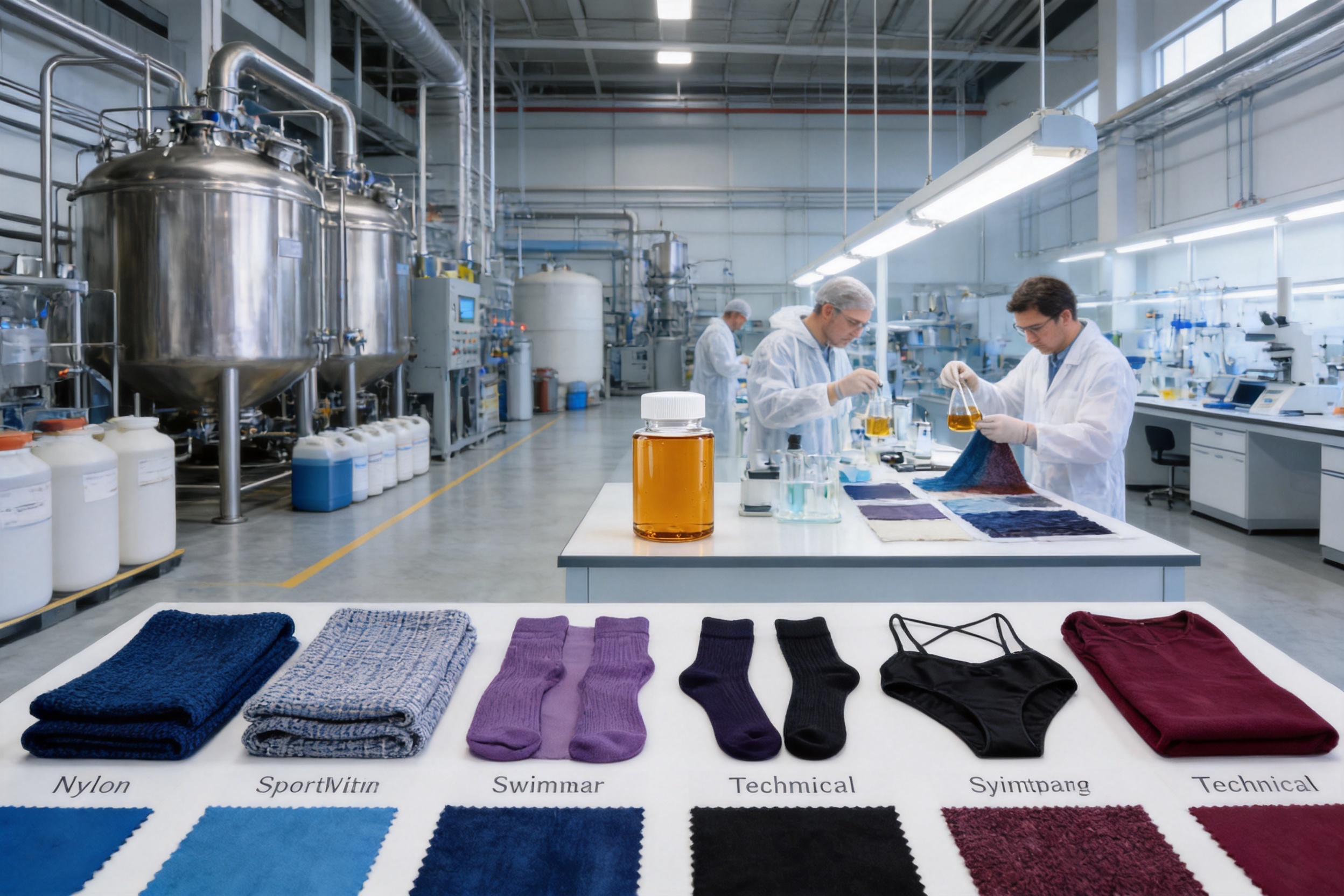
Nylon dyeing requires precise control because nylon fibers do not always absorb dyes uniformly. Differences in fiber affinity, yarn structure, substrate history, heat transfer, and dye distribution can produce streaks, cross-dyeing bars, shade variations, and uneven color development. These problems are especially challenging in high-temperature dyeing, where small differences in dye uptake can become visible as the temperature rises and the dye rapidly moves into the fiber.
Nylon Leveling Agent RY-3055 is a high-temperature leveling auxiliary developed to address these challenges. It is designed to reduce the effect of affinity differences between nylon fibers, improve the coverage of cross-dyeing bars, and provide controlled retarding and migration effects. At the same time, it is formulated to avoid negatively affecting dye exhaustion and final color yield when used under suitable process conditions.
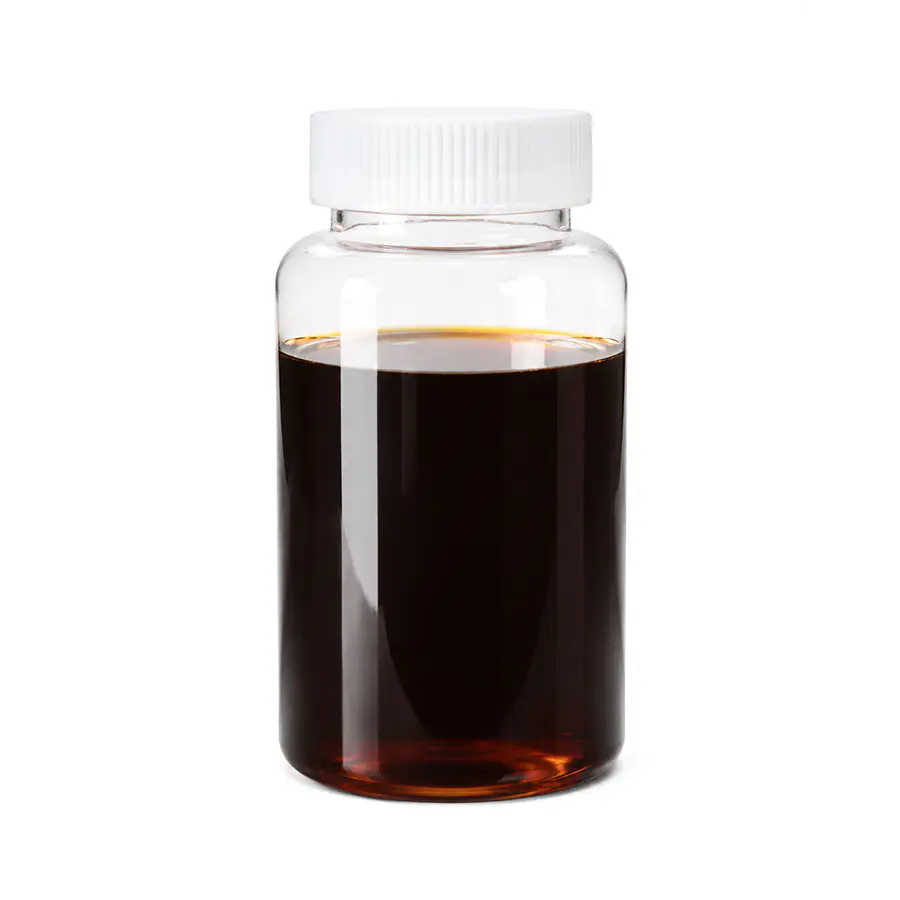
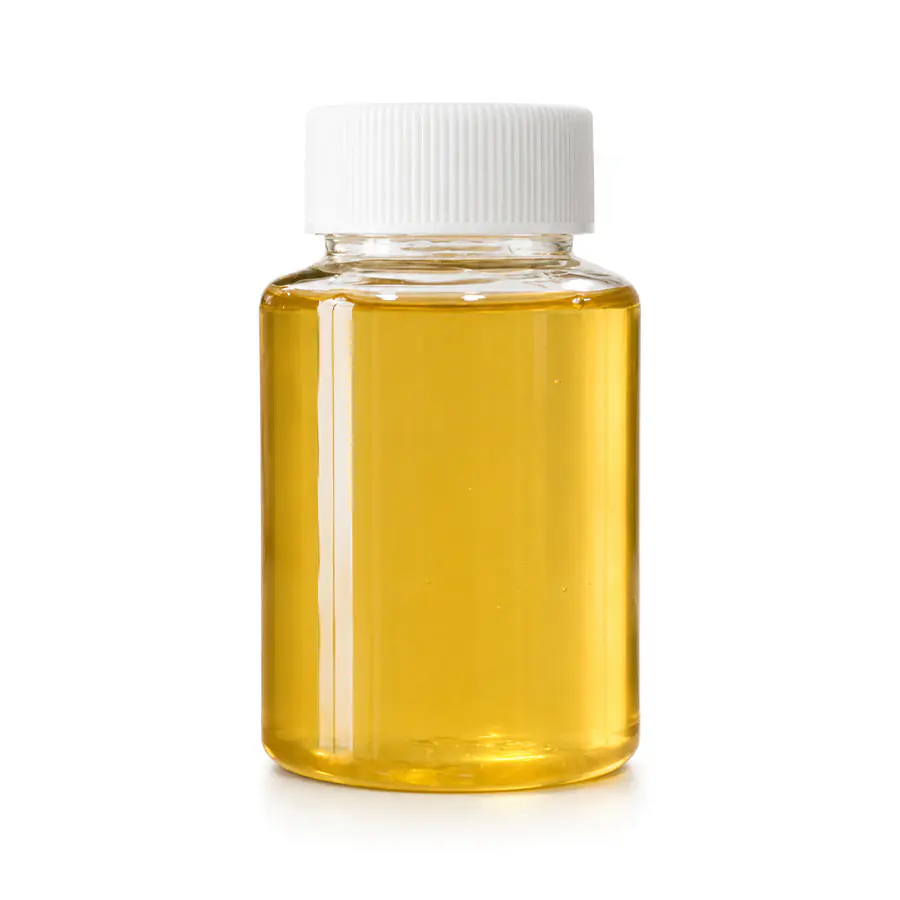
The product is an amphoteric surfactant blend supplied as a dark brown liquid. It is easily soluble in water and remains stable in the presence of acids, alkalis, electrolytes, and hard water. This combination of compatibility, process stability, and leveling performance makes RY-3055 suitable for a broad range of nylon dyeing operations, including situations where uniformity, shade reproducibility, and correction capability are important.
Produced by Jiangyin Huanan New Materials Technology Co., Ltd., RY-3055 reflects the company’s experience in textile pretreatment, dyeing, and finishing auxiliaries. The manufacturer combines formulation development, laboratory testing, standardized production, and quality control to provide textile chemical solutions for mills seeking reliable performance and customized technical support.
Why Nylon Dyeing Requires Specialized Leveling Control
Nylon is a versatile synthetic fiber valued for its strength, abrasion resistance, elasticity, smooth handle, and ability to accept brilliant colors. It is widely used in apparel, hosiery, swimwear, sportswear, lingerie, carpets, upholstery, technical textiles, and blended fabric constructions. However, its dyeing behavior can be sensitive to variations in fiber chemistry and processing history.
Different nylon fibers may show different levels of affinity for acid dyes and other dye systems. These differences can result from polymer composition, spinning conditions, heat setting, drawing, lubricant residues, moisture history, delustering agents, fabric construction, or local differences in the substrate. Even when the fabric appears uniform before dyeing, these variations may become visible during coloration.
Uneven dye uptake can occur at several stages. Some fiber sections may absorb dye faster at the beginning of the dyeing cycle, while other areas remain comparatively pale. If the dyeing curve is too aggressive, the initial differences may become fixed before the dye has enough time to migrate. In other cases, dye may move too quickly from the bath into high-affinity zones, creating streaks or bars that are difficult to correct later.
High-temperature dyeing adds another layer of complexity. Increased temperature generally improves dye mobility and can accelerate dyeing, but it can also intensify uneven uptake if the substrate is not sufficiently controlled. A leveling agent must therefore perform more than one function. It should moderate the initial dyeing rate, help distribute dye more evenly, and encourage migration from areas of excessive concentration to areas of lower concentration.
At the same time, excessive retardation is undesirable. If an auxiliary prevents the dye from exhausting properly, the final shade may be weaker than expected, the color yield may decline, or the bath may contain an unnecessarily high residual dye concentration. A well-balanced leveling agent must support uniformity without compromising the intended depth and brightness of the shade.
Product Overview
Nylon Leveling Agent RY-3055 is formulated as a surfactant blend with amphoteric ionicity. Its chemical design is intended to help equalize the dyeing behavior of nylon fibers while maintaining compatibility with common dyeing environments.
| Property | Specification or Description |
|---|---|
| Product name | Nylon Leveling Agent RY-3055 |
| Product category | High-temperature leveling agent |
| Chemical composition | Surfactant blend |
| Ionicity | Amphoteric |
| Appearance | Dark brown liquid |
| Water solubility | Easily soluble in water |
| pH value | 6–8 |
| Stability | Resistant to alkalis, acids, electrolytes, and hard water |
| Recommended storage | Sealed container at room temperature |
| Indicative shelf life | 12 months under recommended storage conditions |
The product’s liquid form supports convenient handling and dosing in textile dyehouses. Its easy water solubility helps operators prepare the product for addition to the dye bath. The near-neutral pH range also provides flexibility in processes where strong acidity or alkalinity could create compatibility concerns.
As with all textile auxiliaries, the product should be evaluated through laboratory and production trials before full-scale use. Actual performance may vary according to nylon type, fabric construction, dye class, shade depth, liquor ratio, equipment, heating rate, bath pH, and other auxiliaries used in the process.
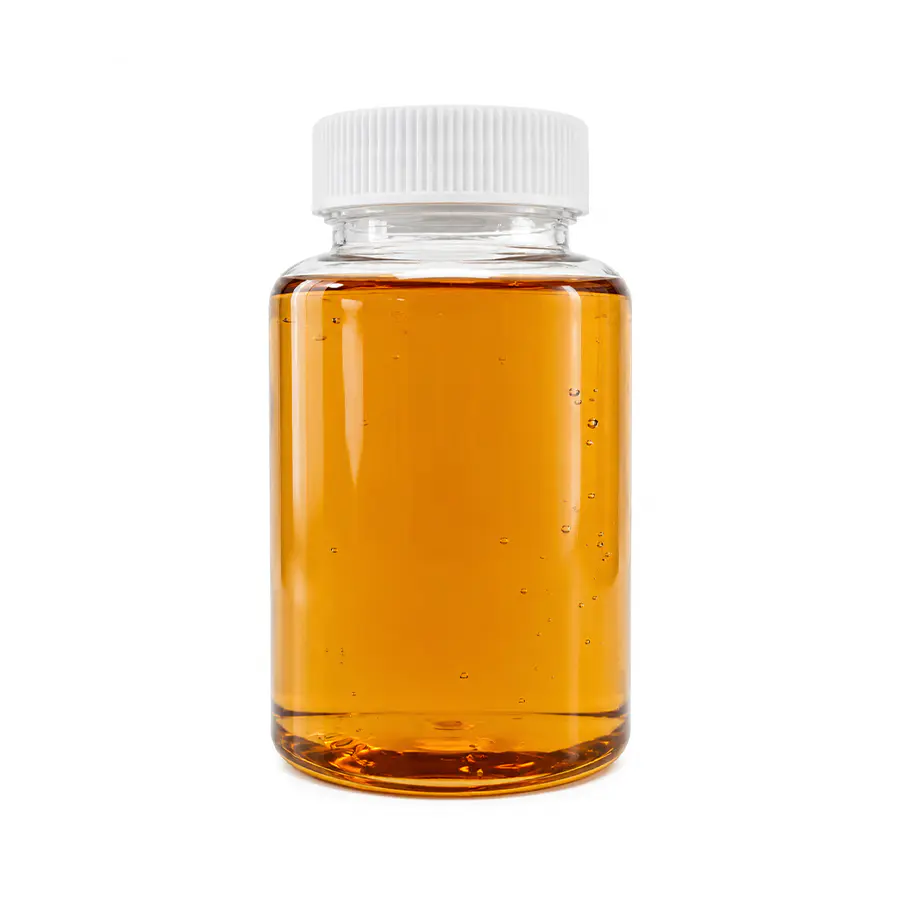
Nylon Leveling Agent RY-3055
How RY-3055 Works in Nylon Dyeing
Reducing the Effect of Fiber Affinity Differences
The central purpose of RY-3055 is to reduce the practical impact of different dye affinities within a nylon substrate. When some fiber segments attract dye more strongly than others, the dye tends to concentrate in the high-affinity areas. This concentration can create uneven color distribution and make the final fabric appear streaky or barred.
RY-3055 helps moderate these differences by influencing the interaction between the dye, the dye bath, and the nylon surface. Rather than allowing dye to attach immediately and irreversibly to the most receptive sites, the auxiliary supports a more controlled dyeing progression. This gives lower-affinity areas more opportunity to receive dye as the process continues.
The objective is not to stop dye uptake. Instead, the aim is to create a more balanced rate of absorption. A controlled dyeing rate is particularly valuable during the early stage of the process, when uneven uptake can have the greatest effect on the final appearance.
Retarding Action
Retarding action helps prevent excessive initial dye absorption. In practical terms, RY-3055 can slow the rate at which dye is taken up by the most active nylon sites. This is important when using dyes with strong affinity or when the process begins with a relatively rapid rise in temperature.
A controlled retarding effect gives the bath more time to distribute dye through the textile assembly. It can also make the process less sensitive to small variations in yarn, fabric density, or local heat transfer. The result is a wider processing window and a reduced risk of sudden, uneven dye fixation.
Retarding must be carefully balanced. Too little control may leave streaks, while too much control may lead to poor exhaustion or extended processing times. RY-3055 is designed to provide useful retardation without affecting dye exhaustion when applied at a suitable dosage and under appropriate process conditions.
Migration Support
Migration is the ability of dye to move from areas of higher concentration toward areas of lower concentration during the dyeing process. This function is essential for correcting early differences in dye uptake. If dye remains fixed only where it initially concentrates, unevenness becomes increasingly difficult to resolve as the process proceeds.
RY-3055 supports migration so that dye can redistribute more evenly across the nylon substrate. This is beneficial in fabrics or yarns where small variations in fiber affinity are unavoidable. Migration performance can also help improve coverage of minor streaks and bars that might otherwise remain visible after dyeing.
The combination of retardation and migration is one of the most important features of a high-performance leveling system. Retardation controls the speed of initial uptake, while migration helps correct differences that have already begun to develop. Together, these effects support more uniform shade development.
Coverage of Cross-Dyeing Bars and Streaks
Cross-dyeing bars, streaks, and similar visual defects can originate from uneven fiber affinity, variations in yarn tension, fabric construction, or previous thermal and mechanical treatments. Once the fabric enters the dyeing process, these irregularities may become more visible because the affected areas absorb color differently.
RY-3055 is designed to provide excellent coverage of cross-dyeing bars and related streaking problems in nylon dyeing. Its leveling and migration effects can help soften the visual contrast between lighter and darker areas. The product is therefore useful not only as a preventive auxiliary but also as part of a correction process for goods that show uneven coloration.
Although a leveling agent cannot replace proper pretreatment, suitable dye selection, or good machine control, it can reduce the sensitivity of the process to moderate substrate differences. This can improve first-time-right performance and help reduce the need for reprocessing.
Key Advantages Compared with Less Specialized Leveling Systems
Balanced Performance Without Unnecessary Loss of Color Yield
One of the main advantages of RY-3055 is its stated ability to provide retarding and migration effects without affecting color yield. In textile production, leveling performance must be considered together with shade depth, brightness, and exhaustion. A product that produces a very level shade but reduces the final color yield may create additional problems, including higher dye consumption, shade correction, extended processing, or increased wastewater loading.
RY-3055 is intended to support evenness while allowing the dye to exhaust normally under suitable conditions. This balance can make it more useful than a highly aggressive retarder that holds dye in the bath for too long. It can also reduce the risk that operators will need to compensate for lost depth by increasing the dye concentration.
Broad Electrolyte and Water Compatibility
Dyehouses may use acids, alkalis, salts, chelating agents, dispersing products, and other auxiliaries depending on the fiber and dye system. Water hardness can also vary between locations and seasons. If an auxiliary is sensitive to electrolytes or hard water, its behavior may change from one production run to another.
RY-3055 is described as resistant to alkalis, acids, electrolytes, and hard water. This stability gives the product a practical advantage in diverse operating environments. It helps reduce the likelihood that changes in bath chemistry will cause precipitation, loss of performance, or unexpected interaction with other process components.
Compatibility should still be confirmed through a laboratory mixing test, particularly when several concentrated products are added at the same point in the process. Nevertheless, broad chemical stability provides a strong foundation for dependable production use.
Amphoteric Character
The amphoteric nature of RY-3055 contributes to its process flexibility. Amphoteric auxiliaries can show favorable compatibility across different pH conditions because their behavior is not limited to a single ionic form throughout the process. This is valuable in nylon dyeing, where bath conditions may change as acid is added, dye uptake progresses, and the temperature increases.
Compared with a narrowly specialized ionic product, an amphoteric surfactant blend may offer more forgiving performance when process parameters fluctuate within the normal operating range. This can be particularly useful for mills handling different nylon qualities, dye brands, fabric weights, or machine types.
Easy Water Solubility
Easy solubility is important for consistent dosing. Poorly dissolved auxiliaries may create localized concentrations, incomplete distribution, or deposits in the dosing line and dyeing machine. RY-3055 can be readily dissolved in water before addition, helping operators achieve more uniform distribution throughout the bath.
Good solubility also supports practical use in production environments where preparation time is limited. Operators can prepare the required quantity with less risk of undissolved material entering the machine. As always, the preferred dilution method should be verified according to the equipment and plant operating procedure.
Suitability for High-Temperature Processing
High-temperature nylon dyeing demands auxiliaries that remain effective as the temperature increases. The leveling agent must continue to control dye uptake, support migration, and remain compatible with the dye bath throughout the thermal cycle. RY-3055 is categorized as a high-temperature leveling agent and is intended for processes where temperature control is central to dye development.
Its performance is especially relevant when the production recipe uses a gradual temperature rise followed by a high-temperature holding period. During this cycle, the product can help manage the transition from initial dye distribution to final fixation and exhaustion.
Recommended Dosage and Application Guidance
The correct dosage of RY-3055 depends on shade depth, dye type, nylon material, fabric construction, and the severity of the leveling challenge. Dosage should not be selected solely according to fabric weight. The required amount may differ between pale shades, medium shades, and deep or dark shades because the dye concentration and risk of uneven uptake are different.
| Shade depth | Reference dosage | Process consideration |
|---|---|---|
| Light shades | 1.5–2% | Higher dosage may support uniform distribution where small variations are highly visible. |
| Medium to deep shades | 1–1.5% | Use a balanced dosage according to dye affinity and substrate behavior. |
| Dark shades | 0.5–1% | A lower dosage may be sufficient because the shade depth can help reduce visual contrast. |
The stated reference dosages should be treated as starting points for laboratory trials. They may be expressed on weight of fabric or another production basis according to the mill’s recipe convention, and the exact calculation should be confirmed before use.
For light shades, a relatively higher dosage may be beneficial because slight irregularities can be easily seen against a pale background. However, operators should verify that the product does not slow the process more than necessary. For medium and deep shades, a moderate dosage can provide useful leveling while preserving efficient dye exhaustion.
Dark shades may require a lower dosage, especially when the dye system already has strong migration behavior. Excessive auxiliary use can alter the kinetic balance of the bath and may not provide additional benefits. A dosage trial should compare levelness, exhaustion, shade depth, and reproducibility rather than focusing on one result alone.
General Addition Practice
RY-3055 should be diluted with water before addition when required by the plant’s operating procedure. Pre-dilution promotes rapid dispersion and avoids adding a concentrated stream directly onto the fabric or into a poorly circulated area of the machine.
The auxiliary may be introduced at the beginning of the dyeing cycle or at another stage recommended by the technical recipe. Early addition is often useful when the primary objective is to control initial dye uptake. In correction work, the application method may be adjusted according to the existing shade and the nature of the defect.
Operators should ensure that the machine has adequate circulation before adding the product. Poor circulation can cause local overdosing and make the actual process less uniform than the recipe indicates. Consistent addition timing, dilution, and circulation are important for repeatable results.
Color Correction Application
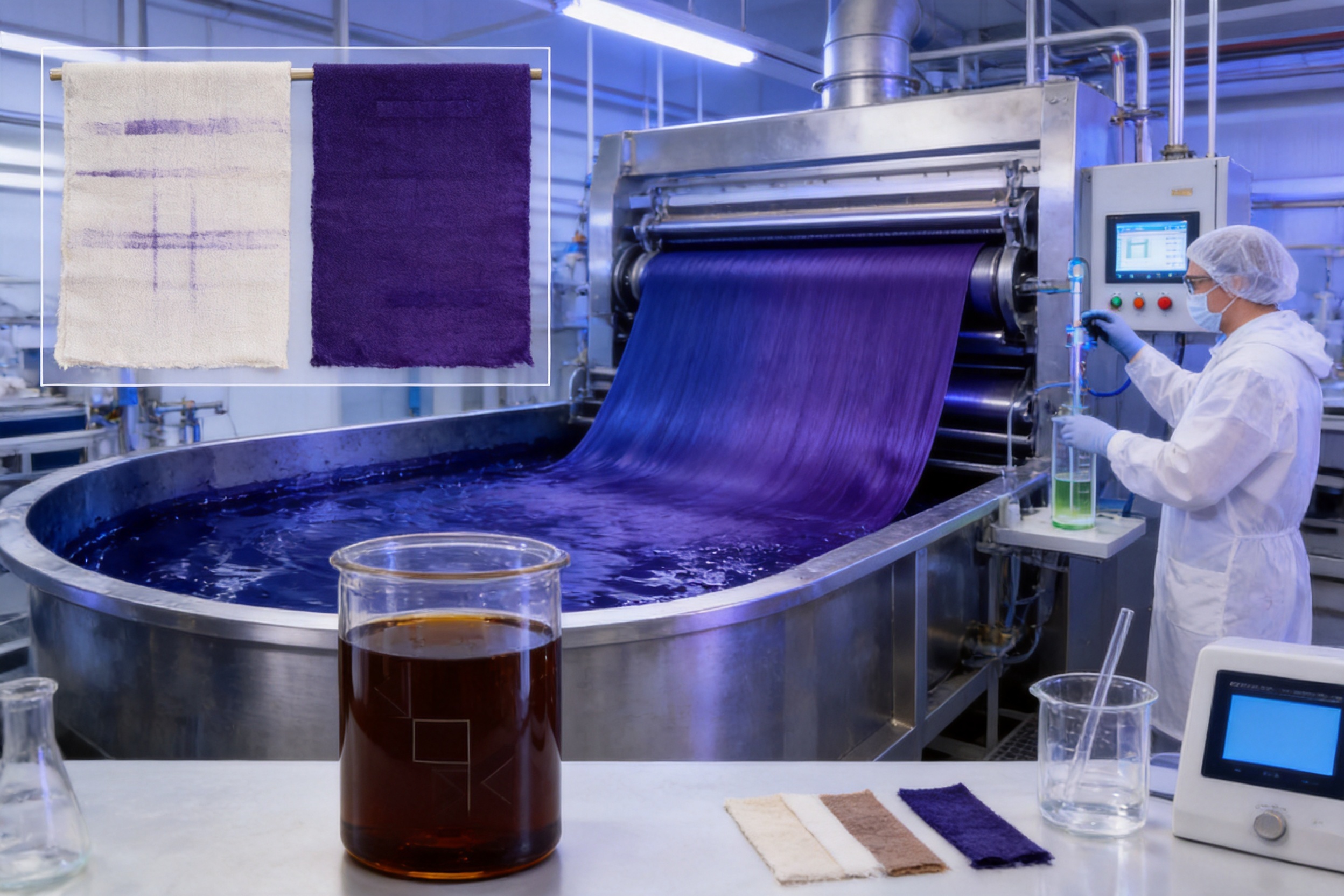
RY-3055 can also be used in a color correction process for nylon goods that show uneven dyeing or streaking. The reference correction conditions are as follows:
| Parameter | Reference condition |
|---|---|
| RY-3055 dosage | 3–4% on weight of fabric |
| Temperature | 100°C |
| Time | 30 minutes |
These conditions are reference values rather than a universal correction formula. Before applying them to production goods, the mill should conduct a controlled laboratory trial. The result can depend on the type of dye, current shade depth, level of fixation, fabric construction, and whether other correction chemicals are present.
During a correction trial, the fabric should be evaluated for visual levelness, shade change, color yield, fastness, and handle. It is also useful to compare treated and untreated samples under different lighting conditions. Some streaks may appear less prominent under one light source but remain visible under another.
The correction process should be introduced carefully because a heavily dyed or fully fixed substrate may respond differently from fabric at an earlier stage of dyeing. If the defect is severe, the leveling agent may improve coverage without completely eliminating the original variation. Process records should therefore include the initial recipe, temperature history, pH, dye concentration, and any previous correction attempts.
Suggested Process Evaluation Plan
A structured evaluation allows a dyehouse to determine whether RY-3055 is suitable for a particular nylon article. The following approach can be adapted to laboratory equipment and production requirements.
Step One: Identify the Substrate
Record the nylon type, denier, yarn structure, fabric weight, construction, finishing history, and any blend components. If the material contains elastane or another fiber, consider whether the additional component may affect bath stability or final performance.
Step Two: Establish a Control Recipe
Run a control sample using the existing dyeing recipe without RY-3055. Record the heating rate, pH profile, holding temperature, processing time, dye exhaustion, final shade, and visual levelness. The control provides a basis for judging the actual benefit of the auxiliary.
Step Three: Compare Several Dosages
Test at least two or three dosage levels around the relevant reference range. For a light shade, the laboratory may compare values within the 1.5–2% range. For medium or deep shades, testing within 1–1.5% may be appropriate. Dark shades may be evaluated at 0.5–1%.
The trial should not assess only the darkest or most level sample. A suitable dosage should provide a practical balance between evenness, exhaustion, shade strength, processing time, and cost.
Step Four: Examine Dye Exhaustion and Color Yield
Measure or estimate residual dye in the bath where facilities permit. Compare the final color yield with the control sample. A successful leveling process should improve uniformity without creating an unacceptable loss of depth or a substantial increase in residual dye.
Step Five: Evaluate Migration and Defect Coverage
Inspect the fabric for streaks, bars, cloudy areas, side-center differences, and end-to-end variation. If the original material contains known affinity differences, use a sample that represents the actual production challenge. The most meaningful test is one that reflects real plant conditions rather than an unusually uniform laboratory specimen.
Step Six: Confirm Fastness and Handle
After dyeing, test the relevant fastness properties and examine the fabric handle. The leveling agent is intended to improve dye distribution, but every recipe should be checked for compatibility with the required product quality standards.
Manufacturing Strengths Behind the Product
The performance of a textile auxiliary depends not only on its stated chemistry but also on manufacturing consistency. A formulation that works well in the laboratory must be produced with reliable raw materials, controlled blending, accurate weighing, stable processing conditions, and effective quality inspection.
Jiangyin Huanan New Materials Technology Co., Ltd. was established in 1984 and is located in Jiangyin City, Jiangsu Province, China. The company specializes in the research, development, production, and sales of textile printing and dyeing auxiliaries. Its product portfolio covers pretreatment, dyeing, and finishing applications, enabling it to understand how individual auxiliaries interact within a complete textile process.
The company operates two production plants and has an annual production capacity of 60,000 tons. This scale supports the supply requirements of textile mills while providing a foundation for standardized manufacturing and production planning. Capacity alone does not determine product quality, but it can help support stable availability, batch management, and supply continuity when combined with appropriate quality systems.
Research and Development Capability
RY-3055 belongs to a product category that requires practical knowledge of dye-fiber interactions, surfactant behavior, bath chemistry, and textile processing. The company’s in-house laboratory and professional R&D team support the development and evaluation of such formulations.
Laboratory capability is important because textile auxiliaries must be assessed under realistic conditions. A product may show acceptable behavior in a simple water test but perform differently in the presence of dye, acid, electrolyte, hard water, or elevated temperature. A dedicated laboratory can help identify these variables and guide formulation adjustments.
The company also offers customized formulation capabilities. This is valuable for mills that dye different nylon qualities or operate specialized equipment. A standard product may be suitable for many applications, but some customers may require adjustments to dosage, compatibility, bath behavior, or processing sequence. Technical cooperation can help align the product with the customer’s specific production conditions.
Standardized Production
Standardized production helps ensure that the product’s appearance, solubility, pH, active composition, and performance remain within defined expectations from batch to batch. For a leveling agent, consistency is particularly important because small changes in formulation can influence dye uptake and final shade reproducibility.
Controlled manufacturing should include appropriate raw material inspection, accurate batching, controlled mixing, process documentation, packaging checks, and finished-product testing. These measures reduce variation and support confidence when the auxiliary is used in repeat production.
Quality Control and Technical Support
Strict quality control is necessary for textile chemical suppliers serving dyehouses with demanding shade and fastness requirements. Quality control should address both physical properties and application performance. The product information for RY-3055 includes appearance, water solubility, pH, ionic character, and chemical stability, all of which are relevant to routine handling and process compatibility.
Technical support is equally important. When a mill experiences streaking or uneven dyeing, the cause may not be the auxiliary alone. It may involve substrate variation, dye selection, machine loading, heating rate, pH control, water quality, or pretreatment. A supplier with experience across pretreatment, dyeing, and finishing can help evaluate the complete process rather than recommending an isolated chemical change.
Environmental and Compliance Considerations
Textile manufacturers increasingly need auxiliaries that support environmental, regulatory, and customer compliance requirements. Jiangyin Huanan New Materials Technology Co., Ltd. offers eco-friendly, APEO-free, and formaldehyde-free formulations as part of its broader product range. These attributes are important for mills supplying international brands and markets with restricted substance requirements.
RY-3055 should be evaluated according to the customer’s current restricted substance list and applicable certification requirements. The available product information identifies it as a surfactant blend and provides its pH, ionicity, solubility, and stability characteristics, but individual customers may require additional documentation, such as safety data, declarations, analytical reports, or specific compliance statements.
Improved leveling can also contribute indirectly to more efficient production. If a process produces fewer rejects, fewer reworks, and more first-time-right batches, the mill may reduce additional water, energy, dye, and auxiliary consumption. The environmental benefit depends on actual process results, but better shade uniformity can support more efficient resource use.
Responsible use remains essential. Operators should follow the recommended dosage, prevent unnecessary overdosing, and manage wastewater in accordance with local requirements. Storage containers should remain sealed, and the product should be handled according to the supplier’s safety documentation.
Storage, Handling, and Shelf Life
RY-3055 should be stored in sealed containers at room temperature. Keeping the container closed helps protect the product from contamination, evaporation, and unintended changes caused by prolonged exposure to the environment.
Before use, the product should be inspected for unusual separation, contamination, or other changes. If the material has been stored for an extended period, a small laboratory check of appearance, solubility, and process performance is advisable. The stated shelf life is 12 months under recommended storage conditions.
When transferring the product, use clean equipment and avoid mixing it directly with incompatible concentrated chemicals. If several products are being prepared for the same bath, each should be diluted and added according to the mill’s established procedure. A preliminary compatibility test can help prevent unexpected precipitation or loss of performance.
Personnel should use the appropriate protective equipment and consult the current safety documentation before handling the product. Storage and handling practices should follow local occupational safety requirements.
Applications Across Nylon Textile Production
Knitted Fabrics
Nylon knitted fabrics can be sensitive to variations in loop structure, tension, and heat history. These variations may cause uneven dye uptake or visual barré. RY-3055 can help improve shade uniformity when used with a suitable dyeing curve and adequate circulation.
Woven Fabrics
In woven nylon, differences in warp and weft behavior or local fabric density may affect dye distribution. A leveling system with retarding and migration performance can help reduce the visibility of moderate variations, especially in pale and medium shades.
Hosiery and Intimate Apparel
Hosiery and intimate apparel often require bright, clean, and highly uniform shades. Small streaks or shade differences may be especially noticeable on smooth nylon surfaces. Controlled leveling can support a more consistent appearance while preserving the desired color yield.
Sportswear and Swimwear
Sportswear and swimwear fabrics may combine nylon with elastane and may undergo demanding finishing processes. The dyeing recipe must consider the stability of the complete construction. RY-3055 can be evaluated as part of a controlled process designed to produce even coloration without unnecessary thermal or chemical stress.
Carpet and Technical Textiles
Nylon carpet yarns and technical textile constructions may present different dyeing challenges from apparel fabrics. Fiber bulk, yarn density, package structure, and machine type can all affect leveling. The product’s broad stability and high-temperature positioning make it a candidate for evaluation in these applications, subject to specific trial work.
Process Factors That Should Be Controlled Alongside the Auxiliary
No leveling agent can compensate for every process weakness. To achieve the best result with RY-3055, the dyehouse should also control the following factors.
Substrate preparation should be consistent. Oils, lubricants, spinning finishes, and contaminants can alter dye uptake. Uneven pretreatment may create differences that appear to be dyeing defects.
Water quality should be monitored. Although RY-3055 is described as resistant to hard water, water hardness and metal ions can still influence dyes and other auxiliaries. Where necessary, a suitable chelating or sequestering approach should be considered.
Bath pH should be measured and controlled. Nylon dyeing often depends strongly on the timing and rate of acid addition. A sudden pH change can accelerate dye uptake and reduce the time available for leveling.
Heating rate should be reproducible. Rapid heating can increase the risk of uneven absorption, while a controlled temperature rise generally provides better opportunity for migration and distribution.
Machine loading and liquor circulation should remain consistent. Overloading can reduce circulation and produce differences between the inside and outside of the fabric mass. The same auxiliary may perform differently at different loading levels if hydrodynamics change significantly.
Dye selection and compatibility should be reviewed. Dyes with very different affinity or migration behavior may require different leveling strategies. RY-3055 dosage should therefore be optimized for the actual dye combination rather than applied as a fixed value for every recipe.
Commercial Value for Textile Mills
For a dyehouse, the value of a leveling agent extends beyond the chemical’s purchase price. A product that improves first-time-right performance may reduce reprocessing, re-dyeing, claims, delivery delays, and production interruptions.
RY-3055 can support more predictable shade development by reducing the effect of fiber affinity differences and improving streak coverage. If the product helps a mill achieve acceptable levelness without reducing color yield, it may also help control dye consumption and preserve production efficiency.
Reliable batch-to-batch supply is another important consideration. Jiangyin Huanan’s production capacity, two-plant structure, laboratory resources, and standardized manufacturing approach are intended to support customers requiring consistent textile auxiliaries. For larger dyehouses, supply continuity and technical communication can be as important as laboratory performance.
The company’s broader portfolio also allows customers to source products for pretreatment, dyeing, and finishing from one specialized supplier. This can simplify technical coordination when a textile mill is developing a complete process rather than solving a single isolated problem.
Frequently Asked Questions
What type of product is Nylon Leveling Agent RY-3055?
RY-3055 is a high-temperature leveling agent for nylon dyeing. It is based on a surfactant blend and has amphoteric ionicity.
What defects can RY-3055 help address?
It is designed to reduce the effect of nylon fiber affinity differences and improve the coverage of cross-dyeing bars, streaks, and related uneven coloration. It may also support more uniform shade development during normal dyeing.
Does RY-3055 reduce dye exhaustion?
The product is designed to provide retarding and migration effects without affecting dye exhaustion or color yield when used at a suitable dosage and under appropriate process conditions. Actual results should be confirmed with a laboratory and production trial.
What is the recommended dosage for light shades?
The reference dosage for light shades is 1.5–2%. The exact dosage should be selected according to the dye type, nylon material, process conditions, and desired levelness.
What is the recommended dosage for medium to deep shades?
The reference dosage for medium to deep shades is 1–1.5%. A trial should compare shade strength, levelness, exhaustion, and process reproducibility.
What is the recommended dosage for dark shades?
The reference dosage for dark shades is 0.5–1%. A lower dosage may be sufficient, but the final selection depends on the dye system and the behavior of the substrate.
Can RY-3055 be used for color correction?
Yes. A reference correction process uses 3–4% RY-3055, 100°C, and 30 minutes. These conditions are for guidance only and should be confirmed through a controlled trial before production use.
Is the product soluble in water?
Yes. RY-3055 is easily soluble in water, which supports dilution and distribution in the dye bath.
What is the pH value of RY-3055?
The stated pH value is 6–8.
Is RY-3055 compatible with hard water and electrolytes?
The product is described as resistant to acids, alkalis, electrolytes, and hard water. Nevertheless, a compatibility test is recommended when it is combined with concentrated dyes or other auxiliaries.
How should the product be stored?
Store it in sealed containers at room temperature. The stated shelf life is 12 months under recommended storage conditions.
Can the product be used for every nylon article at the same dosage?
No. Dosage depends on shade depth, dye type, material, fabric construction, equipment, and the severity of the leveling problem. Each new application should be evaluated before standardization.
What makes RY-3055 different from a simple retarding agent?
RY-3055 is designed to combine retarding and migration effects. A simple retarder may slow dye uptake, while a balanced leveling agent also helps dye redistribute across the substrate. The combined function is intended to improve uniformity without unnecessarily reducing exhaustion.
What support can the manufacturer provide?
The manufacturer provides textile auxiliaries for pretreatment, dyeing, and finishing and maintains an in-house laboratory, R&D team, customized formulation capability, standardized production, and quality control resources. Technical support should be coordinated around the specific substrate and dyeing process.
Conclusion
Nylon Leveling Agent RY-3055 is designed for dyehouses that need reliable control over uneven nylon dyeing. Its core functions include reducing fiber affinity differences, slowing excessive initial dye uptake, supporting migration, and improving coverage of cross-dyeing bars and streaks. Unlike a leveling product that simply delays exhaustion, RY-3055 is intended to provide a balanced effect while maintaining dye exhaustion and color yield under suitable conditions.
Its amphoteric surfactant-blend composition, easy water solubility, near-neutral pH, and resistance to acids, alkalis, electrolytes, and hard water contribute to its process flexibility. Reference dosages range from 0.5–2% according to shade depth, while a separate 3–4% correction application may be evaluated at 100°C for 30 minutes.
The product’s value is strengthened by the manufacturing capabilities of Jiangyin Huanan New Materials Technology Co., Ltd. Established in 1984, the company combines textile chemical R&D, an in-house laboratory, two production plants, annual capacity of 60,000 tons, customized formulation, standardized production, and quality control. Its wider portfolio across pretreatment, dyeing, and finishing allows it to approach textile processing from a complete-process perspective.
For best results, users should conduct trials with the actual nylon substrate, dye system, machine, water quality, pH profile, heating rate, and production target. When properly evaluated and applied, RY-3055 can help textile mills improve shade consistency, reduce visible streaking, protect color yield, and achieve more dependable high-temperature nylon dyeing.
References
1. Product technical information for Nylon Leveling Agent RY-3055, including composition, ionicity, appearance, solubility, pH, stability, dosage, correction conditions, and storage guidance.
2. Jiangyin Huanan New Materials Technology Co., Ltd. company information concerning textile auxiliary manufacturing, research and development, production capacity, customized formulation, and quality control.
3. General technical principles of nylon dyeing, including dye affinity, retarding action, migration, temperature control, pH control, and leveling behavior.
4. General textile dyehouse practices for laboratory evaluation, color yield measurement, shade correction, process reproducibility, and auxiliary compatibility testing.
5. General guidance on responsible storage, handling, restricted substance evaluation, and environmental management of textile chemical products.
Product: Nylon Leveling Agent RY-3055


Contact us
huanannewmaterials@gmail.com
-
 Phone: +86 - 13861620767
-
 Fax: +86-0510-86200939
-
 298 Hongxing Road, Huashi Town, Jiangyin City, Wuxi City, Jiangsu Province, China
Product links
Mobile App
Copyright © Jiangyin Huanan New Materials Technology Co., Ltd. All Rights Reserved

-
huanannewmaterials@gmail.com
-

-

-
+86 - 13861620767