


 English
 中文简体

Extra-Soft Silicone Oil HN-8100: A High-Performance Softening Solution for Modern Textile Finishing
Content
- 1 1. The Role of Silicone Softeners in Textile Finishing
- 2 2. Product Profile and Main Technical Characteristics
- 3 3. Sensory Performance: Softness, Smoothness, and Resilience
- 4 4. Advantages Compared with Conventional Softening Approaches
- 5 5. Recommended Textile Applications
- 6 6. Application Methods
- 7 7. Preparation and Dilution Procedure
- 8 8. Manufacturing Process and Quality-Control Strengths
- 9 9. Environmental and Compliance Considerations
- 10 10. Storage, Packaging, and Handling
- 11 11. How HN-8100 Supports Textile Product Development
- 12 12. Recommended Trial and Evaluation Program
- 13 13. Frequently Asked Questions
- 13.1 Q1: What is Extra-Soft Silicone Oil HN-8100 used for?
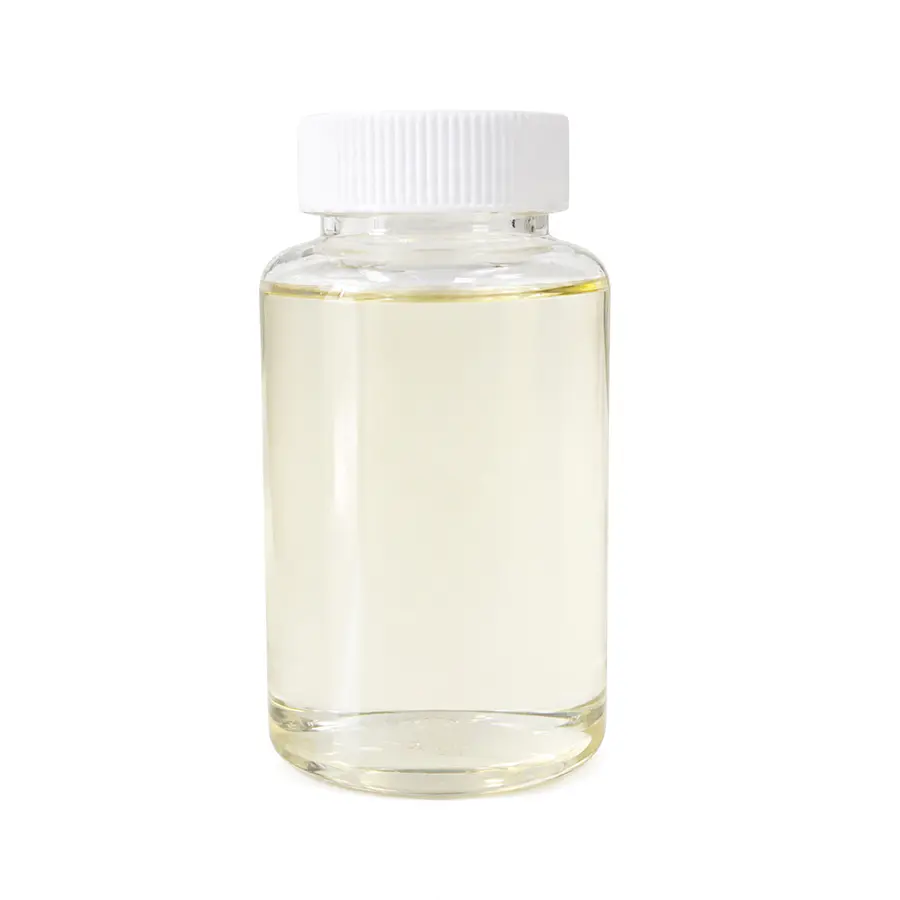
- 13.2 Q2: What does the product look like?
- 13.3 Q3: What is the ionic character of HN-8100?
- 13.4 Q4: What is the active content?
- 13.5 Q5: What is the pH value?
- 13.6 Q6: Can HN-8100 be used in both exhaustion and padding processes?
- 13.7 Q7: Is the product suitable for brushed fabrics?
- 13.8 Q8: How should the product be diluted?
- 13.9 Q9: What equipment is recommended for large-scale preparation?
- 13.10 Q10: How should HN-8100 be stored?
- 13.11 Q11: What package sizes are available?
- 13.12 Q12: Can HN-8100 be used for eco-conscious textile production?
- 13.13 Q13: How can a mill obtain the best softness?
- 13.14 Q14: Does a higher dosage always produce a better result?
- 14 14. Why Manufacturer Capability Matters
- 15 15. Conclusion
- 16 References
- 17 Product: Extra-Soft Silicone Oil HN-8100
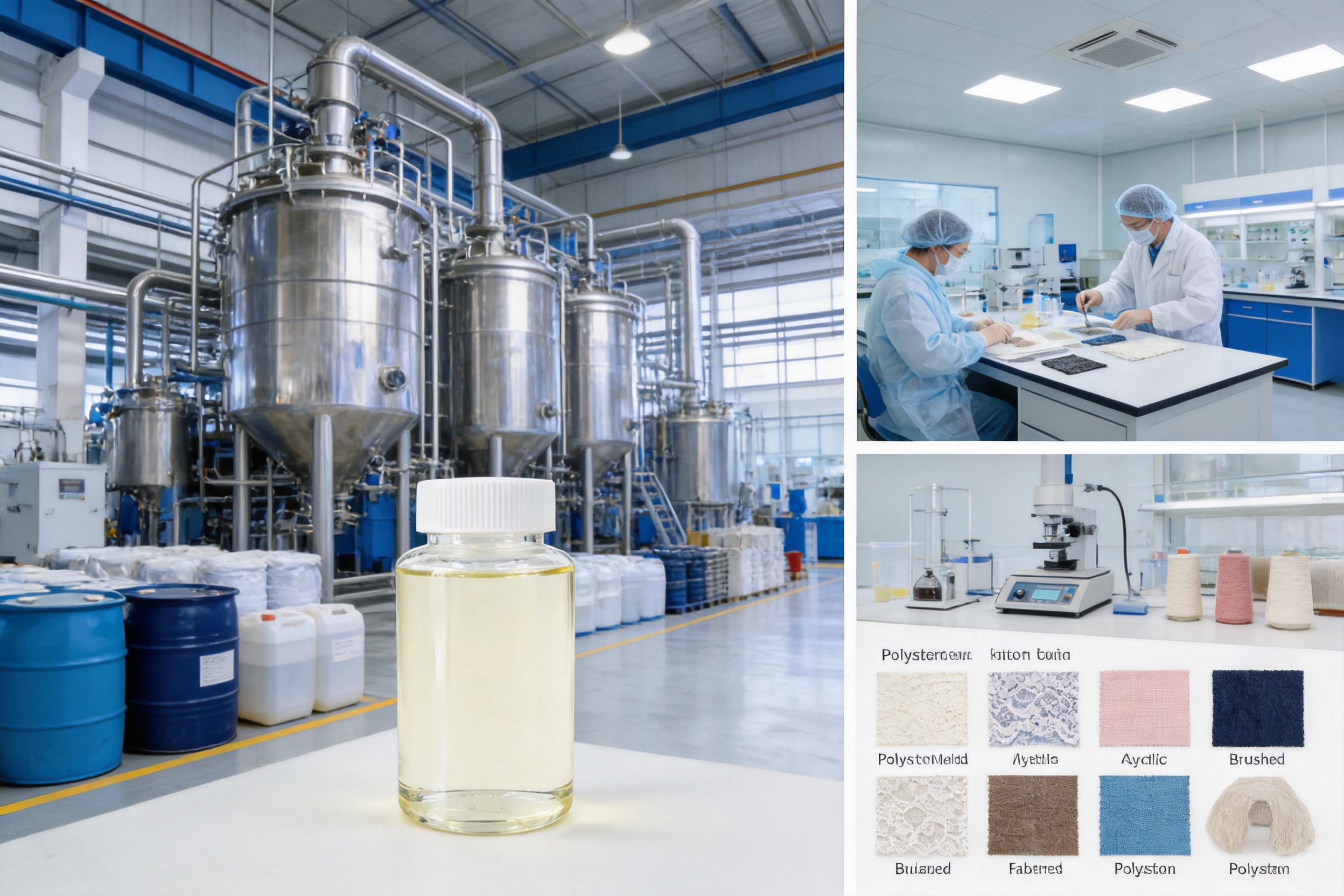
In textile manufacturing, the finishing stage determines many of the qualities that consumers notice first: softness, smoothness, fullness, resilience, surface comfort, drape, and overall fabric handle. A well-designed finishing auxiliary can transform an ordinary textile into a product with a more attractive tactile character and stronger market appeal. Extra-Soft Silicone Oil HN-8100 is formulated for textile producers seeking a combination of exceptional softness, smooth lubrication, resilient fullness, and practical processing performance across a broad range of synthetic and blended fabrics.
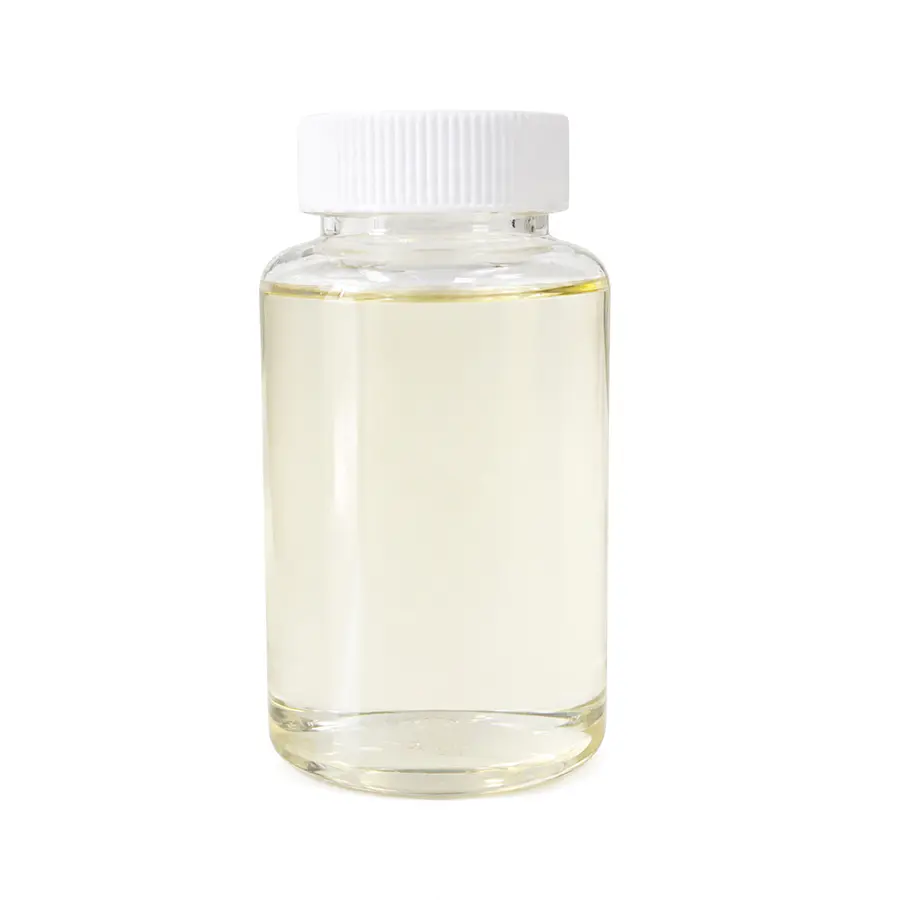
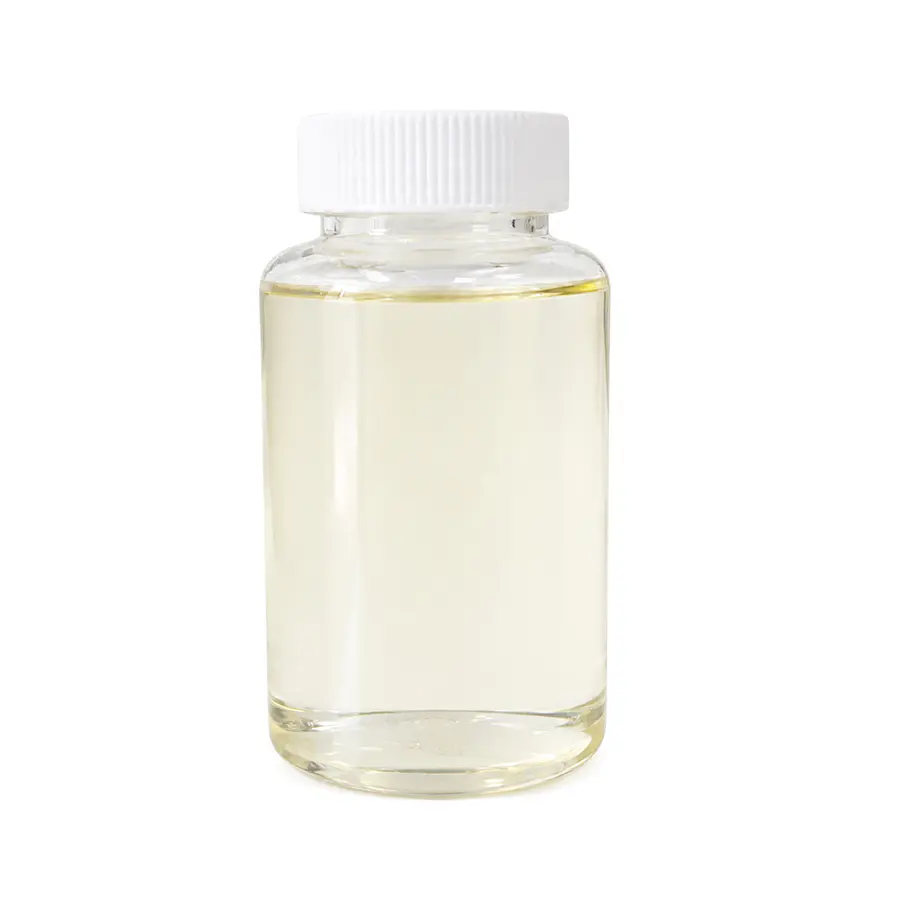
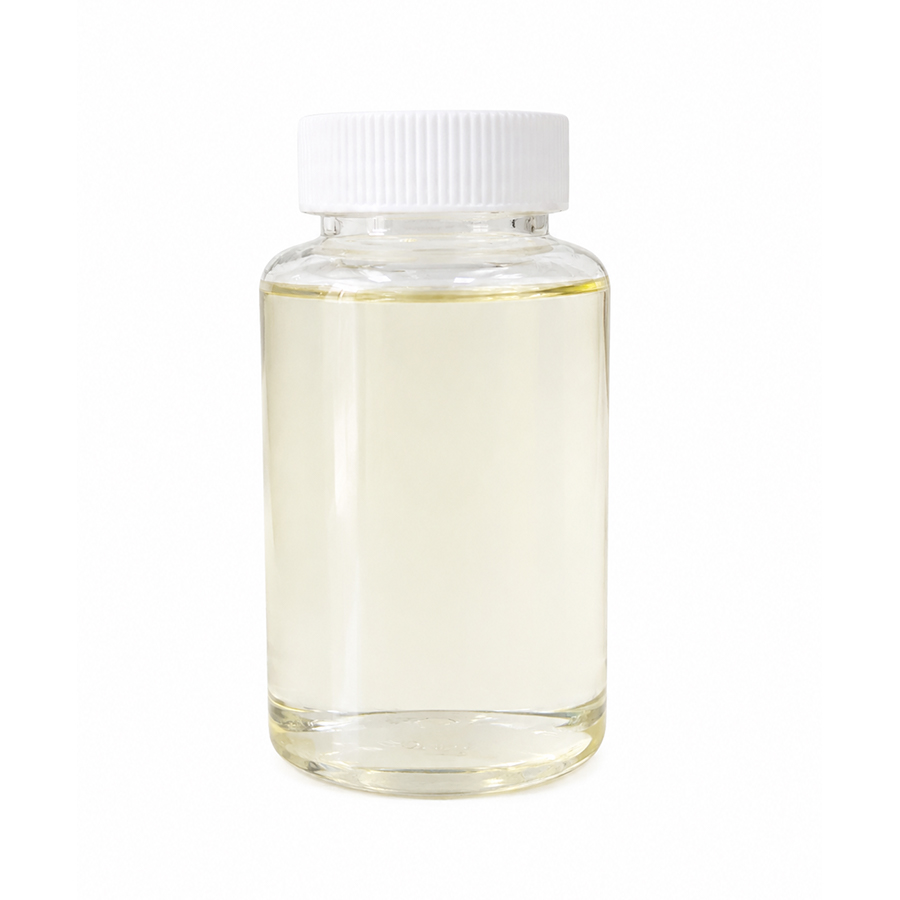
HN-8100 is a weakly cationic silicone oil supplied as a transparent yellow liquid with an active content of 70% or higher. Its performance profile is designed around three distinctive sensory effects: the fluffy resilience associated with cotton candy, the fine and delicate softness of baby skin, and the smooth, refreshing touch of butter cheese. These descriptions reflect the product’s intended handle rather than a single narrow finishing effect. The formulation is suitable for manufacturers that need softness without losing fabric body, surface smoothness, or the characteristic appearance of the substrate.
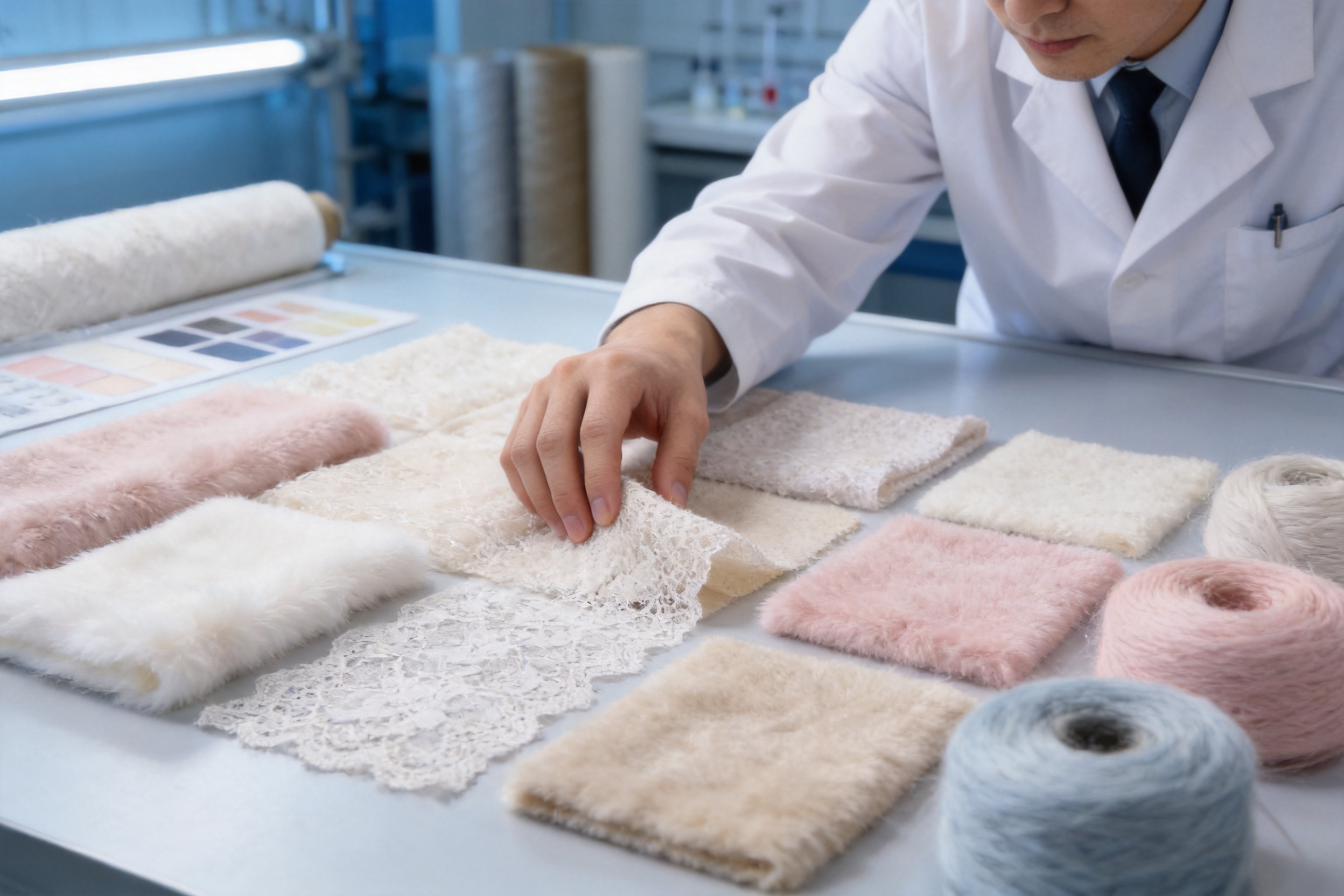
The product is especially applicable to polyester/cotton blends, acrylic fabrics, lace, brushed textiles, polyester yarn, and other synthetic-fiber materials. It can be applied through exhaustion or padding processes, allowing textile mills to select a method according to fabric construction, production equipment, process volume, and desired handle. In addition, the product can be diluted for use in textile finishing operations, making it practical for plants that require flexible dosage adjustment.
This article examines the product’s technical characteristics, textile applications, processing advantages, recommended use methods, preparation procedure, quality-control considerations, and the manufacturing strengths behind its consistent performance.
Extra-Soft Silicone Oil HN-8100
1. The Role of Silicone Softeners in Textile Finishing
Textile fibers leave dyeing and washing processes with a surface condition that may not meet the final performance or sensory requirements of the finished article. Heat, mechanical action, detergents, dyes, alkaline auxiliaries, and repeated washing can all influence fiber friction and fabric handle. Even when color and dimensional stability are satisfactory, the textile may feel harsh, dry, stiff, or insufficiently flexible.
Silicone-based softeners are used to modify the interaction between fibers and between the fabric surface and the human hand. Silicone structures can form a thin, lubricating film over fibers. This film reduces surface friction and helps create a smoother, more supple handle. Depending on the chemistry and application level, silicone softeners can also contribute to fullness, drape, elasticity of handle, surface smoothness, and improved sewability.
However, textile manufacturers rarely want softness alone. Excessive lubrication may create an oily or greasy sensation, reduce sewability, cause shade variation, or interfere with subsequent processes. A useful finishing product must therefore balance softness, smoothness, resilience, compatibility, application convenience, and process control.
HN-8100 is positioned as an extra-soft silicone oil for applications where a refined and highly comfortable hand is required. Its formulation is intended to provide softness that remains lively and resilient instead of creating a flat or heavy surface. This is particularly important for brushed fabrics, synthetic yarns, lace, and blended textiles, where the final touch can strongly affect perceived quality.
2. Product Profile and Main Technical Characteristics
Product name |
Extra-Soft Silicone Oil HN-8100 |
Product category |
Silicone oil; textile finishing auxiliary |
Appearance |
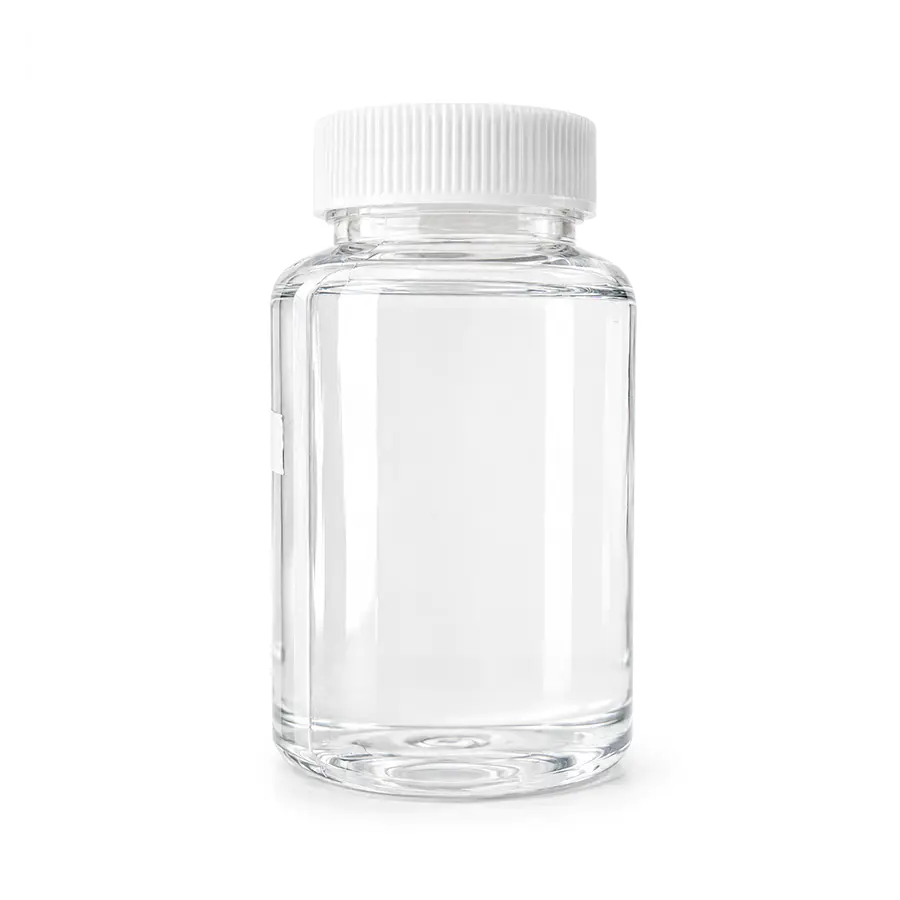
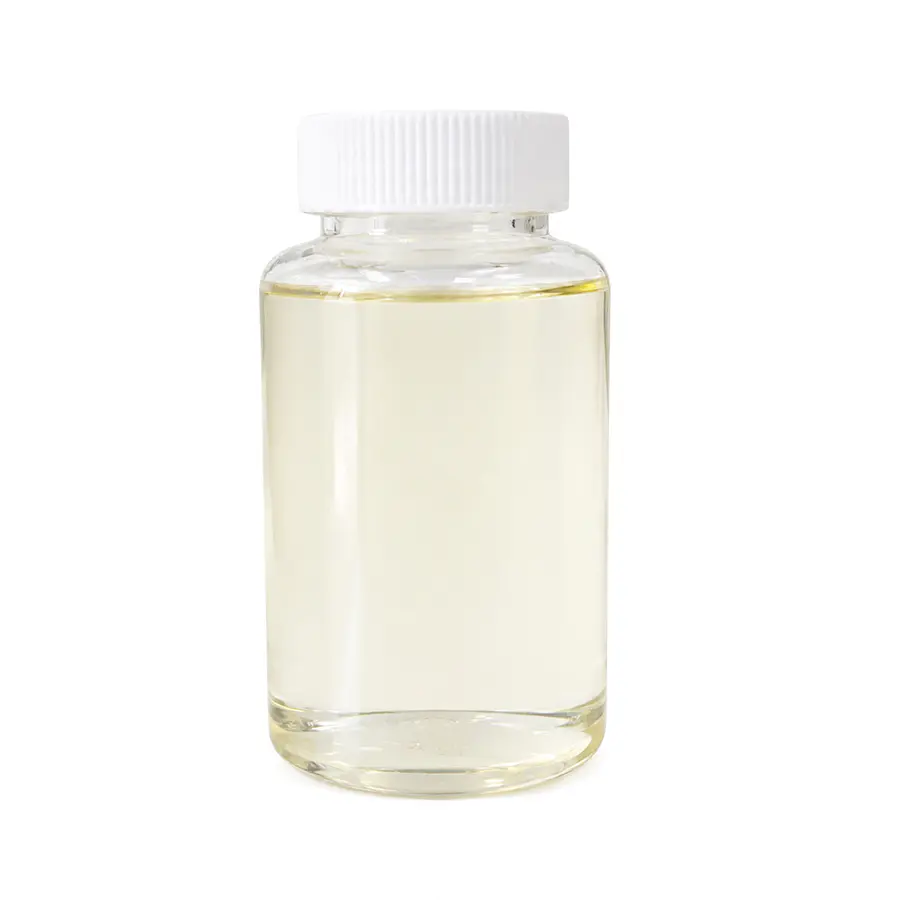
Transparent yellow liquid |
Ionicity |
Weakly cationic |
Active content |
70% or higher |
pH value |
5–6 |
Primary functional effect |
Extra softness, smoothness, fullness, and resilient handle |
Recommended application areas |
Polyester/cotton, acrylic, blended fabrics, lace, brushed fabrics, polyester yarn, and other synthetic fibers |
The transparent yellow appearance is a normal product characteristic and provides a convenient visual reference during receiving and production inspection. The weakly cationic character supports affinity toward many textile surfaces, while the pH range of 5–6 is consistent with mildly acidic finishing conditions commonly used in textile plants.
An active content of 70% or higher offers a concentrated product format. Concentration can help reduce the volume of material that must be stored, handled, and transported compared with a ready-to-use low-solids product. It also allows mills to adjust working concentrations according to fiber type, fabric weight, process route, and desired softness level.
As with all concentrated textile auxiliaries, the product should be properly diluted and thoroughly dispersed before use. Application results depend not only on the silicone oil itself but also on water quality, liquor ratio, pH, temperature, mixing efficiency, fabric preparation, and compatibility with other finishing chemicals.
3. Sensory Performance: Softness, Smoothness, and Resilience
3.1 Cotton-candy-like fluffiness
One of the key performance objectives of HN-8100 is a fluffy and resilient hand. This effect is valuable in textiles that need a light, voluminous, or pleasantly springy surface. A fabric with this type of handle can feel fuller without becoming excessively heavy or rigid.
Fluffy resilience is particularly desirable in brushed polyester, polyester/cotton blends, acrylic fabrics, and selected knitted materials. These substrates often benefit from a finishing agent that enhances surface comfort while preserving the natural structure created by brushing, knitting, or blending. The target is not simply a soft surface, but a surface that recovers its character after compression by the hand.
3.2 Baby-skin-like delicacy
The second characteristic is fine, delicate softness. Consumers frequently associate premium textile quality with a smooth and gentle touch. This is especially relevant for apparel, underwear, sleepwear, home textiles, children's products, and fabrics that remain in direct contact with skin.
HN-8100 is designed to create a refined handle rather than a coarse or waxy finish. When the application is correctly controlled, the product can help reduce the perception of fiber harshness and improve the tactile uniformity of the fabric. A consistent finish is essential because uneven softness can be detected immediately during inspection and garment handling.
3.3 Butter-like smoothness
The third sensory objective is a smooth and refreshing touch. Smoothness is related to the reduction of surface friction, while the refreshing sensation refers to a clean, non-sticky, and comfortable handle. These qualities can make a fabric feel more polished and commercially attractive.
For synthetic fibers, which may otherwise feel dry or less natural than cellulosic materials, a suitable silicone softener can improve the surface impression substantially. In blended fabrics, it can help bring different fiber components closer together in terms of tactile character, supporting a more harmonious final handle.
4. Advantages Compared with Conventional Softening Approaches
Textile mills use many types of softening agents, including fatty-acid derivatives, wax-based products, polyethylene emulsions, mineral-oil dispersions, and silicone formulations. Each chemistry has its place, but the selection must match the required hand and the technical demands of the fabric.
Compared with conventional non-silicone softeners, a concentrated silicone oil may offer a more pronounced combination of surface smoothness and supple softness. Silicone chemistry is widely valued for its ability to provide lubrication at relatively low application levels. This can be beneficial when the objective is to achieve a premium hand without depositing a visibly heavy coating.
HN-8100 also provides a balanced sensory profile. Some softeners emphasize a greasy or waxy effect, while others produce softness without sufficient smoothness or fullness. The product is designed to combine multiple tactile attributes: fluffiness, fine softness, smoothness, and resilience. This balance can give textile producers more flexibility when developing different quality grades.
Its weakly cationic nature is another practical feature. Ionicity influences how a softener interacts with fibers, dyes, finishing agents, and the bath environment. A weakly cationic system can offer useful affinity while remaining more manageable than strongly cationic systems in certain process conditions. Nevertheless, compatibility trials are still recommended before combining HN-8100 with other auxiliaries.
The product is also suitable for multiple application routes. Some specialty finishing agents are limited to a single process or substrate. HN-8100 can be used by exhaustion or padding, which makes it adaptable to continuous and batch production environments.
Performance consideration |
Potential benefit of HN-8100 |
Production value |
Softness |
Fine, delicate, and skin-friendly handle |
Improves comfort and perceived quality |
Surface lubrication |
Smooth and refreshing touch |
Supports premium surface appearance and feel |
Resilience |
Fluffy, springy, and full handle |
Helps avoid a flat or lifeless finish |
Application flexibility |
Suitable for exhaustion and padding |
Fits different production lines and fabric types |
Concentration |
Active content of 70% or higher |
Allows dosage adjustment and efficient storage |
Substrate range |
Applicable to blends, synthetics, lace, brushed fabrics, and yarn |
Reduces the need for multiple softener grades |
These advantages should be evaluated through laboratory and production trials because fabric construction, pretreatment, dye class, and finishing equipment can affect the final result. The strongest performance is achieved when dosage and process conditions are optimized for each individual substrate.
5. Recommended Textile Applications
5.1 Polyester/cotton blends
Polyester/cotton blends combine the durability and dimensional stability of polyester with some of the comfort and moisture-related characteristics of cotton. However, the two fiber types do not naturally have the same surface feel. After dyeing and finishing, the fabric may require a softener that can create a more unified handle.
HN-8100 can be considered for woven or knitted polyester/cotton materials where the target is a soft, smooth, and full surface. Its use may be relevant to shirts, uniforms, casualwear, workwear, bedding, and household textiles. The final dosage should be selected according to blend ratio, fabric weight, color depth, and required hand.
5.2 Acrylic fabrics
Acrylic fibers are often selected for warmth, lightness, and wool-like appearance. Their surface can benefit from a softening treatment that improves comfort and reduces a dry or harsh sensation. HN-8100 is suitable for acrylic textiles requiring a smoother and more pleasant handle while maintaining a light and resilient character.
5.3 Lace and delicate fabrics
Lace requires careful finishing because excessive deposition can affect openness, drape, flexibility, or visual clarity. A controlled application of a high-performance silicone softener can enhance the touch while avoiding an overly heavy finish. Laboratory testing should focus on handle, whiteness, shade, dimensional stability, and the appearance of open structures.
5.4 Brushed fabrics
Brushing creates a raised surface that is highly sensitive to finishing conditions. A suitable softener can make the raised fibers feel smoother and more comfortable. HN-8100 is appropriate for brushed synthetic and blended fabrics where a fluffy, full, and resilient hand is desired.
For brushed materials, it is important to verify that the finish does not cause excessive flattening of the raised surface. The optimum process may depend on the brushing intensity, fabric weight, pile or nap height, drying temperature, and mechanical treatment after application.
5.5 Polyester yarn and other synthetic fibers
Polyester yarn can benefit from a reduction in friction and an improvement in surface smoothness. Depending on the yarn construction and end use, the finish may support better tactile quality, easier handling, or a more attractive appearance. Other synthetic fiber fabrics can also be evaluated when a smooth, soft, and resilient surface is needed.
For yarn applications, the producer should examine package density, wetting behavior, bath circulation, drying conditions, and any effect on subsequent weaving or knitting. Small-scale trials are particularly important because yarn finishing requirements can differ from fabric finishing requirements.
6. Application Methods
6.1 Exhaustion process
The recommended starting range for the exhaustion process is 0.6–3% of HN-8100 diluted solution. The supplied guidance specifies dilution of the product at a ratio of 1:3 before application. In practical terms, the concentrated product should be mixed with an appropriate quantity of water to create a uniform working solution, followed by dosage according to the fabric weight and the required handle.
The exact meaning of the percentage should be confirmed by the technical team according to the mill’s standard calculation method, such as percentage on weight of goods or percentage of working liquor. Textile plants should use one consistent basis throughout laboratory and production records.
A typical exhaustion trial should consider the following parameters:
1. Fabric weight and fiber composition.
2. Liquor ratio.
3. Working-solution concentration.
4. Bath temperature.
5. Treatment time.
6. Bath pH.
7. Mechanical movement and circulation.
8. Drying and curing conditions, when applicable.
Because HN-8100 is weakly cationic, the finishing bath should be checked for compatibility with anionic products, residual detergents, dyes, and alkaline substances. Incompatible materials may reduce dispersion stability or cause deposition. A clean bath and appropriate rinsing practice can improve reproducibility.
6.2 Padding process
For padding, the recommended range is 0.6–30 g/L of HN-8100 diluted solution, with the product diluted at a ratio of 1:3 before use. The wide dosage range reflects the differences among fabric types and desired effects. A light synthetic fabric may require a lower concentration, while a heavy brushed fabric or a material requiring an especially full hand may require a higher level.
Padding performance depends strongly on wet pickup. The same bath concentration can produce different results when the fabric absorbs different quantities of liquor. For this reason, textile mills should record wet pickup, line speed, nip pressure, bath temperature, drying temperature, and fabric moisture after padding.
Even application is critical. Poor bath circulation, insufficient mixing, or prolonged standing can lead to concentration differences across the padding trough. The working solution should be kept homogeneous and replenished according to a controlled production procedure.
6.3 Practical dosage optimization
Dosage should be increased gradually rather than changed dramatically between trials. A useful laboratory design may include low, medium, and high application levels within the recommended range. Each sample should be assessed after the same drying and conditioning period.
Evaluation should include both subjective and objective criteria. A trained panel can compare softness, smoothness, fullness, resilience, and surface uniformity. Instrumental tests may include bending length, coefficient of friction, compression recovery, air permeability, whiteness, color difference, and dimensional stability, depending on the product category.
7. Preparation and Dilution Procedure
HN-8100 is supplied as a concentrated silicone oil and may be diluted before use. Correct dispersion is important because silicone systems can be sensitive to mixing energy, addition rate, acid level, water quality, and vessel design.
The supplied preparation example uses 970 kg of HN-8100 and 30 kg of acid. The operation is carried out in a 3-ton dispersion kettle equipped with a scraper. Under safe operating conditions, the rotation speed should be set as high as reasonably possible to promote efficient mixing.
Material |
Reference quantity |
Silicone oil HN-8100 |
970 kg |
Acid |
30 kg |
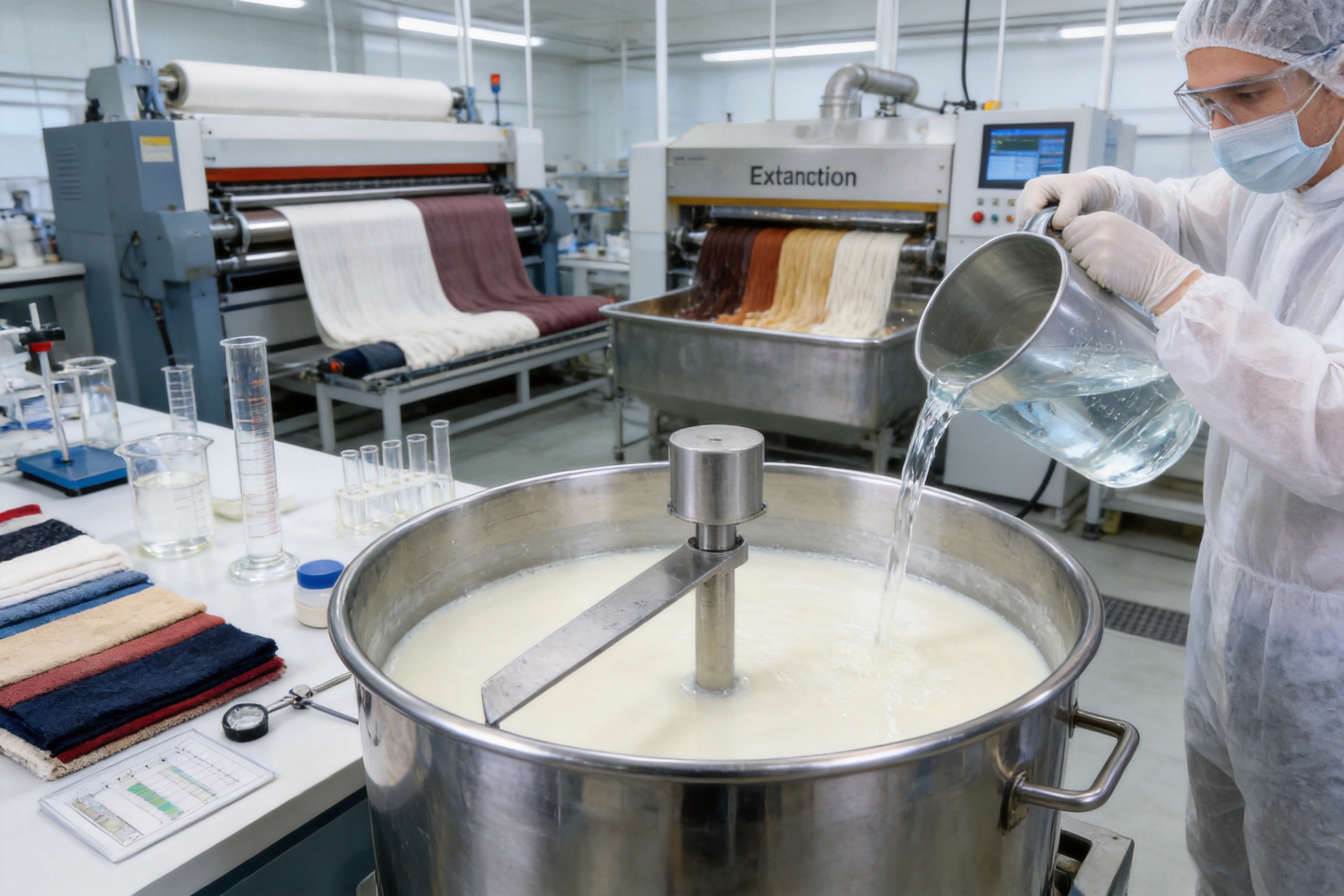
The recommended sequence is as follows. First, add the silicone oil and acid into the reaction kettle. Stir thoroughly for approximately three minutes to achieve initial blending. Next, add 300 kg of water at once. After this initial water addition, reduce the water flow to approximately 100 kg every ten minutes. Continue stirring for about forty minutes.
When the emulsion becomes uniform and demonstrates good fluidity, add the remaining water at once. This sequence is designed to control the formation and development of the emulsion. The gradual addition stage helps the mixture develop sufficient uniformity before the final water quantity is introduced.
Operators should not rely only on time. The end point should also be evaluated by observing appearance, flow, uniformity, and absence of visible separation or large particles. Any change in raw-material lot, water quality, acid concentration, kettle geometry, scraper condition, or agitation speed may influence the result.
Safety procedures must be followed throughout the preparation process. Operators should use suitable personal protective equipment, verify the compatibility of vessel materials, control splashing, and follow the site’s procedures for acid handling, spill response, ventilation, and waste management. The equipment should be inspected before operation, and the mixing speed should be increased only within safe mechanical limits.
8. Manufacturing Process and Quality-Control Strengths
The performance of a textile auxiliary depends on more than its formulation concept. Consistency from batch to batch is essential because textile mills calibrate their processes around predictable product behavior. Variations in active content, ionic character, dispersion stability, viscosity, pH, or impurity level can create visible differences in fabric handle and production efficiency.
The manufacturer behind HN-8100 has operated in the textile-chemical field since 1984 and maintains two production plants with an annual production capacity of 60,000 tons. This scale provides a foundation for organized production scheduling, raw-material management, process standardization, and supply continuity.
Large-scale capacity does not by itself guarantee quality, but it can support a mature manufacturing system when combined with technical controls. Standardized production procedures help reduce variation in charging sequence, reaction or dispersion conditions, mixing time, temperature control, filtration, filling, and packaging.
The company also operates an in-house laboratory and professional research and development team. An internal laboratory can support raw-material inspection, process monitoring, finished-product testing, application trials, and troubleshooting. For customers, this means that product development and technical communication can be connected more directly to actual production experience.
Customized formulation capability is another important strength. Textile producers often require different combinations of softness, hydrophilicity, smoothness, resilience, color protection, antistatic performance, or durability. A manufacturer with formulation and application expertise can evaluate customer requirements and adjust solutions according to fiber type, equipment, end use, and environmental targets.
Integrated supply arrangements can also support more reliable delivery. Textile mills frequently operate under demanding production schedules, and delayed auxiliaries can interrupt dyeing or finishing plans. A coordinated manufacturing and supply network helps reduce avoidable disruptions while supporting repeat orders and long-term cooperation.
8.1 Process control considerations
For a silicone oil such as HN-8100, process control may include checking the identity and quality of incoming raw materials, verifying addition quantities, monitoring mixing conditions, examining appearance, measuring pH, confirming active content, and evaluating dispersion behavior.
Sampling should be performed according to a defined procedure so that laboratory results represent the entire batch. Retained samples can be used for future comparison if a customer reports a change in application behavior. Documentation of batch numbers, production dates, raw-material lots, and release results strengthens traceability.
8.2 Application-oriented quality assurance
Quality assurance should extend beyond basic physical specifications. A textile auxiliary may meet appearance and pH requirements but still perform differently if its dispersion stability or compatibility has changed. Application testing on representative fabrics can therefore provide valuable confirmation.
For HN-8100, an application-oriented release or development program may examine the softness and smoothness produced on polyester/cotton, acrylic, brushed, lace, and polyester-yarn substrates. The purpose is not to impose a single universal performance value, but to verify that the product remains suitable for its intended range of uses.
9. Environmental and Compliance Considerations
Textile brands and manufacturers increasingly require auxiliaries that support responsible chemical management. The product range associated with the manufacturer includes eco-friendly, APEO-free, and formaldehyde-free formulations. These characteristics are important for mills seeking to align their chemical purchasing with customer restricted-substance requirements and international textile expectations.
HN-8100 should be evaluated within the customer’s complete chemical-management system. Compliance is influenced by the full formulation, raw materials, contaminants, packaging, process emissions, wastewater treatment, and the requirements of the specific market or certification program. Customers should request current technical and safety documentation and confirm suitability for their own compliance obligations.
The manufacturer’s stated support for standards and management systems including OEKO-TEX, ISO 14001, and ISO 45001 reflects an orientation toward product safety, environmental management, and occupational health and safety. Textile producers should nevertheless verify the exact scope and status of any applicable certification or declaration before making formal claims on finished goods.
Using a concentrated product may provide logistical advantages because more active material is delivered per unit of product volume. It may reduce packaging and transport requirements in some supply chains, although the actual environmental benefit depends on dosage, shipping distance, packaging design, process efficiency, and waste management.
10. Storage, Packaging, and Handling
HN-8100 is available in 115 kg, 180 kg, or 900 kg plastic drums. The appropriate package size depends on customer consumption, warehouse capacity, handling equipment, and production frequency.
The product should be stored in a cool, well-ventilated warehouse. Containers should remain properly closed when not in use, and the storage area should be protected from excessive heat, direct sunlight, contamination, and incompatible materials. Before production use, operators should inspect the container and confirm the product identification, batch number, and storage period.
The stated shelf life is six months. Stock should be managed according to the first-in, first-out principle where practical. If a product has been stored for an extended period or exposed to unsuitable conditions, it should be examined for changes in appearance, fluidity, separation, odor, or application behavior before use.
When transferring or diluting the product, clean equipment should be used. Residues of strong alkali, anionic surfactants, dyes, or other chemicals may affect dispersion stability. A small compatibility check can prevent larger production problems.
11. How HN-8100 Supports Textile Product Development
Textile development teams often work across multiple fabric categories and customer requirements. A softener that can be applied to both synthetic and blended materials simplifies the development process and provides a common platform for trials.
HN-8100 can help development teams create differentiated hand-feel specifications. For example, one customer may prefer a light and smooth touch, while another may require a dense, full, and fluffy surface. By adjusting concentration, process route, fabric preparation, and drying conditions, the same product family may be evaluated across several target profiles.
The product can also support the development of value-added synthetic textiles. Synthetic fibers are widely used because of their strength, dimensional stability, affordability, and design flexibility. Improving their softness and surface comfort can help manufacturers create products that compete more effectively in apparel, home textiles, and specialty fabric markets.
For blended fabrics, a silicone softener may contribute to a more consistent hand across different fiber components. This can be valuable when the fabric is expected to feel natural, smooth, and comfortable despite containing a high proportion of synthetic material.
Development teams should maintain detailed trial records. Each record should identify the fabric construction, fiber composition, pretreatment history, dyeing conditions, product dosage, dilution method, bath pH, temperature, time, pickup, drying conditions, and final evaluation. Such records make it easier to transfer successful laboratory results to bulk production.
12. Recommended Trial and Evaluation Program
A structured trial program reduces uncertainty and helps determine whether HN-8100 is the best fit for a specific textile article. The following sequence can be used as a general framework.
Stage one: substrate review
Identify the fiber composition, fabric weight, construction, color, surface treatment, and intended end use. Note whether the material is knitted, woven, brushed, raised, open, compact, or yarn-based.
Stage two: laboratory dilution
Prepare the diluted solution using clean water and controlled agitation. The dilution ratio should follow the recommended 1:3 starting guidance unless a technical specialist has approved an alternative procedure. Examine the solution for uniformity before application.
Stage three: dosage screening
Apply low, medium, and high levels within the relevant exhaustion or padding range. Keep other process conditions constant so that the effect of dosage can be evaluated clearly.
Stage four: drying and conditioning
Dry all samples under comparable conditions and allow them to condition before evaluation. Silicone-treated textiles can show different tactile impressions immediately after drying and after reaching equilibrium moisture conditions.
Stage five: performance assessment
Evaluate softness, smoothness, fullness, resilience, surface uniformity, color change, whiteness, shade, dimensional stability, and any odor. For technical fabrics, also assess absorbency, air permeability, friction, sewability, and rewetting behavior where relevant.
Stage six: compatibility confirmation
If HN-8100 will be used with other finishing auxiliaries, conduct a bath compatibility test. Observe whether precipitation, separation, excessive foam, viscosity change, or uneven deposition occurs.
Stage seven: pilot production
Transfer the selected recipe to a pilot or limited production run. Compare the bulk result with the laboratory reference and adjust for machine-specific factors such as liquor circulation, nip pressure, fabric speed, and dryer configuration.
13. Frequently Asked Questions
Q1: What is Extra-Soft Silicone Oil HN-8100 used for?
HN-8100 is a textile finishing auxiliary used to improve softness, smoothness, fullness, fluffiness, and resilient handle. It is suitable for polyester/cotton blends, acrylic fabrics, lace, brushed fabrics, polyester yarn, and other synthetic fiber textiles.
Q2: What does the product look like?
It is supplied as a transparent yellow liquid. This appearance should be used as a general identification reference, while complete quality confirmation should include the applicable product specification and batch documentation.
Q3: What is the ionic character of HN-8100?
HN-8100 is weakly cationic. Compatibility with other auxiliaries should be checked before production use, especially when the finishing bath contains anionic products, residual alkali, detergents, or dyes.
Q4: What is the active content?
The active content is 70% or higher. The concentrated format allows textile mills to prepare working solutions and adjust application levels according to fabric type and desired handle.
Q5: What is the pH value?
The stated pH value is 5–6. The actual working bath should still be tested after dilution and after the addition of any other chemicals.
Q6: Can HN-8100 be used in both exhaustion and padding processes?
Yes. The recommended exhaustion range is 0.6–3% of diluted solution, while the recommended padding range is 0.6–30 g/L of diluted solution. The product is diluted at a ratio of 1:3 as a starting guideline, and the exact dosage should be optimized through trials.
Q7: Is the product suitable for brushed fabrics?
Yes. HN-8100 is suitable for brushed fabrics where a fluffy, soft, smooth, and resilient handle is desired. Trials should confirm that the finish does not excessively flatten or alter the raised surface.
Q8: How should the product be diluted?
The product can be prepared according to the supplied dispersion procedure. The reference process uses silicone oil and acid, followed by controlled water addition, strong agitation, and final addition of the remaining water after the emulsion becomes uniform and fluid.
Q9: What equipment is recommended for large-scale preparation?
The reference procedure specifies a 3-ton dispersion kettle with a scraper. The rotation speed should be set as high as safely possible to support efficient dispersion. Equipment suitability should be confirmed according to the actual plant design and mechanical limits.
Q10: How should HN-8100 be stored?
Store it in a cool, well-ventilated warehouse. Keep containers closed and protect them from excessive heat, direct sunlight, contamination, and incompatible chemicals. The stated shelf life is six months.
Q11: What package sizes are available?
The product is available in 115 kg, 180 kg, or 900 kg plastic drums. Selection depends on consumption, handling systems, warehouse space, and production scale.
Q12: Can HN-8100 be used for eco-conscious textile production?
The manufacturer offers eco-friendly, APEO-free, and formaldehyde-free formulation options within its textile auxiliary portfolio. Customers should review the current technical and compliance documentation for the specific product and confirm suitability for their own restricted-substance and certification requirements.
Q13: How can a mill obtain the best softness?
The best result depends on correct dilution, suitable dosage, bath compatibility, fabric preparation, liquor ratio, application uniformity, drying, and conditioning. A dosage screening trial followed by pilot production is recommended instead of selecting a level solely from a general dosage range.
Q14: Does a higher dosage always produce a better result?
No. Excessive application may produce an undesirable heavy, oily, or uneven handle and may affect other fabric properties. The optimum level is the lowest dosage that achieves the required softness and surface effect while maintaining appearance and process performance.
14. Why Manufacturer Capability Matters
Textile chemical buyers need more than a product name and a basic specification. They need dependable supply, repeatable batches, technical support, packaging options, and the ability to respond when a fabric or process changes. These requirements make the manufacturer’s infrastructure an important part of product value.
The manufacturer of HN-8100 has long-term experience in textile printing and dyeing auxiliaries, two production plants, substantial annual capacity, an in-house laboratory, professional research and development personnel, and customized formulation capability. Together, these resources support a production model that can address both standard products and customer-specific requirements.
Its product portfolio covers pretreatment, dyeing, and finishing auxiliaries, including moisture-wicking agents, repairing agents, low-temperature carriers, silicone oils, silicone softeners, antistatic agents, color-fixing agents, stiffening agents, down-proof and windproof agents, and rubbing-fastness enhancers. This broad portfolio can be valuable to textile mills that prefer to coordinate multiple chemical requirements with one experienced supplier.
Long-term technical cooperation also enables more effective troubleshooting. If a customer experiences uneven softness, bath instability, shade variation, or differences between laboratory and bulk production, a supplier with application knowledge can investigate the complete process rather than focusing only on the product in isolation.
15. Conclusion
Extra-Soft Silicone Oil HN-8100 is a concentrated, weakly cationic silicone oil developed for textile finishing applications requiring a premium combination of softness, smoothness, fullness, fluffiness, and resilience. Its target sensory profile combines a cotton-candy-like fluffy character, a baby-skin-like delicate touch, and a butter-like smooth surface.
The product is suitable for polyester/cotton blends, acrylic fabrics, lace, brushed fabrics, polyester yarn, and other synthetic fiber materials. Its compatibility with exhaustion and padding processes provides practical flexibility for different production lines. With an active content of 70% or higher and a pH value of 5–6, it can be incorporated into controlled finishing programs through appropriate dilution and dosage optimization.
Correct preparation is essential. The recommended process uses controlled water addition, strong and safe agitation, a dispersion kettle with scraper, and visual confirmation that the emulsion has become uniform and sufficiently fluid. Storage in a cool, well-ventilated warehouse and use within the stated six-month shelf life help preserve product quality.
The manufacturer’s long operating history, two production plants, annual production capacity of 60,000 tons, laboratory resources, R&D team, customized formulation capability, and quality-oriented production system provide an important foundation for consistent supply and technical support. For textile producers seeking a versatile softening solution for synthetic and blended fabrics, HN-8100 offers a practical route to improved tactile quality and differentiated fabric performance.
References
1. Product technical information for Extra-Soft Silicone Oil HN-8100, including appearance, ionic character, active content, pH value, applications, dosage guidance, packaging, and storage conditions.
2. Manufacturer-provided preparation procedure for silicone oil dispersion using a 3-ton kettle with scraper, controlled water addition, acid, and high-speed agitation under safe operating conditions.
3. General principles of textile finishing chemistry, including silicone-based surface lubrication, fiber friction reduction, softening, fullness, and handle modification.
4. General textile laboratory practice for evaluating softness, smoothness, resilience, bending behavior, dimensional stability, shade change, and finishing-bath compatibility.
5. General principles of chemical management in textile production, including restricted-substance control, environmental management, occupational safety, and documentation of textile auxiliary performance.
6. Manufacturer information concerning textile printing and dyeing auxiliary production, research and development, laboratory support, production capacity, customized formulation, and eco-conscious formulation options.
Product: Extra-Soft Silicone Oil HN-8100

Contact us
huanannewmaterials@gmail.com
-
 Phone: +86 - 13861620767
-
 Fax: +86-0510-86200939
-
 298 Hongxing Road, Huashi Town, Jiangyin City, Wuxi City, Jiangsu Province, China
Product links
Mobile App
Copyright © Jiangyin Huanan New Materials Technology Co., Ltd. All Rights Reserved

-
huanannewmaterials@gmail.com
-

-

-
+86 - 13861620767