


 English
 中文简体

Advanced Silicone Softener for Soft, Elastic, and Durable Textile Finishing
Content
- 1 1. The Role of Silicone Softeners in Modern Textile Processing
- 2 2. Product Composition and Technical Identity
- 3 3. Distinctive Soft and Loose Hand Feel
- 4 4. Advantages Over Ordinary Terblock Copolymer Silicone Oils
- 5 5. Application in Textile Hand Feel Treatment
- 6 6. Manufacturing Strengths and Technical Capabilities
- 7 7. Environmental and Compliance Positioning
- 8 8. Product Supply, Packaging, and Storage
- 9 9. Integration with a Complete Textile Auxiliary Portfolio
- 10 10. Recommended Evaluation Procedure for Textile Mills
- 10.1 Step One: Define the Target Style
- 10.2 Step Two: Select Representative Fabric
- 10.3 Step Three: Prepare the Emulsion
- 10.4 Step Four: Apply Through the Intended Equipment
- 10.5 Step Five: Evaluate Immediately and After Washing
- 10.6 Step Six: Conduct Compatibility Testing
- 10.7 Step Seven: Confirm Production Economics
- 11 11. Advantages for Different Textile Stakeholders
- 12 12. Questions and Answers
- 12.1 Q1: What is Soft & Loose Silicone Oil HN-8800?
- 12.2 Q2: What type of hand feel does it produce?
- 12.3 Q3: How does it differ from ordinary terblock copolymer silicone oils?
- 12.4 Q4: Is the product compatible with other silicone oils?
- 12.5 Q5: What is the recommended emulsification ratio?
- 12.6 Q6: What pH should be used?
- 12.7 Q7: What is the active content?
- 12.8 Q8: What is the appearance of the product?
- 12.9 Q9: What fabrics can be treated with the product?
- 12.10 Q10: Is it an environmentally positioned product?
- 12.11 Q11: What packaging is available?
- 12.12 Q12: What is the stated shelf life?
- 12.13 Q13: Does a higher concentration always produce a better result?
- 12.14 Q14: Why is pilot testing important?
- 12.15 Q15: What manufacturing strengths support the product?
- 13 13. Overall Assessment
- 14 References
- 15 Product: Soft & Loose Silicone Oil HN-8800
Textile finishing plays a decisive role in how a fabric looks, feels, performs, and retains its quality after repeated use and laundering. Even when a textile has been expertly spun, woven, knitted, dyed, and processed, its commercial value can be limited if the final hand feel is harsh, rigid, flat, or insufficiently comfortable. Modern textile manufacturers therefore require finishing auxiliaries that provide more than basic softness. They need products that can deliver a balanced combination of softness, elasticity, fullness, drape, wrinkle resistance, wash durability, compatibility, and environmental responsibility.
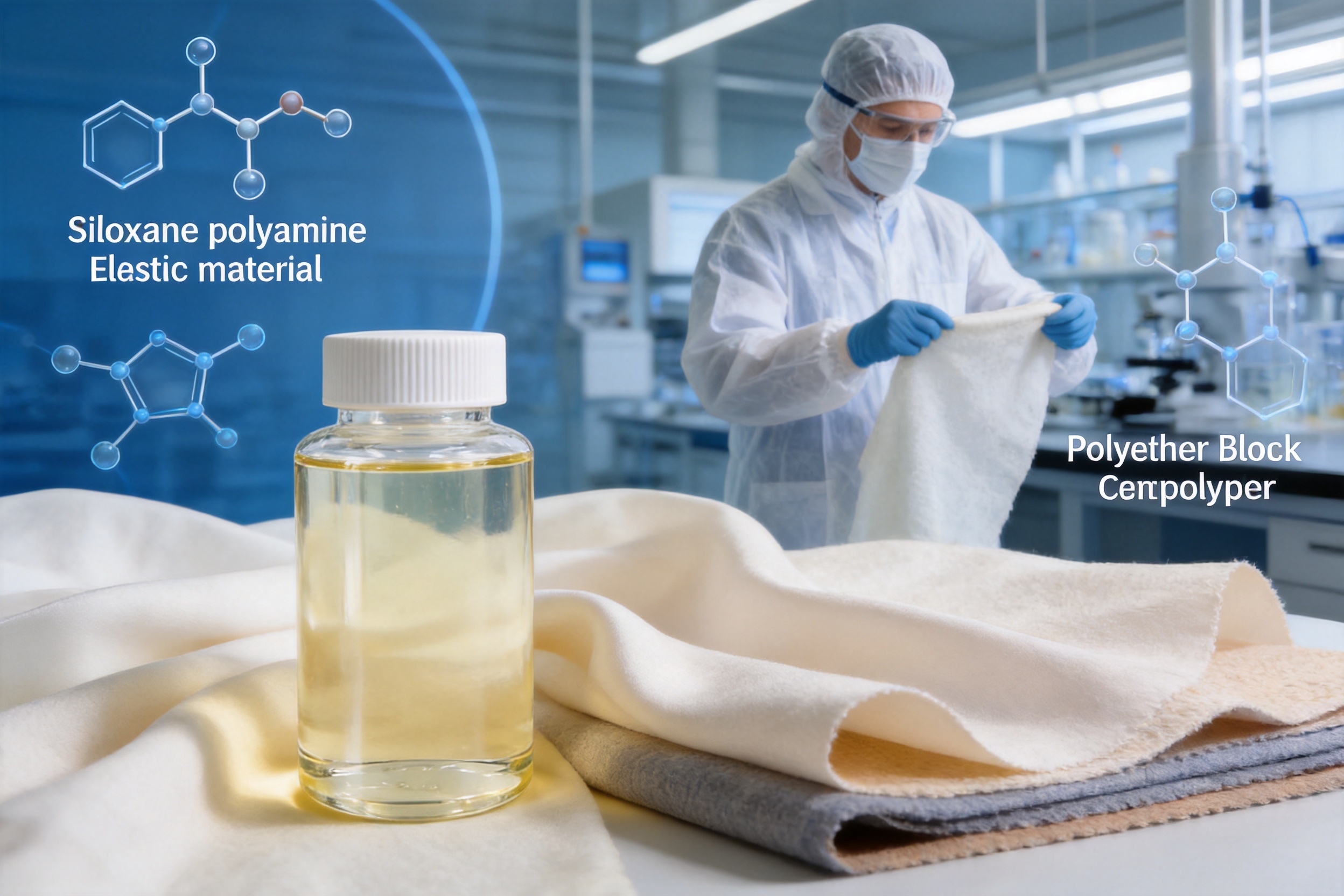
Soft & Loose Silicone Oil HN-8800 is a high-concentration cationic silicone softener developed for this purpose. The product is based on a combination of siloxane, polyamine, a high-elasticity special material, and a polyether block copolymer. This formulation is designed to create a soft, loose, and elastic hand feel across a wide range of textile substrates. It is particularly suitable for mills and finishing houses seeking a more advanced alternative to ordinary silicone oils or conventional terblock copolymer silicone products.
The product has been developed over a period of more than four years. This extended development process reflects the technical challenges involved in combining softness, elasticity, compatibility, stability, and durability within one concentrated finishing material. Rather than focusing only on an immediately soft surface, the formulation is designed to support a more complete finishing effect, including improved drapability, fullness, thickness, wrinkle resistance, and washing resistance.
Manufactured by Jiangyin Huanan New Materials Technology Co., Ltd., the product forms part of a broader portfolio of textile printing and dyeing auxiliaries. The manufacturer has operated since 1984 and has developed capabilities in research, formulation, production, testing, quality control, and customized textile chemical solutions. With two production plants and an annual production capacity of 60,000 tons, the company is positioned to support both standard commercial supply and the technical requirements of larger textile production programs.
This article examines the formulation characteristics, performance advantages, application method, manufacturing strengths, quality approach, environmental positioning, and practical value of Soft & Loose Silicone Oil HN-8800.
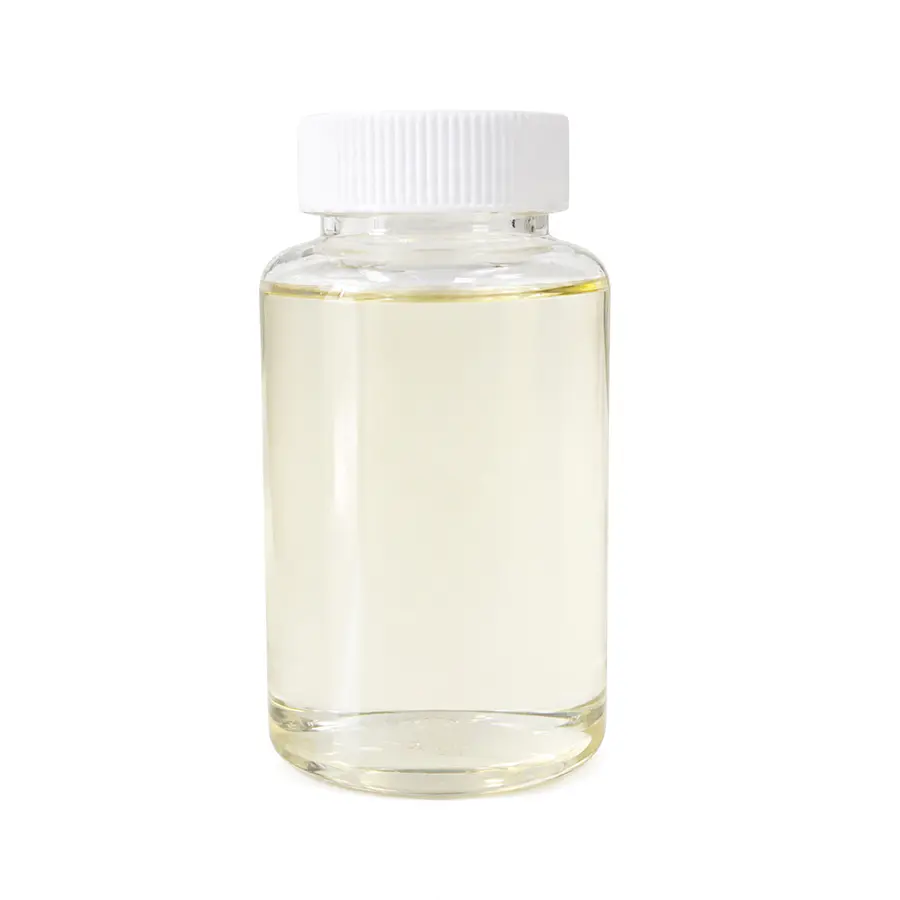
Soft & Loose Silicone Oil HN-8800
1. The Role of Silicone Softeners in Modern Textile Processing
Silicone softeners are widely used in textile finishing because silicone-based materials can spread effectively over fiber surfaces and create a smooth, lubricated, and comfortable touch. They can reduce surface friction, improve flexibility, and make fabrics feel more pleasant against the skin. Depending on the chemistry, silicone products may also contribute to resilience, sewability, drape, surface smoothness, and resistance to creasing.
However, not all silicone softeners produce the same result. A basic softener may provide an initial slippery sensation while failing to create fullness or elasticity. Another product may provide strong softness but leave the fabric overly greasy, too flat, or insufficiently durable after washing. Some products may be difficult to emulsify, incompatible with other auxiliaries, or sensitive to changes in pH, concentration, temperature, and processing conditions.
These challenges are particularly important in the production of apparel, knitted fabrics, home textiles, functional fabrics, synthetic fiber blends, and premium fabrics where consumers evaluate quality directly through touch and appearance. A successful finishing agent must therefore be selected according to the desired style, fiber type, dyeing system, application equipment, and durability requirements.
Soft & Loose Silicone Oil HN-8800 is designed to address this broader set of requirements. Its purpose is not limited to creating a soft surface. The formulation is intended to provide a distinctive combination of softness and looseness, together with a Q-elastic hand feel. In practical terms, this means the fabric can feel soft and resilient rather than merely slick or coated.
2. Product Composition and Technical Identity
Soft & Loose Silicone Oil HN-8800 is described as a siloxane, polyamine, high-elasticity special material, and polyether terblock copolymer system. Each component contributes to the overall finishing behavior of the product.
Siloxane Structure
Siloxane chemistry is associated with low surface tension, smoothness, flexibility, and effective fiber surface coverage. These characteristics enable silicone softeners to spread across textile fibers and reduce the roughness that can remain after wet processing. The siloxane component supports a smooth hand feel and helps create the characteristic softness expected from a silicone-based finishing agent.
Polyamine Contribution
The polyamine component supports the cationic character of the product and contributes to the attraction of the finishing material to many textile surfaces. Cationic softeners are commonly used in textile finishing because they can deposit effectively onto fibers under suitable processing conditions. The polyamine structure can also contribute to the overall balance between softness, substantivity, and durability.
High-Elasticity Special Material
The high-elasticity component is important for the product’s Q-elastic style. Conventional softeners may make fabric smooth but may not create a springy, resilient, or lively touch. By incorporating a material intended to support elasticity, HN-8800 is designed to produce a softer and more flexible textile surface without the harsh or overly rigid feel that can occur with some polyurethane-type elastic silicone oils.
Polyether Block Copolymer
The polyether block copolymer contributes to the advanced character of the formulation. Polyether segments can support compatibility, dispersibility, and the handling characteristics of a concentrated finishing product. In a terblock copolymer system, the structure is intended to balance different performance requirements that would otherwise be difficult to achieve with a single chemical component.
The active content of HN-8800 is listed as 70% or higher. This high active content allows the product to be transported and stored as a concentrated material before being emulsified to the required working concentration. Concentrated products can offer logistical advantages because users may adjust the final treatment concentration according to fabric type, shade, equipment, and desired hand feel.
Technical Property |
Specification or Description |
Product name |
Soft & Loose Silicone Oil HN-8800 |
Product category |
Silicone softener |
Appearance |
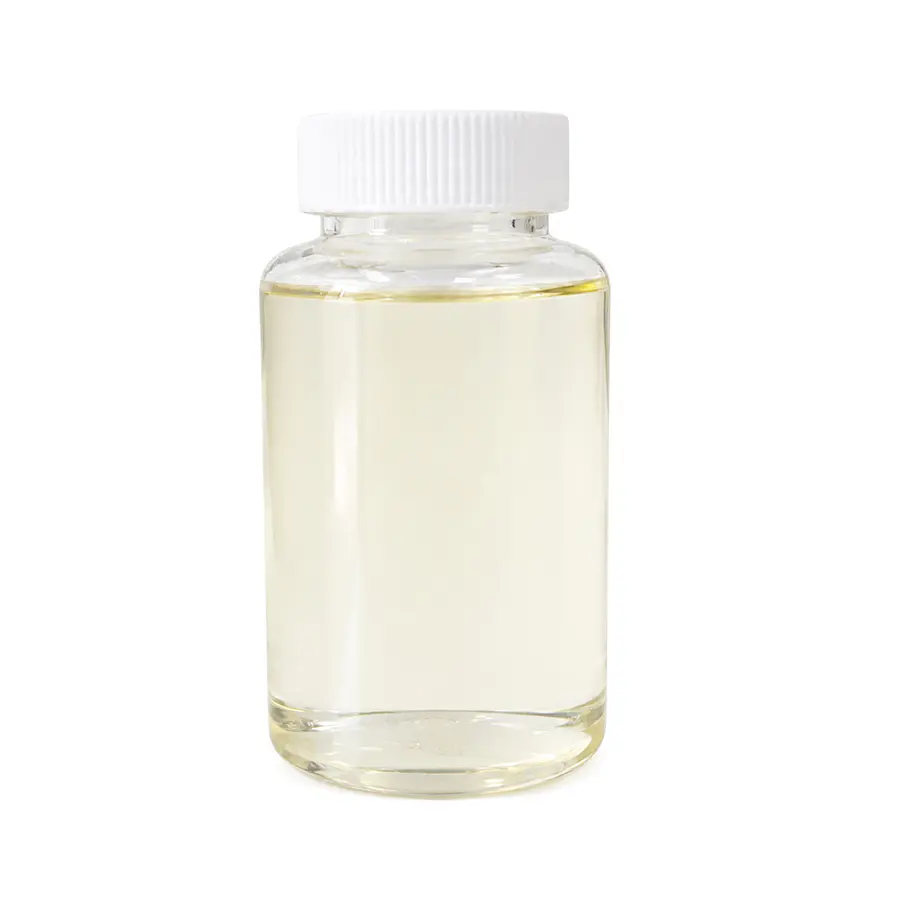
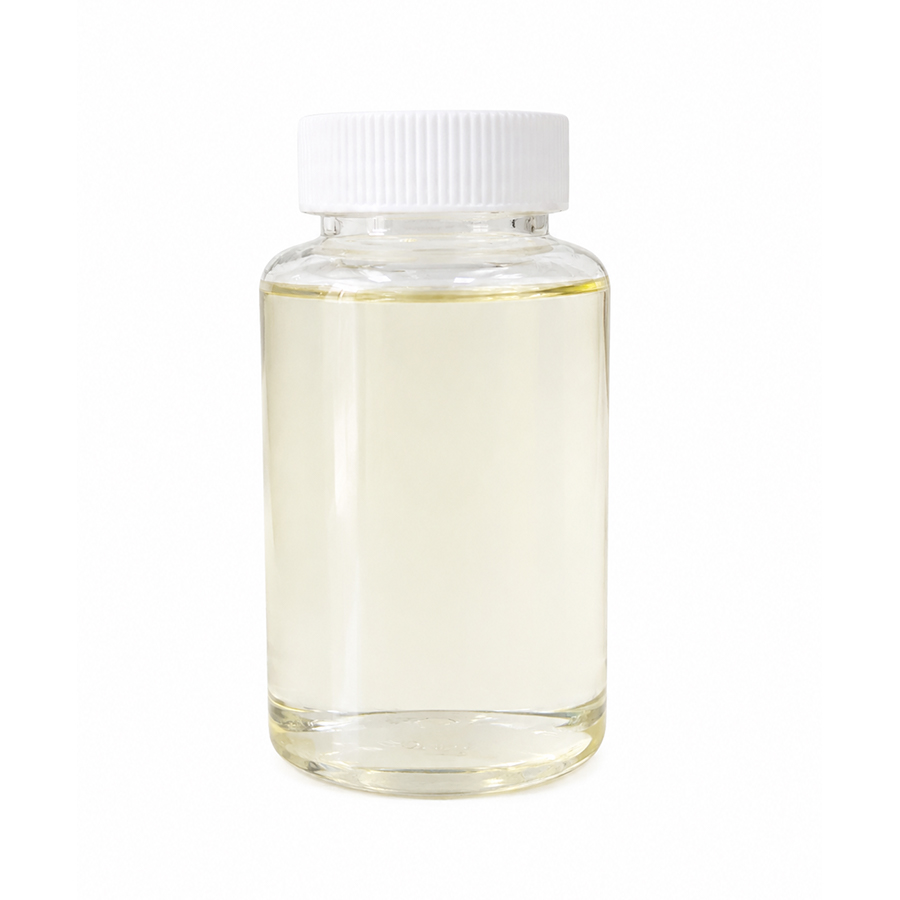
Light yellow transparent liquid |
Ionicity |
Cationic |
Main components |
Siloxane, polyamine, high-elasticity special material, and polyether block copolymer |
Active content |
70% or higher |
Intended use |
Hand feel style treatment for various fabrics |
Packaging |
120 kg or 180 kg plastic drums, with special packaging available when required |
Stated shelf life |
Six months |
3. Distinctive Soft and Loose Hand Feel
The principal benefit of HN-8800 is its ability to produce a soft and loose hand feel. These two characteristics are related but not identical. Softness usually refers to the ease with which a fabric bends and the pleasant sensation created when it is touched. Looseness suggests a more relaxed, flexible, and flowing character in the textile structure.
A fabric can be soft but still feel compressed, flat, or rigid. Conversely, a fabric can feel loose but lack smoothness or comfort. The formulation of HN-8800 is intended to combine both effects, creating a textile that feels comfortable, flexible, and naturally relaxed.
This is valuable for fabrics used in garments, bedding, casualwear, underwear, sportswear, lightweight outerwear, and other applications where touch is a major purchasing factor. The finishing effect can help transform a basic textile surface into one with a more premium sensory profile.
The Q-elastic hand feel is another important feature. The term describes a soft, resilient, and responsive touch rather than a simple oily slip. When a fabric is compressed or folded, a Q-elastic effect may give the material a livelier and more spring-like response. This type of hand feel can be particularly attractive in knitted fabrics and synthetic fiber blends, where manufacturers want softness without sacrificing body or recovery.
4. Advantages Over Ordinary Terblock Copolymer Silicone Oils
HN-8800 has been developed to improve on several common limitations associated with ordinary terblock copolymer silicone oils. The stated advantages include better Q-elastic feel, improved drapability, stronger wrinkle resistance, greater fullness, increased thickness, better washing resistance, and better compatibility.
4.1 Better Q-Elastic Feel
Some general polyurethane elastic silicone oils can produce a harsh, rigid, or insufficiently natural hand feel. While they may contribute to elasticity, the resulting surface may not feel soft and comfortable. HN-8800 is designed to solve this problem by combining elasticity with a softer and more flexible sensory effect.
The result is intended to be a balanced hand feel in which the fabric remains lively and resilient while also being smooth and pleasant. This distinction can be important for fabric buyers who reject products that feel hard, plastic-like, or overly coated.
4.2 Improved Drapability
Drapability describes the way fabric falls, folds, and hangs under its own weight. Good drape is essential for dresses, skirts, scarves, lightweight shirts, home furnishings, and many fashion fabrics. A finishing product that improves drape can help the textile form softer folds and create a more attractive visual appearance.
HN-8800 is designed to improve drapability by reducing excessive surface stiffness and supporting a more flexible fiber-to-fiber interaction. The fabric can therefore appear more fluid and move more naturally. Improved drape may also enhance the perceived quality of a fabric even when the base construction remains unchanged.
4.3 Better Wrinkle Resistance
Wrinkles may develop during garment use, folding, transportation, storage, or laundering. Although wrinkle behavior depends on the fiber, fabric construction, and other finishing treatments, a suitable silicone softener can support a smoother appearance and more flexible recovery.
HN-8800 is promoted as offering better wrinkle resistance than ordinary terblock copolymer silicone oils. This characteristic can be valuable for apparel and household textiles where a neat appearance is expected. The product should still be evaluated together with the complete finishing recipe because wrinkle performance is influenced by resin systems, mechanical finishing, drying conditions, fiber morphology, and fabric weight.
4.4 Greater Fullness
Fullness is the perception that a textile has body, volume, and substance. A softener that creates only surface slipperiness may leave the material feeling thin or empty. HN-8800 is designed to provide greater fullness, which can give fabrics a more substantial and premium touch.
This benefit is especially relevant for lightweight fabrics, knitted structures, and textiles that need a comfortable but not flimsy character. Fullness can also improve the way a garment holds its shape and how a fabric responds during handling.
4.5 Increased Thickness and Body
In textile finishing, perceived thickness does not necessarily mean that the physical thickness of the fabric has dramatically changed. It can also refer to the way the fabric feels when compressed, folded, or rubbed between the fingers. A formulation that increases perceived thickness and body can make a fabric feel richer and more valuable.
HN-8800 is designed to support this type of enhanced body. Its combination of silicone and elastic components can contribute to a fuller tactile response while maintaining softness and flexibility.
4.6 Better Washing Resistance
Durability after laundering is a central concern in modern textile production. Consumers expect softness and comfort to remain after repeated washing, while manufacturers seek to reduce complaints related to loss of finish, harshness, or uneven appearance.
HN-8800 is described as having better washing resistance compared with ordinary terblock copolymer silicone oils. The actual durability will depend on the fiber type, application concentration, drying conditions, curing or fixation conditions where applicable, and the washing method. Nevertheless, improved wash resistance can help manufacturers develop more durable value-added finishing programs.
4.7 Better Compatibility
Compatibility is a practical advantage during production. A finishing product may be used alongside other silicone oils, softeners, wetting agents, antistatic agents, resins, or specialty auxiliaries. If the components are incompatible, the bath may become unstable, form deposits, separate, or produce uneven results on the fabric.
HN-8800 is described as having excellent compatibility with all types of silicone oils. This gives finishers greater flexibility when developing blended or multi-stage treatment recipes. Compatibility should always be confirmed through laboratory testing because actual behavior depends on the specific products, concentrations, water quality, pH, temperature, and order of addition.
5. Application in Textile Hand Feel Treatment
Soft & Loose Silicone Oil HN-8800 is intended for hand feel style treatment of various fabrics. It can be considered for woven and knitted materials, synthetic fibers, blended textiles, and other substrates where a soft, loose, elastic, and fuller hand feel is required.
The product can be selected when the target style includes several of the following characteristics:
Soft and comfortable surface touch.
Loose and flexible fabric behavior.
Q-elastic or spring-like hand feel.
Improved drape and flowing movement.
Greater fullness and perceived thickness.
Improved resistance to wrinkles.
Better retention of finishing performance after washing.
Compatibility with other silicone-based finishing products.
Because textile constructions vary significantly, the ideal application level should be established through laboratory trials. A lightweight knitted fabric may require a different treatment concentration from a dense woven fabric. Fiber chemistry, dye class, pretreatment history, residual electrolyte, fabric pH, and drying equipment can also affect the final result.
Recommended Emulsification Approach
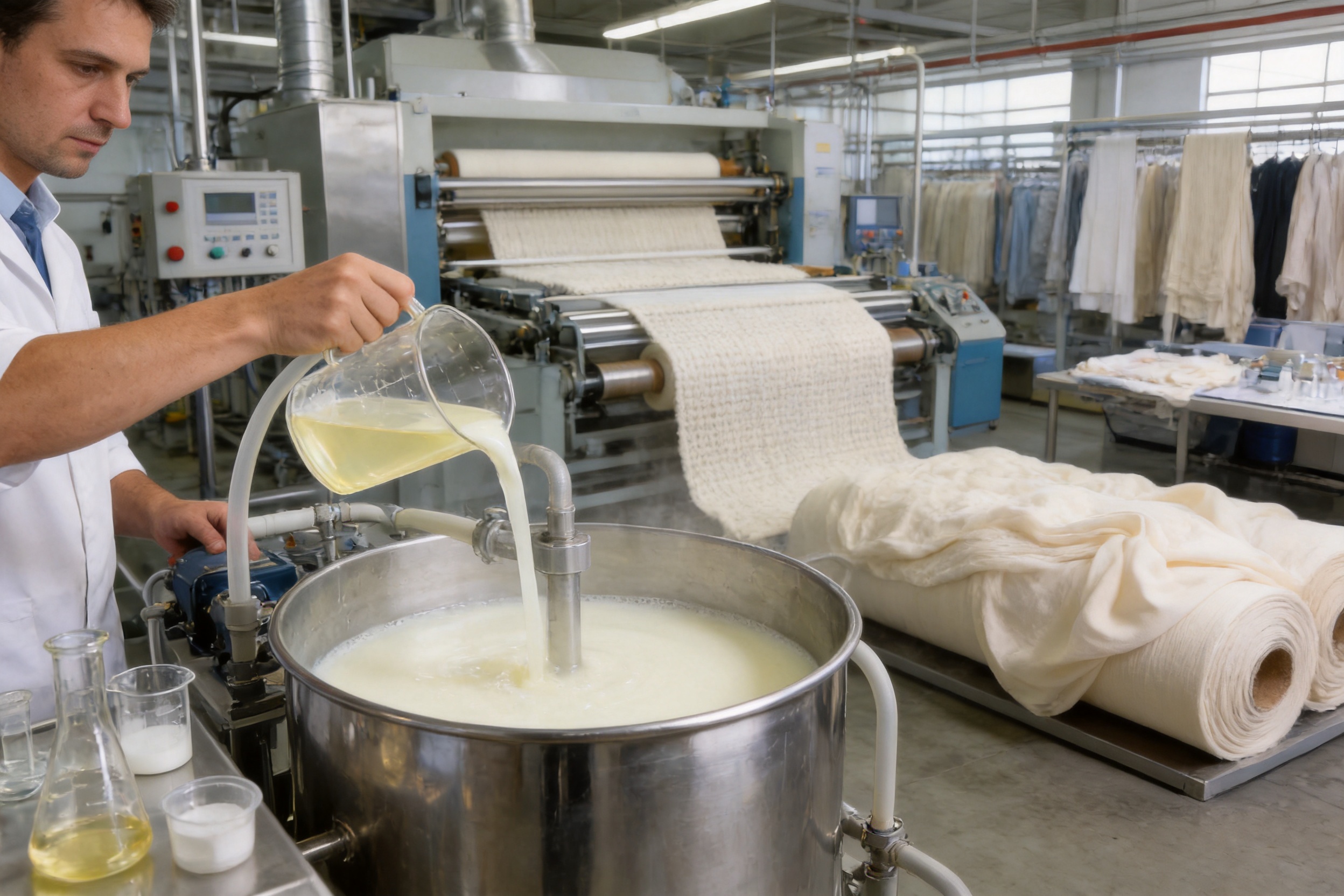
The supplied technical information recommends emulsifying HN-8800 at a ratio of HN-8800 to emulsifier of 9.5:0.5. This ratio may be increased or decreased according to the desired result and the specific processing conditions. After emulsification, the product can be diluted to the required working concentration.
The pH should be adjusted to approximately 6. Maintaining an appropriate pH is important because ionic textile auxiliaries can be sensitive to bath conditions. A controlled pH helps support application stability and may reduce the risk of uneven deposition or unexpected interaction with other components.
In practice, users should add the emulsifier and silicone oil according to a controlled mixing procedure rather than making rapid additions into a small volume of water. Gradual dilution, adequate agitation, and appropriate temperature control can help produce a more uniform working emulsion. The exact procedure should be verified by the user’s technical team and adjusted to the available equipment.
Application Stage |
Recommended Consideration |
Product preparation |
Check appearance, packaging integrity, shelf life, and batch identification before use. |
Emulsification ratio |
Begin with an HN-8800 to emulsifier ratio of 9.5:0.5 as a development reference. |
Working concentration |
Dilute to the concentration required for the fabric, equipment, and target hand feel. |
pH control |
Adjust the working bath to approximately pH 6. |
Compatibility testing |
Test before combining with other silicone oils or textile auxiliaries. |
Process evaluation |
Assess softness, elasticity, fullness, drape, appearance, and wash durability. |
Production approval |
Confirm pilot-scale results before full-scale application. |
6. Manufacturing Strengths and Technical Capabilities
The performance of a textile auxiliary depends not only on its chemical concept but also on the manufacturer’s ability to reproduce that concept consistently. Raw material selection, reaction control, blending, emulsification technology, storage management, quality testing, packaging, and technical service all influence the reliability of the final product.
Jiangyin Huanan New Materials Technology Co., Ltd. was established in 1984 and is located in Jiangyin City, Jiangsu Province, China. Its long operating history provides experience in textile chemicals and industrial production. The company focuses on the research, development, production, and sales of high-performance textile printing and dyeing auxiliaries.
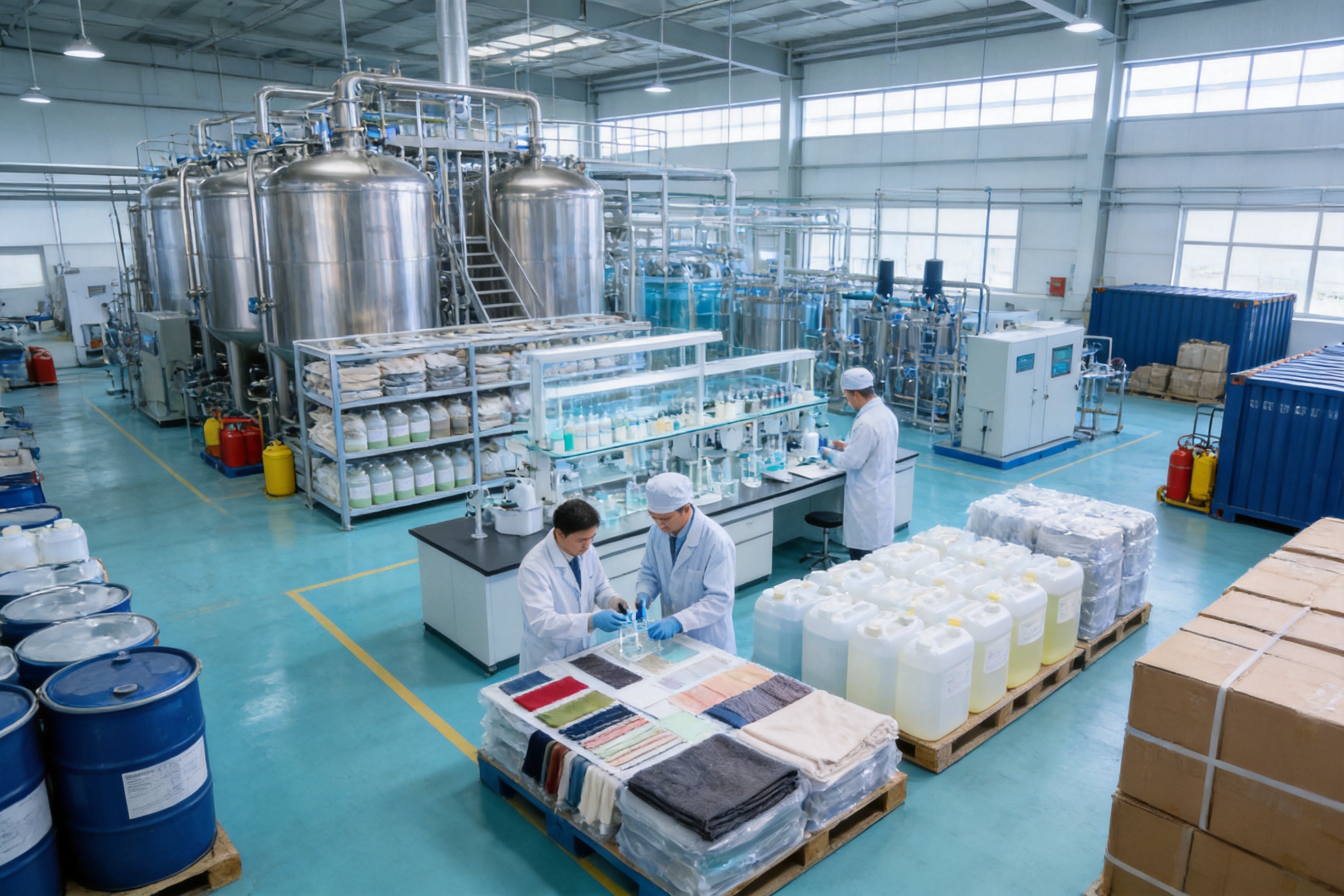
The company operates two production plants and has an annual production capacity of 60,000 tons. This production scale supports supply continuity and provides a foundation for serving customers with different order sizes. Large-scale manufacturing can also help establish standardized procedures for raw material handling, production scheduling, quality inspection, and batch release.
Research and Development
The development of HN-8800 over more than four years demonstrates the importance of systematic formulation work. Advanced silicone softeners often require the optimization of multiple variables, including molecular structure, ionic character, active content, emulsification behavior, compatibility, deposition, softness, elasticity, and resistance to washing.
An in-house laboratory and professional research and development team allow the manufacturer to study these variables in a controlled setting. Laboratory capabilities are also valuable for comparing new formulations with existing products, assessing fabric hand feel, evaluating bath stability, and adjusting formulations for specific textile applications.
Customized Formulation Capability
Textile manufacturers do not all require the same finishing effect. One customer may need a soft and loose knitted hand feel, while another may prioritize drape, fullness, wash durability, or compatibility with an existing silicone system. A manufacturer with customized formulation capabilities can work toward the technical and commercial requirements of a particular production program.
Customization may involve adjusting concentration, application recommendations, compatibility guidance, packaging, or product selection within a broader auxiliary portfolio. It may also involve technical discussion of the customer’s fabric construction, processing route, target market, and restricted substance requirements.
Standardized Production
Standardized production is essential for maintaining consistency between batches. Important controls may include approved raw material specifications, controlled addition sequences, mixing and reaction parameters, filtration, storage conditions, inspection procedures, and documented release criteria.
For a concentrated silicone product, consistent appearance, active content, ionic behavior, and emulsification performance are especially important. Variations in these properties can affect the final hand feel and process stability. A standardized production system helps reduce such variation and supports more predictable customer trials.
Quality Control
Quality control should cover incoming materials, in-process production, finished product testing, packaging, labeling, and retained samples. For textile auxiliaries, testing may include appearance, active content, pH behavior, emulsion stability, compatibility, and application performance.
Quality control is most valuable when it is connected to actual textile performance. A product may meet basic physical specifications but still require application testing to confirm that the desired softness, fullness, drape, and elasticity are achieved on a particular fabric. The manufacturer’s laboratory and technical team can support this connection between chemical testing and textile evaluation.
7. Environmental and Compliance Positioning
Environmental and regulatory considerations have become central to textile chemical purchasing. Brands, retailers, manufacturers, and consumers increasingly expect textile auxiliaries to support restricted substance management, safer production, and responsible supply chains.
HN-8800 is described as environmentally friendly, free from prohibited chemicals, and compliant with EU Oeko-TEX 100 standards. This positioning is relevant for textile producers supplying markets where chemical restrictions and product safety requirements are carefully monitored.
The company’s broader product portfolio includes eco-friendly, APEO-free, and formaldehyde-free formulations. These options can help textile manufacturers design finishing systems that address customer specifications and international environmental expectations. However, compliance should always be verified for the specific product batch, application, and current customer standard. Textile producers should maintain appropriate documentation and perform their own restricted substance checks where required.
Environmental responsibility also includes production management. The company’s stated support for ISO 14001 and ISO 45001 reflects attention to environmental management and occupational health and safety systems. Such management frameworks can help organize environmental objectives, workplace controls, emergency procedures, continual improvement, and risk management.
For textile mills, using an environmentally positioned auxiliary may contribute to a more responsible finishing program, but product selection should be part of a broader approach. Water consumption, energy use, wastewater treatment, packaging, transport, chemical dosing accuracy, and process efficiency all influence the environmental profile of textile production.
8. Product Supply, Packaging, and Storage
HN-8800 is supplied in 120 kg or 180 kg plastic drums, with special packaging available according to customer requirements. Packaging selection should take into account handling equipment, storage space, order volume, transport conditions, and the user’s dosing system.
The stated shelf life is six months. Users should store the product according to the manufacturer’s technical guidance and protect it from unsuitable temperature conditions, contamination, direct exposure, and unnecessary mechanical damage. The packaging should remain closed when the material is not being used.
Before production use, customers should check the product name, batch number, manufacturing date, appearance, packaging integrity, and documentation. If a material has been stored for an extended period or under uncertain conditions, a small-scale inspection and application trial is advisable before full production.
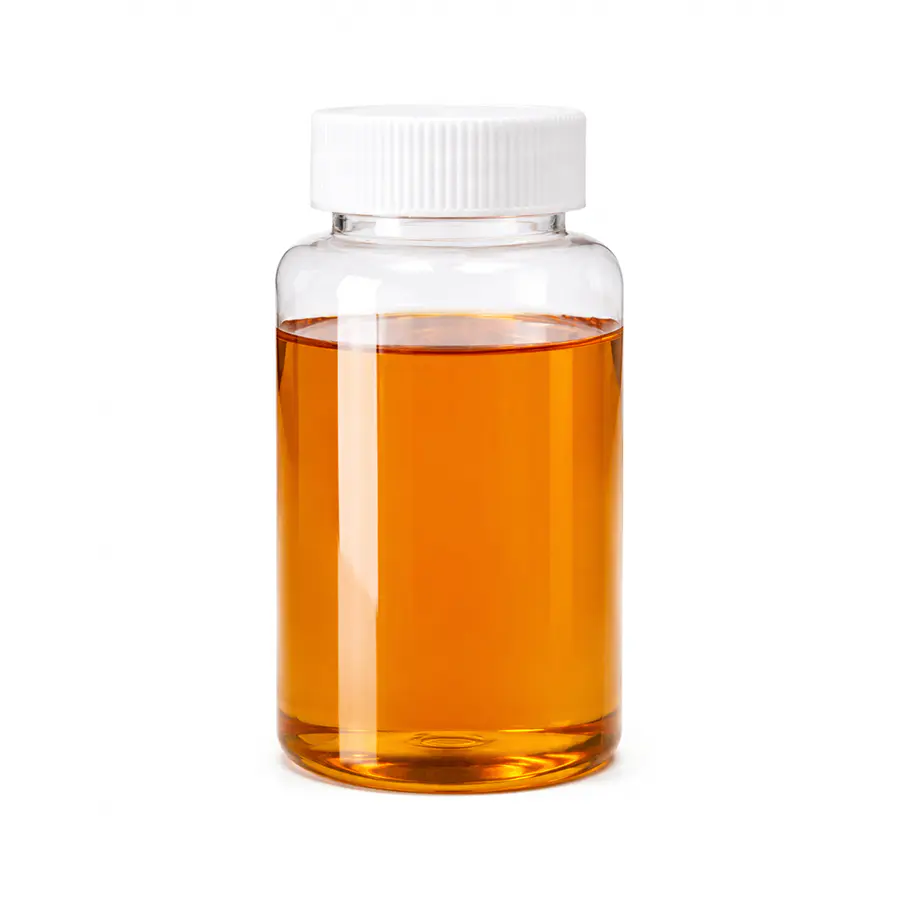
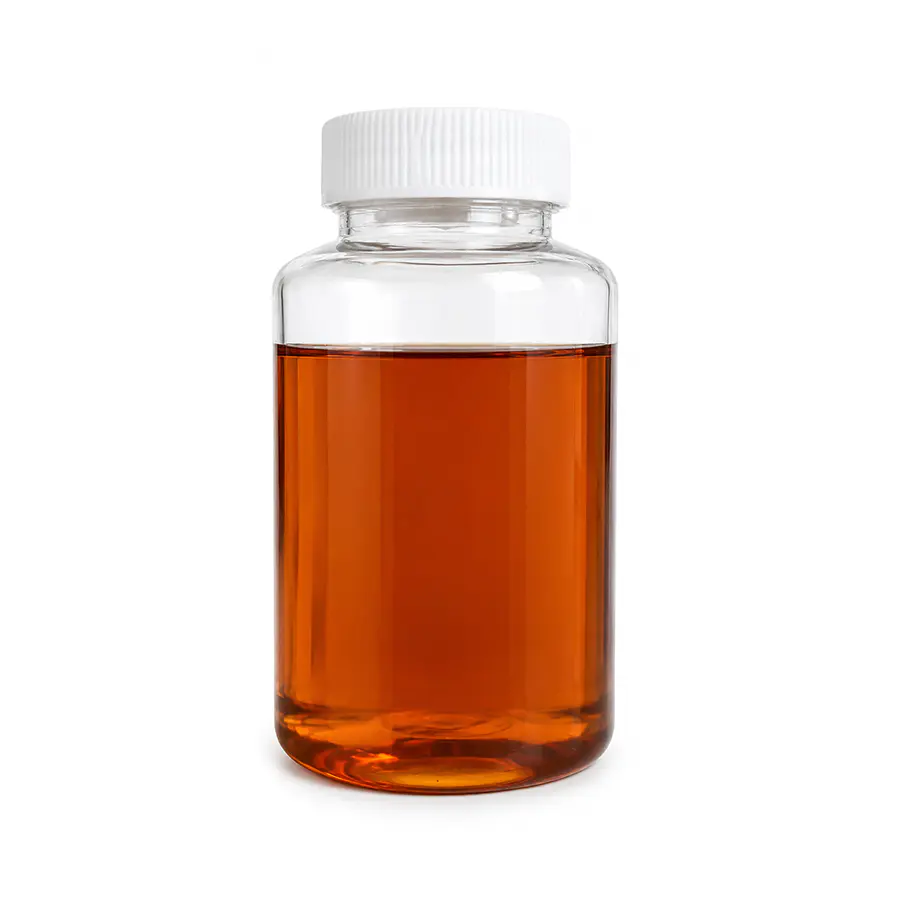
The light yellow transparent liquid appearance provides a useful visual reference. Any unusual cloudiness, separation, foreign matter, significant thickening, or unexpected color change should be investigated before use. Appearance alone is not sufficient to confirm product quality, but it can provide an initial indication that further testing may be needed.
9. Integration with a Complete Textile Auxiliary Portfolio
HN-8800 is one product within a wider range of textile printing and dyeing auxiliaries. Jiangyin Huanan New Materials Technology Co., Ltd. also supplies moisture-wicking finishing agents, high-concentration repairing agents, low-temperature environmentally friendly carriers, silicone oils and silicone softeners, antistatic agents, color-fixing agents, stiffening agents, down-proof and windproof agents, and dry and wet rubbing fastness enhancers.
This broad portfolio can be beneficial to textile producers that prefer to coordinate multiple auxiliary requirements with one experienced supplier. Different stages of textile processing often influence one another. Pretreatment affects dyeing uniformity, dyeing affects shade and fastness, and finishing affects touch, appearance, comfort, and performance.
A supplier with knowledge across pretreatment, dyeing, and finishing may be better positioned to help identify interactions between products. For example, a softener may need to be selected with consideration for residual anionic materials, fixing agents, water quality, or the performance requirements of a moisture-wicking finish. Technical coordination can help reduce trial-and-error during recipe development.
The company’s integrated supply network is also intended to support consistency and customer service. For export-oriented textile manufacturers, dependable supply, clear documentation, repeatable quality, and responsive technical communication can be as important as the initial product performance.
10. Recommended Evaluation Procedure for Textile Mills
Before introducing HN-8800 into full-scale production, textile mills should carry out a structured evaluation. The purpose is to confirm not only that the product creates the desired hand feel, but also that it fits the complete process and quality requirements of the fabric.
Step One: Define the Target Style
The technical team should describe the desired finish in practical terms. The target may include softness, loose touch, Q-elasticity, drape, fullness, thickness, wrinkle resistance, wash durability, or a combination of these properties. Clear targets make comparison and optimization more objective.
Step Two: Select Representative Fabric
Trials should use fabric that represents normal production. Fiber content, construction, weight, color, dye class, pretreatment history, and residual chemistry should be recorded. Results from one fabric should not automatically be transferred to all other fabrics.
Step Three: Prepare the Emulsion
Begin with the recommended HN-8800 to emulsifier ratio of 9.5:0.5 and adjust the pH to approximately 6. The laboratory should document water quality, mixing time, temperature, order of addition, and final concentration. Any visible instability should be recorded.
Step Four: Apply Through the Intended Equipment
The selected application method should reflect the planned industrial process. Relevant systems may include padding, exhaustion, spraying, or other suitable finishing techniques. The same product can produce different results depending on wet pickup, liquor ratio, fabric speed, drying, and curing conditions.
Step Five: Evaluate Immediately and After Washing
Assess the treated fabric after conditioning under controlled conditions. Evaluation should include softness, smoothness, elasticity, fullness, drape, thickness, appearance, and any undesirable surface effect. Washing tests should then be performed to examine the retention of the finishing effect.
Step Six: Conduct Compatibility Testing
If HN-8800 will be combined with other silicone oils or auxiliaries, compatibility testing should be completed before production. The test should observe bath clarity or uniformity, separation, deposits, foam, viscosity changes, and fabric performance.
Step Seven: Confirm Production Economics
Technical performance should be considered together with active content, dosage, process efficiency, packaging, storage, and waste. A concentrated material may provide value when it achieves the required effect at an efficient use level, but the final cost should be calculated using the actual production recipe.
11. Advantages for Different Textile Stakeholders
For Textile Mills
Textile mills can use HN-8800 to develop a wider range of hand feel styles without relying solely on mechanical finishing. Its compatibility with silicone oils may provide flexibility when integrating the product into existing recipes. The concentration of 70% or higher also offers a basis for controlled dilution and application adjustment.
For Dyeing and Finishing Houses
Dyeing and finishing houses often serve multiple customers with different expectations. A softener that can provide softness, looseness, elasticity, fullness, and drape allows finishers to create differentiated textile styles. The ability to adjust the emulsification ratio and working concentration can support recipe development across different fabric types.
For Garment and Home Textile Brands
Brands and product developers are increasingly concerned with both sensory quality and durability. A finish that feels attractive during initial inspection but disappears quickly after washing may not satisfy end users. HN-8800 is designed to support a more durable hand feel while also addressing environmental and compliance expectations.
For Export-Oriented Manufacturers
Export-oriented manufacturers may benefit from a supplier that understands international environmental standards and provides products positioned for global textile markets. The company’s stated compliance approach, laboratory support, production capacity, and broader auxiliary portfolio can help customers manage technical and supply requirements more effectively.
12. Questions and Answers
Q1: What is Soft & Loose Silicone Oil HN-8800?
It is a concentrated cationic silicone softener for textile hand feel treatment. Its main components include siloxane, polyamine, a high-elasticity special material, and a polyether block copolymer.
Q2: What type of hand feel does it produce?
The product is designed to create a soft, loose, and Q-elastic hand feel. It is also intended to improve drapability, fullness, perceived thickness, wrinkle resistance, and washing resistance.
Q3: How does it differ from ordinary terblock copolymer silicone oils?
According to the supplied product information, it offers better Q-elastic feel, drapability, wrinkle resistance, fullness, thickness, washing resistance, and compatibility. It is specifically designed to avoid the harsh and rigid hand feel that may occur with some general polyurethane elastic silicone oils.
Q4: Is the product compatible with other silicone oils?
The product is described as having excellent compatibility with all types of silicone oils. Nevertheless, users should conduct a laboratory compatibility test before combining products in production.
Q5: What is the recommended emulsification ratio?
The recommended starting ratio is HN-8800 to emulsifier at 9.5:0.5. The ratio may be increased or decreased according to the desired concentration and application requirements.
Q6: What pH should be used?
The technical information recommends adjusting the emulsion or working bath to approximately pH 6.
Q7: What is the active content?
The active content is listed as 70% or higher.
Q8: What is the appearance of the product?
HN-8800 is described as a light yellow transparent liquid.
Q9: What fabrics can be treated with the product?
It is intended for hand feel style treatment of various fabrics. The exact suitability should be confirmed through trials using the intended fiber, construction, color, and processing route.
Q10: Is it an environmentally positioned product?
The product is described as environmentally friendly, free from prohibited chemicals, and compliant with EU Oeko-TEX 100 standards. Users should still confirm current documentation and customer-specific requirements before commercial application.
Q11: What packaging is available?
The standard packaging is 120 kg or 180 kg plastic drums. Special packaging may be available according to customer requirements.
Q12: What is the stated shelf life?
The stated shelf life is six months. Storage conditions and packaging integrity should be controlled throughout the storage period.
Q13: Does a higher concentration always produce a better result?
Not necessarily. The optimum concentration depends on fabric type, desired hand feel, application equipment, wet pickup, drying conditions, and the complete finishing recipe. Excessive dosage may create an undesired surface effect or reduce process efficiency, so laboratory optimization is recommended.
Q14: Why is pilot testing important?
Pilot testing confirms whether the product performs as expected on the actual fabric and under the intended production conditions. It also helps identify compatibility, pH, concentration, drying, and washing durability requirements before full-scale production.
Q15: What manufacturing strengths support the product?
The manufacturer has operated since 1984, maintains two production plants, has an annual production capacity of 60,000 tons, and provides in-house laboratory, research and development, customized formulation, standardized production, quality control, and integrated supply capabilities.
13. Overall Assessment
Soft & Loose Silicone Oil HN-8800 is positioned as an advanced silicone softener for textile manufacturers seeking a more complete finishing effect than basic softness alone. Its formulation combines siloxane, polyamine, high-elasticity material, and polyether block copolymer to support a distinctive soft, loose, and Q-elastic hand feel.
The principal competitive advantages are its stated improvements over ordinary terblock copolymer silicone oils. These include better drape, fullness, thickness, wrinkle resistance, washing resistance, and compatibility, together with a softer elastic effect intended to avoid harshness and rigidity.
The product’s practical value is strengthened by its high active content, adjustable emulsification approach, cationic character, compatibility with silicone oils, and suitability for a range of fabric hand feel treatments. Its environmental positioning and alignment with OEKO-TEX-related expectations may also support textile producers serving international markets.
Behind the product is a manufacturer with a long operating history, two production plants, substantial annual capacity, an in-house laboratory, professional research and development resources, customized formulation capabilities, standardized production, and quality control systems. These capabilities are important because textile auxiliary performance depends on consistent manufacturing as much as on formulation design.
As with any finishing chemical, the final result depends on the interaction between product, fabric, process, equipment, and dosage. Users should conduct laboratory and pilot-scale testing, control the pH, verify compatibility, and assess both initial and washed performance. When properly evaluated and applied, HN-8800 can help textile producers create fabrics with a more comfortable, lively, full, draping, and durable hand feel.
References
1. Product technical information for Soft & Loose Silicone Oil HN-8800, including composition, appearance, ionic character, active content, application guidance, packaging, and shelf life.
2. Manufacturer information for Jiangyin Huanan New Materials Technology Co., Ltd., including company history, production capacity, product portfolio, research and development capabilities, and quality management approach.
3. OEKO-TEX Standard 100 principles concerning the assessment of harmful substances in textile products and related materials.
4. ISO 14001 environmental management system principles and continuous improvement practices.
5. ISO 45001 occupational health and safety management system principles.
6. General technical principles of textile wet processing, silicone softener application, emulsion preparation, pH control, compatibility testing, and fabric hand feel evaluation.
Product: Soft & Loose Silicone Oil HN-8800

Contact us
huanannewmaterials@gmail.com
-
 Phone: +86 - 13861620767
-
 Fax: +86-0510-86200939
-
 298 Hongxing Road, Huashi Town, Jiangyin City, Wuxi City, Jiangsu Province, China
Product links
Mobile App
Copyright © Jiangyin Huanan New Materials Technology Co., Ltd. All Rights Reserved

-
huanannewmaterials@gmail.com
-

-

-
+86 - 13861620767