


 English
 中文简体

Eco-Friendly Chelating and Dispersing Agents for Reliable Textile Pretreatment
Content
- 1 Introduction
- 2 The Role of Chelating and Dispersing Agents in Textile Processing
- 3 Product Profile and Technical Characteristics
- 4 Environmental Advantages Over Conventional Alternatives
- 5 Performance Advantages in Textile Pretreatment
- 6 Applications in Different Textile Processes
- 7 Manufacturing Strengths and Production Capabilities
- 8 Advantages Compared With Less Specialized Alternatives
- 9 Recommended Use and Process Optimization
- 10 Quality, Compliance, and Responsible Textile Production
- 11 Frequently Asked Questions
- 11.1 What is the main function of this product?
- 11.2 Which metal ions can it chelate?
- 11.3 Can it be used in alkaline processes?
- 11.4 What is the recommended dosage?
- 11.5 Is the product compatible with other textile auxiliaries?
- 11.6 Is the product phosphorus-free?
- 11.7 Does it contain APEO or formaldehyde?
- 11.8 Can it help control iron-related discoloration?
- 11.9 Can it be used for reactive dye washing-off?
- 11.10 What makes it different from a basic dispersing agent?
- 11.11 What manufacturing support is available?
- 11.12 Should customers rely only on the general product data?
- 12 Conclusion
- 13 References
- 14 Product: Chelating & Dispersing Agent
Introduction
Textile pretreatment is one of the most important stages in the production of high-quality dyed and finished fabrics. Before dyeing, printing, or finishing begins, fibers must be properly prepared so that impurities, metal ions, unfixed colorants, electrolytes, and processing residues do not interfere with subsequent operations. Even a small amount of calcium, magnesium, or iron can affect whiteness, shade consistency, dye fixation, washing performance, and the overall appearance of the finished textile.
A modern chelating and dispersing agent provides an effective solution to these challenges. The product discussed in this article is an anionic, phosphorus-free liquid auxiliary developed for textile pretreatment applications. Its main component is an organic high molecular polymer. It combines metal-ion chelation, dispersing, and washing-off functions in one formulation, helping textile manufacturers achieve more stable and environmentally responsible processing.
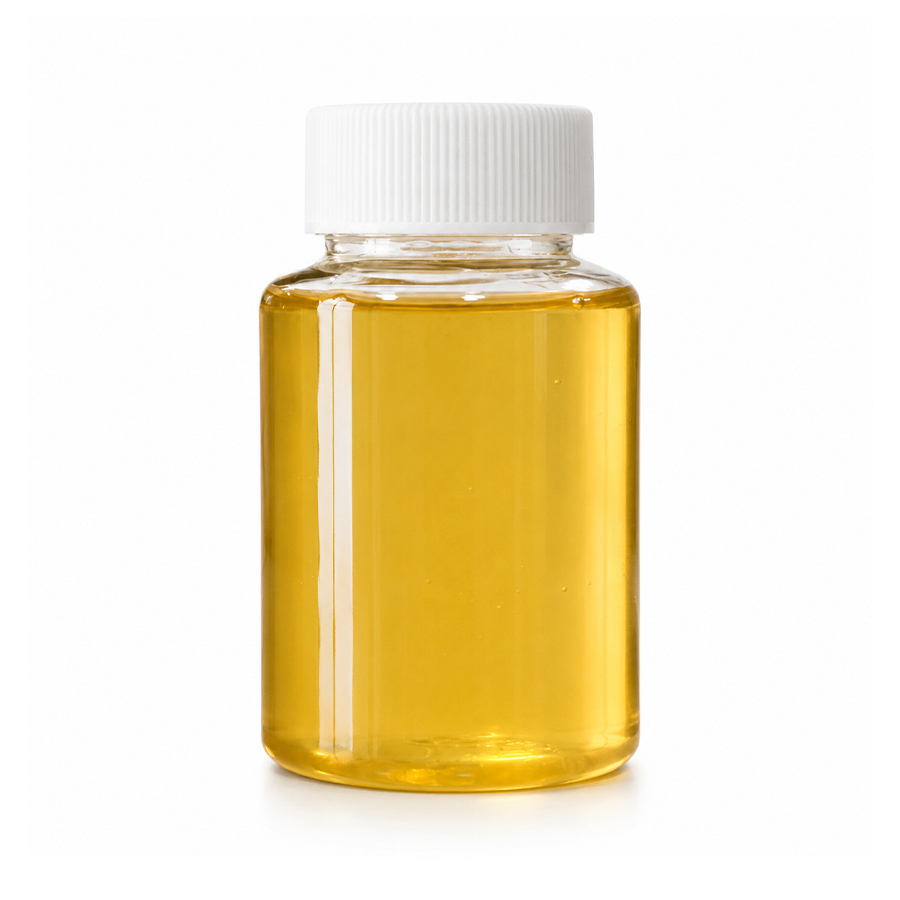
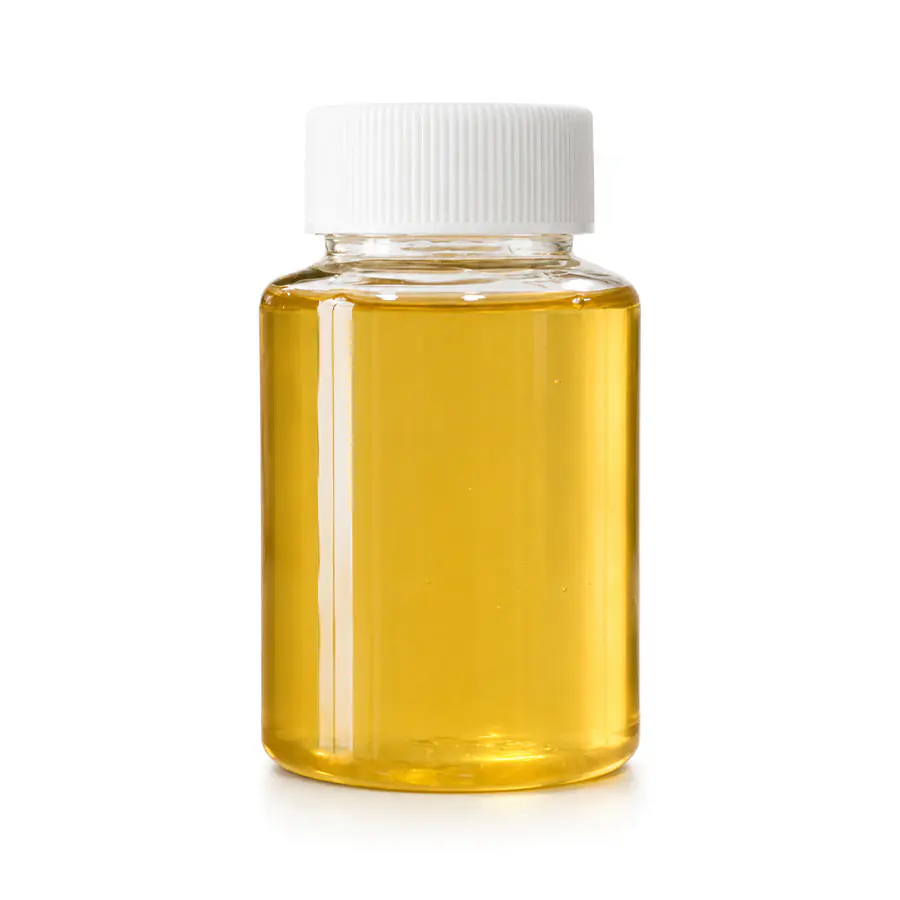
With its yellow transparent viscous appearance, pH value of 6–7, strong alkali resistance, and compatibility with non-ionic and anionic auxiliaries, this product is suitable for a wide range of preparation processes. It is particularly effective against iron ions while also addressing calcium and magnesium ions that may be present in process water, fibers, equipment, or other chemical inputs.
The product is designed for mills that require reliable pretreatment performance, reduced formulation complexity, and improved control over environmental compliance. Its recommended general dosage of 1–2 g/L can deliver effective chelating and dispersing results under suitable process conditions.
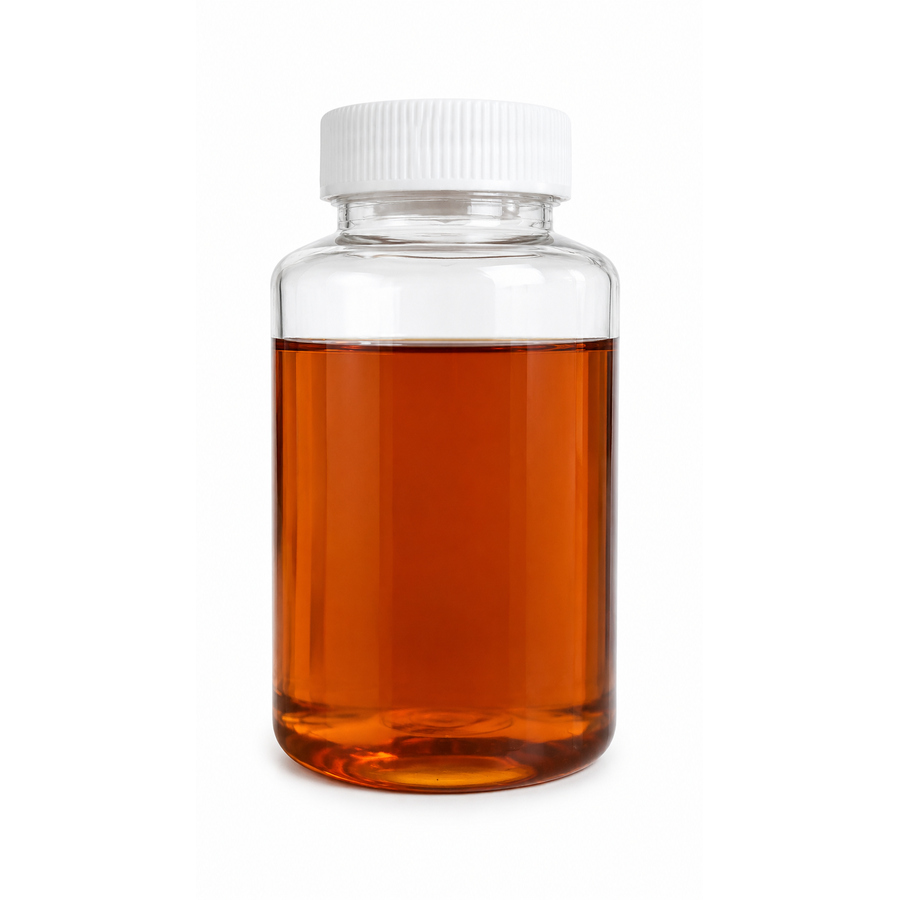
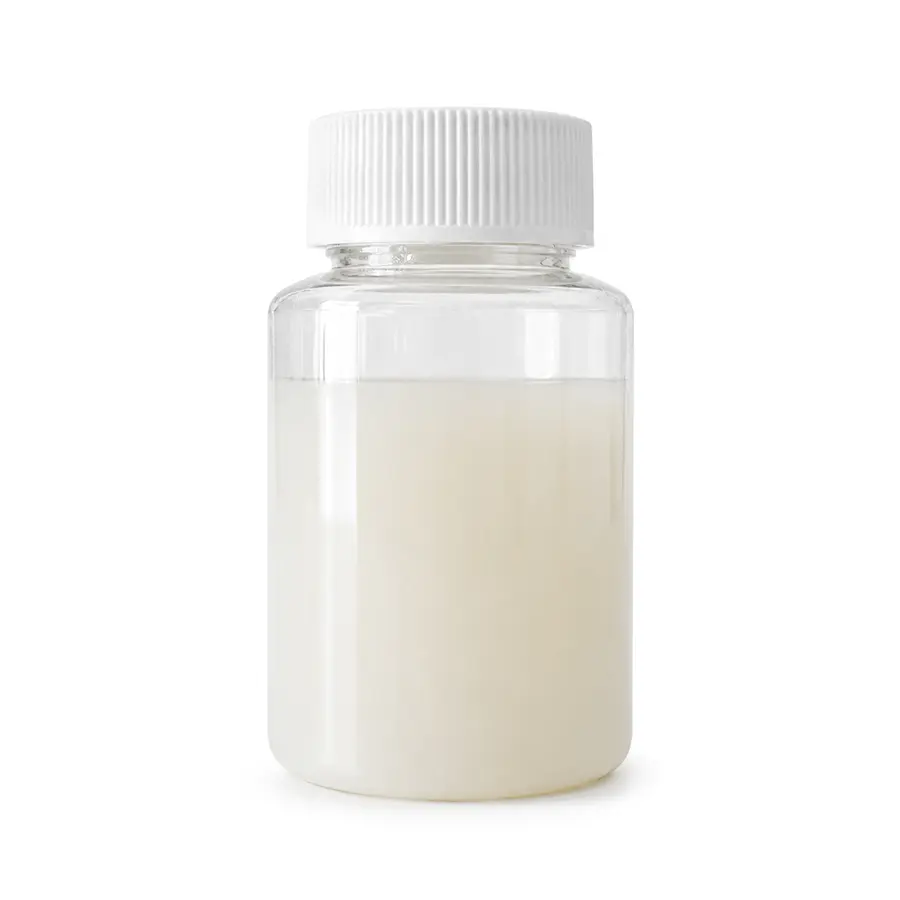
Chelating & Dispersing Agent
The Role of Chelating and Dispersing Agents in Textile Processing
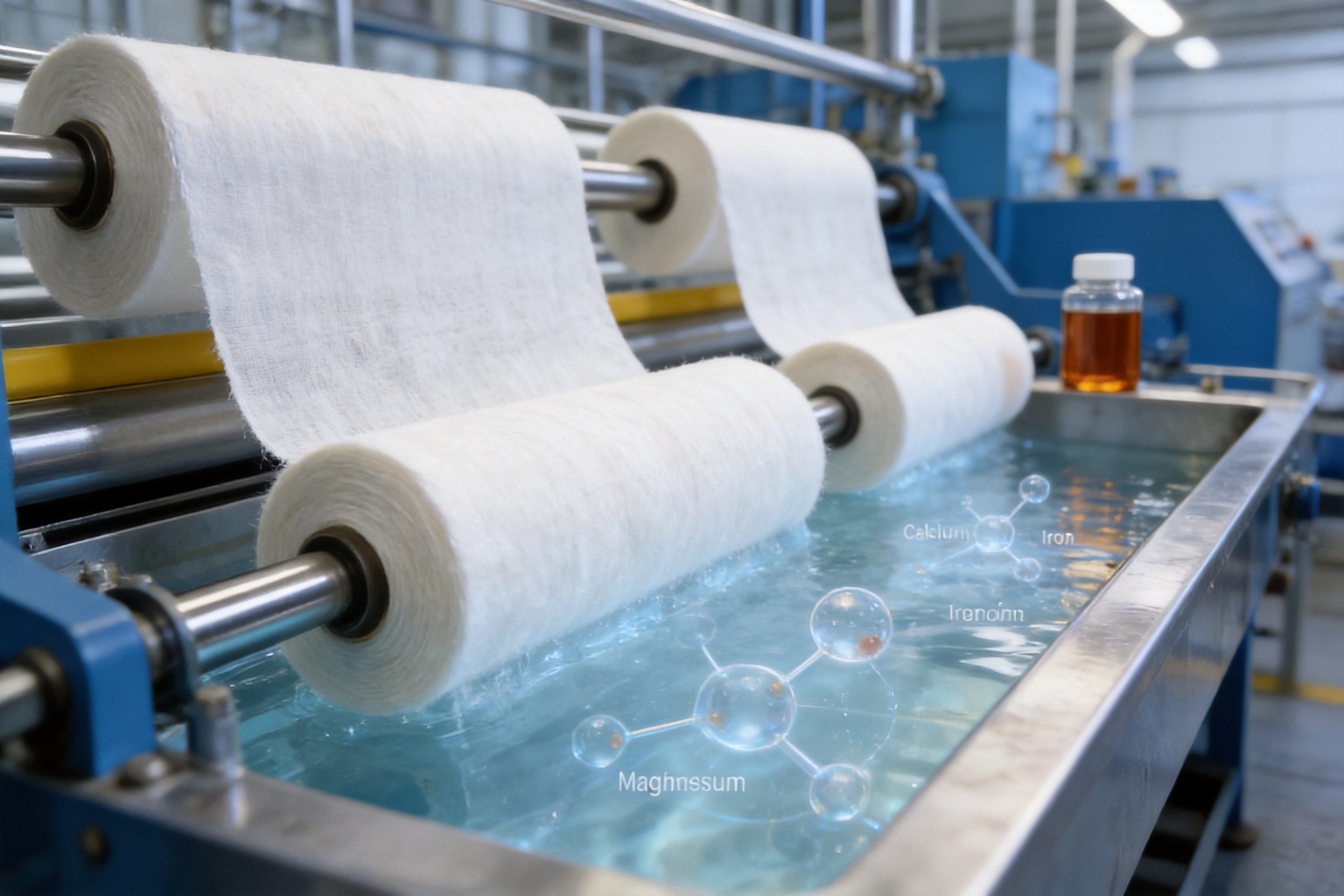
Textile fibers and processing systems frequently contain or encounter inorganic impurities. Hard water introduces calcium and magnesium ions. Rust or corrosion may contribute iron ions. Natural fibers can carry mineral residues, while dyes, salts, alkalis, and other auxiliaries may interact with these metal ions during pretreatment and dyeing.
Without proper control, metal ions can produce several unwanted effects. They may react with dyes, cause shade variation, reduce brightness, promote uneven dye uptake, or create spots and streaks on fabric. Iron contamination is especially troublesome because even low levels can influence whiteness and produce discoloration. Metal ions can also reduce the effectiveness of washing and dispersing operations.
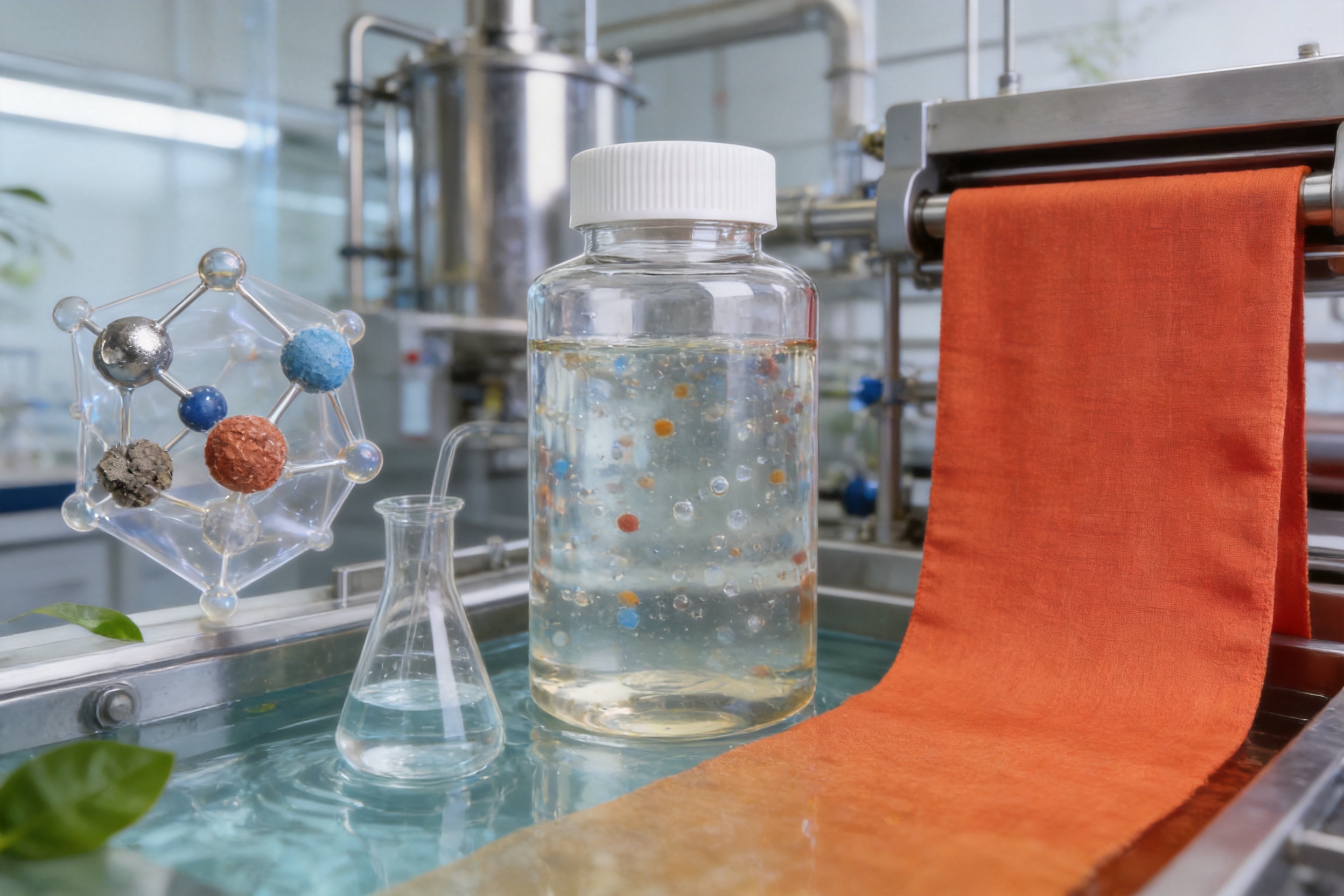
A chelating agent works by binding metal ions and keeping them in a controlled, non-interfering form. Instead of allowing calcium, magnesium, or iron to react freely with dyes, surfactants, alkalis, and fibers, the chelating component holds these ions within a stable chemical structure. This helps reduce their adverse impact on the textile process.
A dispersing agent performs a complementary function. It helps keep unfixed dyes, inorganic particles, and other residues uniformly distributed in the bath. This reduces the possibility of redeposition onto the fabric and supports more effective removal during washing-off.
Combining these functions in a single auxiliary can simplify the chemical recipe. It can also reduce the need to add several separate products, each with its own compatibility and dosage requirements. For mills seeking more efficient and consistent pretreatment, a multifunctional formulation can offer practical operational benefits.
Why Metal-Ion Control Matters
Calcium and magnesium are commonly associated with water hardness. In alkaline textile processes, these ions may form deposits or interact with anionic substances. Such reactions can affect bath stability and fabric handle. Their presence may also reduce the efficiency of washing and wetting systems.
Iron ions require particular attention because they can have a strong influence on textile whiteness and color appearance. Iron may enter the process through water, pipes, tanks, pumps, steam systems, or contact with corroded equipment. When iron is not adequately controlled, fabric may develop yellowish or grayish discoloration, especially during bleaching or high-temperature alkaline treatment.
The product is formulated to chelate calcium, magnesium, and iron ions, with especially effective performance toward iron. Its ability to work under alkaline conditions makes it suitable for pretreatment processes where high pH and elevated temperatures are commonly used.
Why Dispersing Performance Is Equally Important
Chelation alone does not resolve every pretreatment problem. Once metal ions and process residues are present in the bath, they must also be prevented from settling or returning to the textile surface. This is where dispersing and washing-off performance become essential.
The product helps disperse unfixed dyes and electrolytes, allowing them to remain distributed in the liquor and be removed more effectively during washing. This can support cleaner fabric surfaces, lower the risk of back-staining, and improve the reproducibility of subsequent finishing operations.
For dyed and printed goods, effective washing-off is particularly important. Residual unfixed dyes may affect rubbing fastness, washing fastness, shade clarity, and the cleanliness of the final fabric. A product that combines dispersing and washing-off functions can help mills manage these concerns within a coordinated pretreatment or after-dyeing recipe.
Product Profile and Technical Characteristics
The chelating and dispersing agent is based on an organic high molecular polymer. The formulation is synthesized at high temperature using specialty surfactants. This manufacturing approach is intended to create a stable multifunctional product with useful chelating, dispersing, and washing-off properties.
Property |
Specification or Description |
Main component |
Organic high molecular polymer |
Appearance |
Yellow transparent viscous liquid |
Ionicity |
Anionic |
pH value |
6–7 |
Compatibility |
Stable in the same bath with non-ionic and anionic auxiliaries |
Recommended general dosage |
1–2 g/L |
Environmental profile |
Phosphorus-free, APEO-free, formaldehyde-free, and free from heavy metals |
Primary functions |
Metal-ion chelation, dispersion, washing-off, and control of inorganic residues |
The yellow transparent viscous appearance provides a useful visual indication of product uniformity during handling. The near-neutral pH range of 6–7 can make storage and formulation management convenient, particularly when the auxiliary is incorporated into processes that already include alkaline or neutral-stage chemicals.
As an anionic product, it is designed for compatibility with non-ionic and anionic auxiliaries. This is important because textile recipes often contain wetting agents, detergents, scouring agents, dispersants, leveling agents, and other functional chemicals. Bath compatibility helps reduce the risk of unexpected precipitation or loss of performance when the product is used as part of a broader chemical system.
Environmental Advantages Over Conventional Alternatives
Environmental requirements are becoming increasingly important in textile manufacturing. Brands, retailers, certification systems, and consumers are asking mills to reduce substances of concern while maintaining high production standards. Pretreatment auxiliaries therefore need to provide effective technical performance without creating unnecessary environmental burdens.
This product is designed as a phosphorus-free chelating and dispersing agent. The absence of phosphorus is significant because phosphorus-containing substances can contribute to nutrient enrichment in wastewater streams if not properly managed. Selecting a phosphorus-free auxiliary can help textile manufacturers move toward cleaner chemical inventories and support wastewater management objectives.
The formulation is also described as free from APEO, formaldehyde, heavy metals, and other environmentally harmful substances. These characteristics can help mills address restricted-substance requirements and support the development of more responsible textile chemical programs.
Compared with conventional formulations that may depend on phosphorus-containing builders, formaldehyde-related chemistry, or substances with greater regulatory concern, a phosphorus-free and APEO-free product offers a more suitable direction for environmentally conscious production. The benefit is not limited to marketing language; it can influence chemical approval procedures, customer audits, wastewater considerations, and long-term supply-chain compliance.
Environmental performance must always be evaluated in the context of the complete process. Water quality, temperature, dosage, bath ratio, wastewater treatment, fabric type, and the use of other auxiliaries all influence the final environmental profile. Nevertheless, beginning with an auxiliary designed without phosphorus, APEO, formaldehyde, or heavy metals is a practical step toward improving the overall formulation.
Supporting Cleaner Chemical Management
A multifunctional product can also help simplify chemical management. When one auxiliary provides chelation, dispersion, and washing-off support, the mill may be able to reduce the number of separate products in a recipe. Fewer products can mean fewer storage locations, fewer dosing points, fewer compatibility checks, and simpler production documentation.
Such simplification does not automatically mean that every process will require less chemical material. Instead, the main benefit is greater control over the formulation. Mills can evaluate the product as one coordinated component rather than attempting to balance multiple independent chelating and dispersing products.
Performance Advantages in Textile Pretreatment
The main performance advantage of this product is its combination of strong chelating ability and effective dispersing behavior. Many textile chemicals perform one primary task well but provide limited support in other areas. A formulation that addresses several common pretreatment challenges can help improve process stability.
Effective Chelation Under Alkaline Conditions
Alkaline conditions are common in scouring, bleaching, washing, and other pretreatment operations. Some chelating agents perform well only within a limited pH range, while others may lose effectiveness when exposed to strong alkali or elevated temperature. This product is designed to provide good alkali resistance and excellent chelating ability under alkaline conditions.
That characteristic is valuable because metal-ion control is often most necessary when the process is chemically demanding. Stable performance in alkaline baths can help maintain the intended action of wetting agents, detergents, bleaching chemicals, and other process components.
Particular Effectiveness Against Iron Ions
Iron contamination is one of the most difficult issues for textile mills to manage. It may arise from process water, mineral deposits, equipment corrosion, or raw materials. Iron can contribute to discoloration and may be especially noticeable on white, pale, or brightly colored fabrics.
The product is particularly effective for chelating iron ions. By controlling iron in the process bath, it can help reduce the risk of unwanted color development and improve the consistency of pretreatment results. The degree of benefit will depend on the iron level, process conditions, and the dosage selected, so laboratory testing remains important for each application.
Washing-Off of Unfixed Dyes and Electrolytes
After dyeing or printing, not all dye molecules become fixed to the fiber. Unfixed dyes and electrolytes must be removed from the textile surface to achieve a clean appearance and appropriate fastness properties. Inadequate washing-off can cause staining, poor rubbing performance, and shade changes during later wet treatments.
The product has excellent washing-off and dispersing properties for unfixed dyes and electrolytes. It supports the movement of these residues into the bath, where they can be removed through suitable rinsing and washing procedures.
Compatibility With Common Auxiliary Systems
Textile production rarely relies on a single chemical. A pretreatment recipe may include wetting agents, scouring detergents, peroxide stabilizers, sequestering agents, antifoams, optical brighteners, and other products. Compatibility is therefore a critical purchasing and processing consideration.
The product is stable in the same bath with non-ionic and anionic auxiliaries. This compatibility makes it easier to integrate into established production systems. It may be introduced into new recipes or used to replace a conventional chelating and dispersing product after appropriate trials.
Low General Dosage
A general dosage of 1–2 g/L provides excellent chelating and dispersing results according to the product information. A relatively simple dosage recommendation can make initial laboratory screening more straightforward. Mills can begin with the general range and then optimize the dosage according to water hardness, metal-ion concentration, fabric construction, process temperature, and the required level of washing performance.
Dosage optimization is important for both technical and economic reasons. Under-dosing may leave metal ions insufficiently controlled, while excessive dosing may increase chemical cost without producing a proportional benefit. The appropriate dosage should therefore be established through controlled trials.
Applications in Different Textile Processes
Scouring and Bleaching
Scouring and bleaching are highly sensitive to water quality and metal contamination. During these operations, the fabric is exposed to alkaline chemicals, elevated temperatures, and oxidative conditions. Metal ions may interfere with the process or contribute to uneven whiteness.
Adding the chelating and dispersing agent at a suitable stage can help control calcium, magnesium, and iron. Its alkali resistance makes it appropriate for recipes where high pH is required. The product can also support the dispersion of inorganic residues and improve the overall cleanliness of the bath.
Preparation of Cellulosic Fabrics
Cotton, viscose, modal, lyocell, and other cellulosic materials may carry natural impurities, processing residues, and mineral contaminants. Proper pretreatment is essential to achieve even absorbency and consistent dye uptake.
A chelating and dispersing agent can help stabilize the preparation bath and reduce the influence of hard-water ions. More uniform pretreatment may contribute to more consistent coloration during subsequent reactive, direct, or other dyeing processes.
Reactive Dyeing and Washing-Off
Reactive dyeing commonly involves electrolytes and alkaline fixation conditions. After fixation, unfixed reactive dyes must be thoroughly removed. Residual salts and dyes can affect fabric appearance and fastness.
The product’s washing-off and dispersing properties make it suitable for use in processes where unfixed colorants and electrolytes need to be controlled. The exact addition point may vary according to the mill’s machinery and recipe. Trials should determine whether the product performs best during a dedicated washing-off stage, in a combined bath, or as part of a sequence of rinsing operations.
Printing and Post-Printing Washing
Printed textiles require careful removal of unfixed dyes, thickener residues, salts, and other substances after fixation. Poor washing can leave unwanted deposits between printed areas or cause color migration.
The product can support the dispersion and removal of unfixed materials during post-printing washing. It may be considered for applications involving a range of printed fabric constructions, provided that compatibility and performance are confirmed in laboratory and production trials.
White and Pale-Shade Production
White and pale shades make contamination particularly visible. Small amounts of iron or other metal ions may influence the visual appearance of the final textile. In these applications, reliable metal-ion control is often essential rather than optional.
Because the product is especially effective in chelating iron, it can be valuable in processes where high whiteness and clean appearance are important. The product should be evaluated together with the mill’s water source, equipment condition, bleaching system, and optical brightener program.
Manufacturing Strengths and Production Capabilities
The performance of a textile auxiliary depends not only on its formula but also on the consistency of its manufacture. Jiangyin Huanan New Materials Technology Co., Ltd. has been established since 1984 and specializes in the research, development, production, and sales of textile printing and dyeing auxiliaries.
The company operates two production plants and has an annual production capacity of 60,000 tons. This production scale can support stable supply for textile manufacturers with regular or large-volume requirements. It also reflects experience in organizing raw-material procurement, production scheduling, batch control, packaging, and distribution.
High-Temperature Synthesis Technology
The chelating and dispersing agent is synthesized at high temperature using specialty surfactants. High-temperature synthesis requires careful control of heating profiles, reaction time, mixing, raw-material ratios, and cooling procedures. Consistency in these parameters is important because variations can influence viscosity, appearance, ionic behavior, and functional performance.
A controlled synthesis process helps produce a stable organic high molecular polymer system. The manufacturer’s experience in textile auxiliaries provides a foundation for adjusting formulation design to the practical requirements of pretreatment, dyeing, printing, and finishing operations.
In-House Laboratory and R&D Team
The company maintains an in-house laboratory and professional research and development team. These resources are important for developing new products, improving existing formulations, and evaluating customer-specific requirements.
Laboratory capabilities can support testing of appearance, pH, compatibility, chelating performance, dispersing behavior, and application results. They can also help compare the product against a customer’s existing auxiliary under controlled conditions before a production trial is arranged.
For textile mills, access to technical development support can reduce the risk associated with changing chemical suppliers. Rather than relying only on a standard product specification, the customer can work with the manufacturer to evaluate the product in relation to actual fabric types, water conditions, machinery, and processing recipes.
Customized Formulation Capabilities
Textile manufacturers often face different requirements depending on fiber type, fabric weight, process route, dye class, machine design, and environmental policy. A product that works well in one mill may require adjustment in another.
Jiangyin Huanan provides customized formulation capabilities. This can be useful when a customer requires a specific balance of chelation, dispersion, washing-off, alkali resistance, viscosity, or compatibility. Customization may also be valuable when a mill is transitioning away from a conventional formulation or developing a new low-impact process.
Standardized Production and Quality Control
Standardized production is essential for maintaining batch-to-batch consistency. A textile auxiliary must perform predictably because changes in viscosity, concentration, pH, or active composition can influence dosing and fabric results.
The company emphasizes standardized production and strict quality control. These systems can include raw-material inspection, process monitoring, finished-product testing, batch documentation, and release procedures. The exact internal control methods are determined by the manufacturer, but the overall objective is consistent product quality from one shipment to the next.
Reliable quality control is a significant advantage when compared with suppliers that may offer similar product descriptions but lack stable production systems. For textile mills, consistency reduces process adjustments, troubleshooting time, rework, and the risk of shade or whiteness variation.
Integrated Supply Network
An integrated supply network helps connect manufacturing, inventory planning, packaging, logistics, and customer service. This is particularly important for textile chemical customers that operate continuous production schedules and need dependable delivery.
The company’s production capacity and integrated supply approach can support both standard orders and customized requirements. Customers can benefit from a supplier relationship that includes product development, technical communication, manufacturing, and delivery coordination.
Advantages Compared With Less Specialized Alternatives
Textile mills may obtain chelating or dispersing products from a variety of sources. However, not all alternatives provide the same combination of environmental profile, alkaline stability, metal-ion control, and textile-specific support.
Multifunctional Performance
A single-function product may control hardness ions but offer limited washing-off performance. Another product may disperse dyes but provide insufficient protection against iron. The multifunctional design of this chelating and dispersing agent allows one product to address several related process issues.
This can reduce formulation complexity and make it easier for production teams to manage the pretreatment recipe. It may also reduce the number of compatibility interactions that must be evaluated during process development.
Phosphorus-Free Formulation
Phosphorus-free chemistry provides a clear environmental distinction from phosphorus-containing alternatives. Mills seeking to reduce phosphorus input or comply with customer chemical policies may find this feature especially relevant.
Strong Performance in Alkaline Baths
Good alkali resistance is another important point of differentiation. Pretreatment frequently takes place under alkaline conditions, and a product that remains effective in such environments can offer more practical value than a product limited to neutral or mildly acidic conditions.
Iron-Ion Control
Many general water-treatment or dispersing products do not provide the same emphasis on iron chelation. The product’s particular effectiveness toward iron makes it suitable for applications where whiteness, brightness, and clean shade appearance are major concerns.
Textile-Specific Technical Support
A manufacturer specializing in textile printing and dyeing auxiliaries understands the practical relationship between water chemistry, fiber preparation, dyeing, washing, and finishing. This specialization can be an advantage over general chemical distributors that may supply a raw chemical without providing textile-process guidance.
Recommended Use and Process Optimization
The general recommended dosage is 1–2 g/L. This range should be regarded as a starting point rather than a universal requirement. Actual dosage depends on the concentration of metal ions, water hardness, fabric loading, process temperature, bath ratio, chemical recipe, and the desired level of washing-off or dispersion.
Suggested Evaluation Procedure
First, the mill should identify the main process problem. This may be iron contamination, hard-water interference, poor washing-off, back-staining, uneven whiteness, or instability in an alkaline bath. Defining the problem helps determine the most meaningful laboratory test.
Second, the product should be evaluated using the same or closely simulated process conditions as the current production recipe. Important variables include water source, fabric type, liquor ratio, temperature, time, pH, alkali concentration, dye class, and the presence of other auxiliaries.
Third, several dosage levels should be compared. The general 1–2 g/L range can be used as the initial reference, with lower and higher levels included where appropriate. Results should be evaluated not only immediately after treatment but also after dyeing, washing, drying, and finishing.
Fourth, the mill should examine fabric appearance, whiteness, absorbency, shade consistency, back-staining, washing-off efficiency, and relevant fastness properties. Bath appearance and any signs of precipitation or residue should also be recorded.
Finally, the preferred dosage and addition point should be confirmed through a controlled production trial. The production trial should include a comparison with the existing product or recipe so that the technical and economic benefits can be clearly measured.
Storage and Handling Considerations
The product is supplied as a yellow transparent viscous liquid. It should be handled according to the manufacturer’s technical documentation and the applicable workplace safety requirements. Containers should be properly identified, protected from contamination, and stored under suitable conditions.
Before use, the product should be checked for uniformity and any unusual change in appearance. If a product has been stored for an extended period, the customer should follow the manufacturer’s recommendations regarding agitation, sampling, and suitability for use.
Compatibility should be confirmed before mixing concentrated products together. Although the product is stable in the same bath with non-ionic and anionic auxiliaries, direct premixing of concentrated chemicals may produce results different from those observed after dilution in the process bath.
Quality, Compliance, and Responsible Textile Production
Textile brands and international buyers increasingly expect suppliers to demonstrate responsible chemical management. A product free from APEO, formaldehyde, heavy metals, and phosphorus can help mills build a cleaner auxiliary inventory and respond to customer inquiries concerning restricted substances.
The manufacturer offers eco-friendly, APEO-free, and formaldehyde-free formulations intended to support compliance with international environmental standards, including OEKO-TEX, ISO 14001, and ISO 45001-related expectations. Compliance with any particular standard depends on the full product formulation, documentation, site management system, and customer-specific requirements. Mills should request and review the relevant technical and safety documentation before approval.
Environmental responsibility also includes process efficiency. Better chelation and dispersion may help reduce reprocessing, shade correction, fabric rejection, and unnecessary water or energy consumption. These potential benefits must be verified through mill trials, but they demonstrate why a textile auxiliary should be evaluated as part of the entire production system rather than only by its purchase price.
Frequently Asked Questions
What is the main function of this product?
It is a multifunctional textile pretreatment auxiliary that provides chelating, dispersing, and washing-off support. It helps control calcium, magnesium, and iron ions while dispersing unfixed dyes and electrolytes.
Which metal ions can it chelate?
The product is suitable for chelating calcium, magnesium, and iron ions. It is especially effective for iron-ion chelation.
Can it be used in alkaline processes?
Yes. The product has good alkali resistance and excellent chelating ability under alkaline conditions. It should still be tested under the exact temperature, pH, and chemical conditions of the intended process.
What is the recommended dosage?
A general dosage of 1–2 g/L is recommended as a starting point. The optimum dosage depends on water quality, metal-ion concentration, fabric type, process conditions, and the required washing-off performance.
Is the product compatible with other textile auxiliaries?
It is stable in the same bath with non-ionic and anionic auxiliaries. Compatibility testing is recommended before introducing it into a new formulation, especially when concentrated products are mixed or when cationic chemicals are present.
Is the product phosphorus-free?
Yes. The product is described as phosphorus-free and is designed to provide an environmentally responsible alternative to phosphorus-containing chelating systems.
Does it contain APEO or formaldehyde?
The product is described as free from APEO and formaldehyde. It is also stated to contain no heavy metals or other environmentally harmful substances identified in the product information.
It is particularly effective for chelating iron ions and may help reduce the influence of iron on whiteness and shade appearance. The result depends on the iron level, process conditions, and dosage.
Can it be used for reactive dye washing-off?
Its washing-off and dispersing properties make it suitable for applications involving unfixed dyes and electrolytes, including suitable reactive dye washing-off processes. Each mill should confirm the best addition point and dosage through laboratory and production trials.
What makes it different from a basic dispersing agent?
In addition to dispersion, the product provides metal-ion chelation and washing-off support. Its combination of functions can help address hard-water ions, iron contamination, unfixed dyes, and electrolytes within a coordinated chemical program.
What manufacturing support is available?
The manufacturer operates two production plants, has an annual production capacity of 60,000 tons, and maintains an in-house laboratory, professional R&D team, customized formulation capabilities, standardized production, strict quality control, and an integrated supply network.
Should customers rely only on the general product data?
No. The available data are based on the manufacturer’s current knowledge, experience, and laboratory conditions. Customers should confirm product suitability through testing under their own water, equipment, fabric, recipe, and production conditions.
Conclusion
The chelating and dispersing agent is a practical solution for textile manufacturers seeking stronger control over metal ions, unfixed dyes, electrolytes, and alkaline pretreatment conditions. Its organic high molecular polymer base, anionic character, near-neutral pH, compatibility with non-ionic and anionic auxiliaries, and recommended dosage of 1–2 g/L make it suitable for integration into a broad range of textile processes.
Its major advantages include phosphorus-free chemistry, the absence of APEO, formaldehyde, and heavy metals, strong alkali resistance, effective chelation of calcium, magnesium, and iron, and particularly good performance against iron ions. Its dispersing and washing-off functions provide additional value in processes where fabric cleanliness, color clarity, and fastness are important.
Behind the product is a textile chemical manufacturer with long-term industry experience, two production plants, substantial annual capacity, in-house laboratory resources, professional R&D, customized formulation capabilities, standardized manufacturing, strict quality control, and integrated supply support. These strengths can help customers move beyond simple product purchasing toward a more stable and technically supported chemical partnership.
For the best results, mills should evaluate the product through controlled laboratory and production trials. Water quality, fabric type, process conditions, dosage, and chemical compatibility should all be considered. When properly selected and applied, this multifunctional auxiliary can contribute to more consistent pretreatment, cleaner textile surfaces, improved process control, and a more environmentally responsible textile production system.
References
1. Product technical information for Chelating and Dispersing Agent, including composition, appearance, ionicity, pH value, compatibility, application properties, environmental profile, and dosage guidance.
2. Manufacturer information for Jiangyin Huanan New Materials Technology Co., Ltd., including company history, production facilities, annual capacity, research and development resources, customized formulation capabilities, and quality-control systems.
3. General principles of textile pretreatment, metal-ion control, washing-off, dispersing, and dyeing process management.
4. General guidance on environmentally responsible textile auxiliaries, restricted substances, wastewater considerations, and chemical inventory management.
5. General technical principles concerning chelation, water hardness, iron contamination, alkaline processing, and the interaction of auxiliaries in textile wet processing.

Product: Chelating & Dispersing Agent


Contact us
huanannewmaterials@gmail.com
-
 Phone: +86 - 13861620767
-
 Fax: +86-0510-86200939
-
 298 Hongxing Road, Huashi Town, Jiangyin City, Wuxi City, Jiangsu Province, China
Product links
Mobile App
Copyright © Jiangyin Huanan New Materials Technology Co., Ltd. All Rights Reserved

-
huanannewmaterials@gmail.com
-

-

-
+86 - 13861620767