


 English
 中文简体

Ultra-Low Yellowing Softener Flakes for High-Performance Textile Finishing
Content
- 1 Introduction
- 2 What Are Ultra-Low Yellowing Softener Flakes?
- 3 Core Performance Advantages
- 4 Application Areas
- 5 Preparation Procedures
- 6 Recommended Application Methods
- 7 Why It Can Offer an Advantage Over Conventional Softener Choices
- 8 Manufacturing and Technical Strengths
- 9 Quality Control in Mill Trials
- 10 Storage, Handling, and Safety Considerations
- 11 Process Optimization Recommendations
- 12 Frequently Asked Questions
- 12.1 What is the main function of this product?
- 12.2 Is it suitable for white and pastel fabrics?
- 12.3 Can it be used on polyester/cotton blends?
- 12.4 Is the product strongly cationic?
- 12.5 How should the flakes be prepared?
- 12.6 What is the recommended padding dosage?
- 12.7 What is the recommended exhaustion dosage?
- 12.8 Can it be used with other auxiliaries?
- 12.9 Does the product provide moisture wicking?
- 12.10 What is the shelf life?
- 12.11 What packaging is available?
- 12.12 Why should a mill compare this product with its current softener?
- 13 Conclusion
- 14 References
- 15 Product: Ultra-Low Yellowing Softener Flakes ZX
Introduction
Textile finishing is the stage at which many fabrics acquire their final softness, smoothness, fullness, hydrophilicity, antistatic performance, and overall handle. Although finishing agents are applied in relatively small quantities, their influence on fabric quality, production efficiency, shade appearance, and customer acceptance can be substantial. A softener that produces an attractive hand feel but causes yellowing may be unsuitable for white and pastel fabrics. Conversely, a product with excellent whiteness protection but poor bath stability or difficult preparation may create problems on the production floor.
Ultra-Low Yellowing Softener Flakes ZX are designed to address these competing requirements. Based on a fatty acid and polyol compound, this softener is supplied in a flake form and is suitable for a wide range of textile finishing applications. It combines softness and smoothness with good hydrophilicity, antistatic properties, low yellowing, and resistance to salt, alkali, and anionic agents. Its characteristics make it particularly suitable for polyester/cotton blends, printed fabrics, synthetic leather base fabrics, and textiles requiring strict control of shade and whiteness.
The product is also designed with practical mill operation in mind. It can be converted into a usable slurry through either a gradual heating method or a direct high-temperature preparation method. The first method provides lower viscosity and better fluidity, while the second method produces a higher-viscosity preparation for processes that require a thicker working solution. This flexibility allows finishers to select a preparation route according to equipment, fabric construction, dosage, and application requirements.
Manufactured by Jiangyin Huanan New Materials Technology Co., Ltd., the product reflects the company’s experience in textile chemicals, its research and development capabilities, and its focus on standardized production and quality control. The company has operated since 1984 and maintains two production plants with an annual production capacity of 60,000 tons. Its product portfolio covers pretreatment, dyeing, printing, and finishing auxiliaries, enabling it to understand the interactions that occur throughout the textile processing chain.
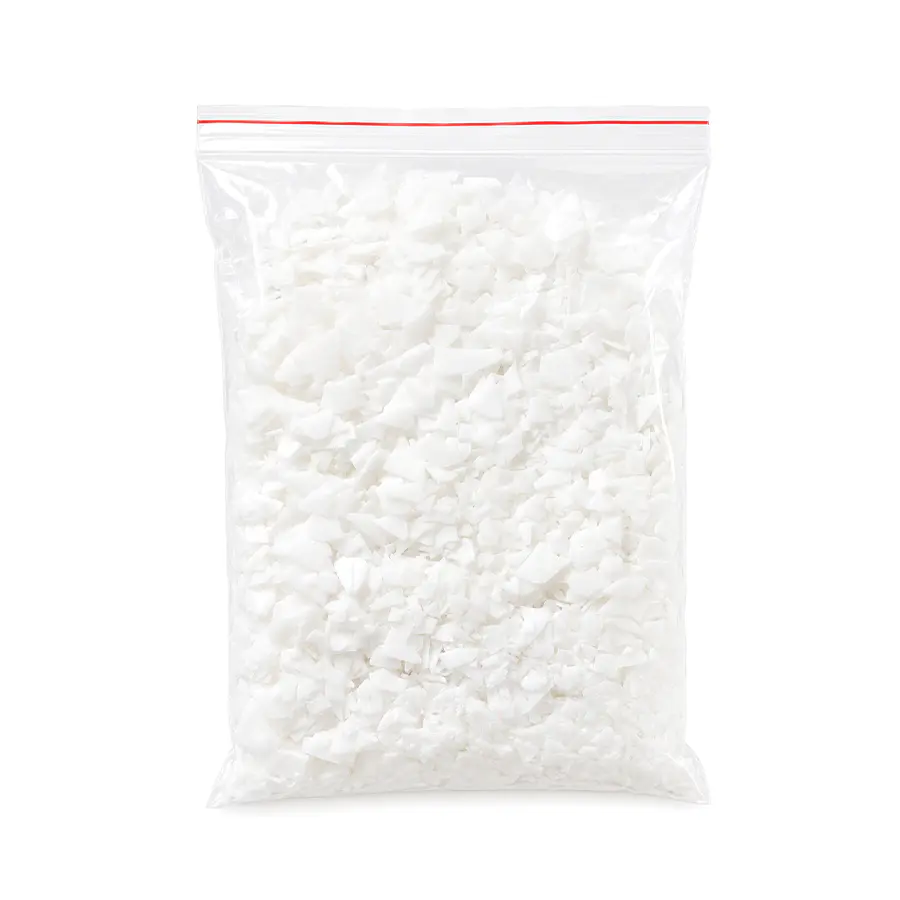
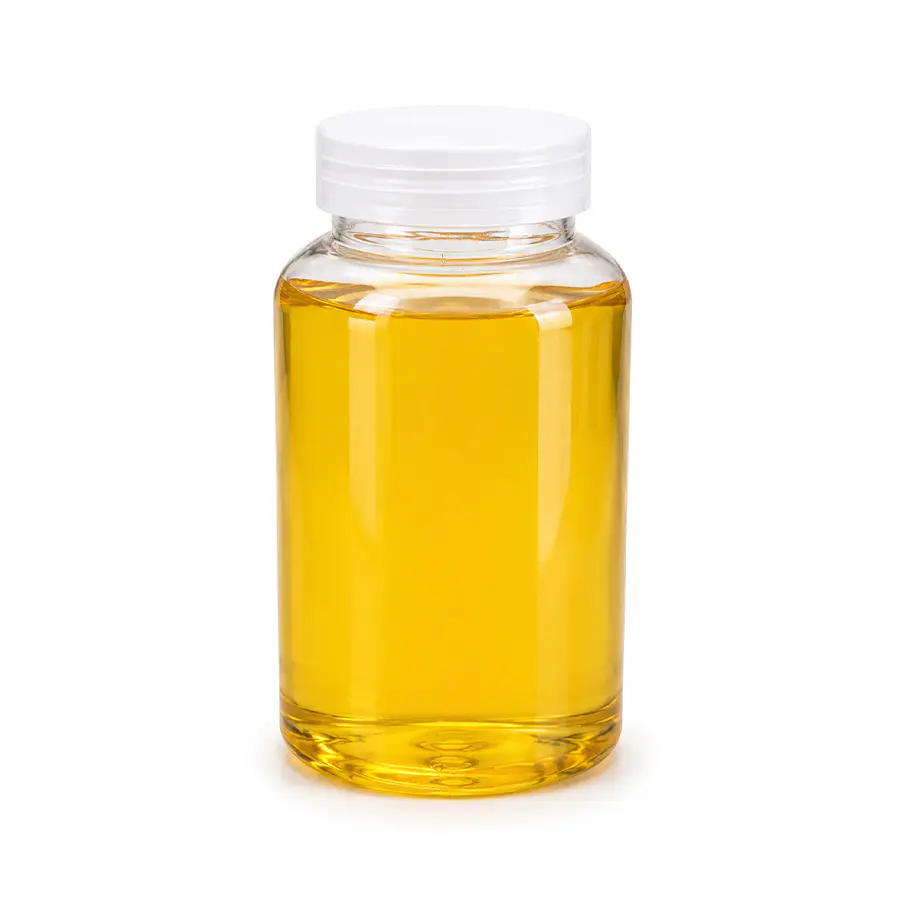
Ultra-Low Yellowing Softener Flakes ZX
What Are Ultra-Low Yellowing Softener Flakes?
Softener flakes are concentrated finishing materials supplied in a solid flake form. Before use, the flakes are dispersed or dissolved in water to create a uniform preparation that can be applied by padding or exhaustion. Compared with ready-to-use liquid products, flakes can offer advantages in storage, transportation, concentration, and formulation flexibility. They are especially useful for manufacturers that need to manage freight costs, warehouse volume, or production requirements across different finishing lines.
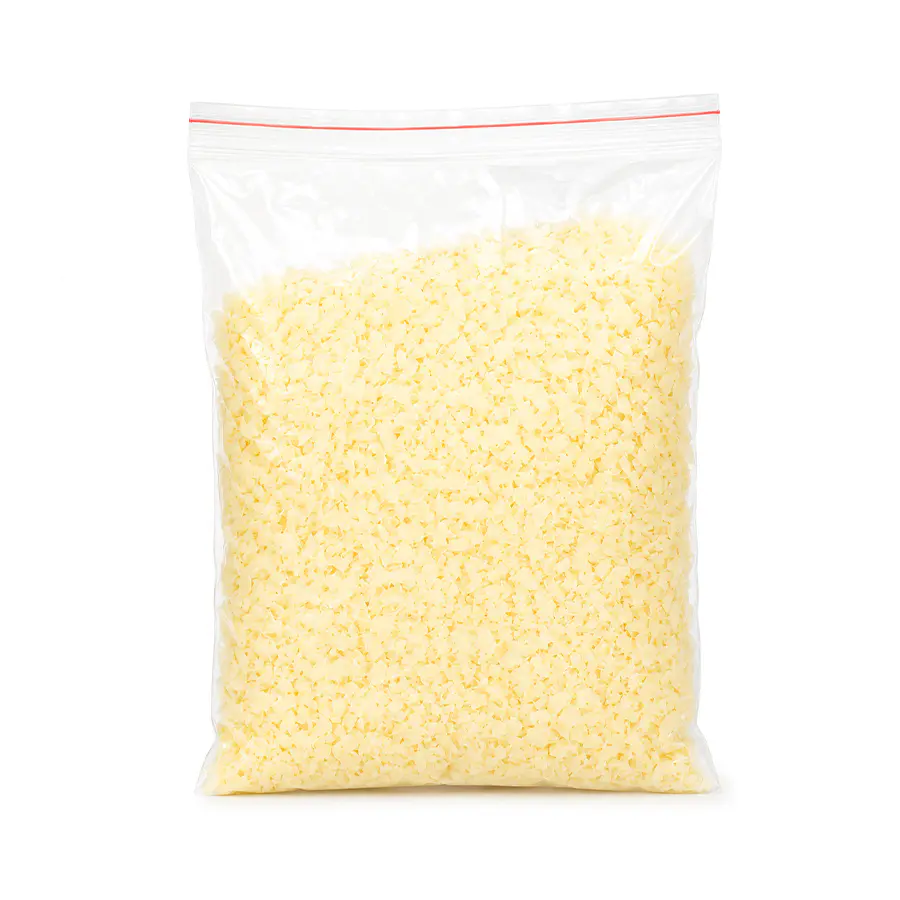
Ultra-Low Yellowing Softener Flakes ZX contain a fatty acid and polyol compound as the main component. This composition is intended to provide a soft, smooth, and full hand feel without creating excessive discoloration during finishing or subsequent heat treatment. The product has a slightly yellow appearance in its solid form, a pH value of 3–5 when measured as a 5–10% slurry, and non-ionic or weakly cationic ionicity.
The combination of non-ionic and weakly cationic behavior contributes to broad compatibility. In textile processing, compatibility is important because finishing baths may contain residual salts, alkali, dyes, fixing agents, wetting agents, dispersing agents, or other auxiliaries. A softener that is highly sensitive to anionic materials may form deposits, lose performance, or create bath instability. This product is formulated to provide excellent resistance to salt, alkali, and anionic agents, although laboratory and production trials remain essential before combining it with unfamiliar chemicals.
| Property | Typical Information | Practical Significance |
|---|---|---|
| Main component | Fatty acid and polyol compound | Supports softness, smoothness, fullness, and flexible finishing performance |
| Appearance | Slightly yellow flakes | Concentrated solid form suitable for controlled preparation before application |
| pH value | 3–5 in a 5–10% slurry | Suitable for finishing systems requiring a mildly acidic working preparation |
| Ionicity | Non-ionic / weakly cationic | Provides broad compatibility with many textile substrates and auxiliaries |
| Padding dosage | 10–30 g/L of a 10% slurry | Applicable to continuous finishing operations |
| Exhaustion dosage | 2–8% on weight of fabric using a 10% slurry | Applicable to batch and discontinuous finishing processes |
Core Performance Advantages
Low Yellowing for Shade-Sensitive Fabrics
Yellowing is one of the most important concerns in textile finishing. It can affect optical whiteness, pastel shades, fluorescent effects, and the visual uniformity of dyed goods. Yellowing may become more visible after drying, curing, heat setting, storage, or exposure to light and atmospheric conditions. For this reason, finishing products used on white and light-colored textiles must be evaluated not only for immediate softness but also for their influence on final appearance.
The ultra-low yellowing design of this softener makes it suitable for fabrics with strict requirements on shade and whiteness. Polyester/cotton blends are a particularly important application because these fabrics combine fibers with different dyeing and thermal behaviors. A softener used on such blends must enhance handle while minimizing the risk of changing the apparent shade of either component.
Low yellowing is also valuable in printing houses. Printed fabrics often contain sharp contrasts, bright backgrounds, and carefully controlled color effects. A finishing agent that introduces a warm cast can reduce print brilliance or make white grounds appear dull. By supporting whiteness retention and visual shade control, the product helps finishing departments protect the appearance achieved during pretreatment, dyeing, and printing.
Softness, Smoothness, and Full Hand Feel
The primary reason for applying a softener is to improve tactile quality. Ultra-Low Yellowing Softener Flakes ZX is designed to provide a combination of softness, smoothness, and fullness rather than a single superficial slippery effect. This combination can be important for apparel, home textiles, knitted fabrics, and technical fabrics in which the final hand contributes directly to product value.
Softness refers to the reduction of harsh or coarse sensations when the fabric is handled. Smoothness relates to the ease with which the fabric surface moves against skin or another textile surface. Fullness describes a richer, more substantial handle that can improve the perception of fabric quality. The balance between these effects depends on fiber type, construction, pretreatment history, finishing concentration, application method, drying conditions, and mechanical treatment.
Because the product is supplied as a concentrated flake, mills can prepare a working slurry and adjust the application level according to the fabric’s construction and desired handle. A lightweight woven fabric may require a different concentration from a dense knitted fabric, brushed fabric, or synthetic leather base. The recommended dosage ranges provide a starting point, but optimization through controlled trials is necessary to achieve the preferred hand feel without over-application.
Good Hydrophilicity
Many traditional softening systems are selected mainly for surface lubrication and may reduce the ability of a fabric to absorb or transport water. This can be undesirable for sportswear, underwear, functional textiles, towels, printed fabrics, and other products where moisture behavior matters. A hydrophilic softener can help maintain a more favorable relationship between softness and moisture management.
This product provides good hydrophilicity while still improving softness. Its hydrophilic character is also relevant to finishing operations such as sanding, raising, and antistatic treatment. When a fabric must retain a comfortable and less cling-prone surface, the combination of hydrophilicity and antistatic behavior can be more useful than a purely hydrophobic softening effect.
Hydrophilicity should not be interpreted as a guarantee of a specific moisture-wicking rating on every fabric. Moisture behavior is influenced by fiber composition, yarn structure, fabric density, dyeing history, surface hairiness, mechanical finishing, and test conditions. Nevertheless, the product’s hydrophilic design provides a useful foundation for applications where excessive water repellency would be undesirable.
Antistatic Properties
Static electricity can create problems during fabric processing and in the final product. Synthetic fibers, particularly under dry environmental conditions, may accumulate static charge that causes cling, attraction of dust, handling discomfort, and feeding problems on certain machines. In garments, static may reduce comfort and create an undesirable appearance.
The product offers antistatic properties that complement its softening effect. This is especially relevant for polyester/cotton blends, synthetic fabrics, printed textiles, and synthetic leather base materials. Antistatic performance is affected by ambient humidity, fiber type, fabric construction, surface condition, and the presence of other finishing chemicals. Even so, an auxiliary with both softening and antistatic functions can simplify formulation and reduce the need for multiple separate products.
Resistance to Salts, Alkali, and Anionic Agents
Textile finishing baths are rarely chemically isolated. Fabrics may carry residual electrolytes from dyeing, traces of alkali from pretreatment, or anionic materials from previous processing stages. If a softener is incompatible with these substances, the bath may become cloudy, unstable, or difficult to circulate. Deposits can appear on equipment, and uneven application may result.
Ultra-Low Yellowing Softener Flakes ZX is designed with excellent resistance to salt, alkali, and anionic agents. This feature improves its suitability for practical mill conditions, where perfect removal of all previous auxiliaries may not always be possible. It may also provide greater flexibility when the finishing recipe contains other agents that would be problematic for a more sensitive softener.
Compatibility should still be confirmed by jar testing and pilot-scale trials. Resistance to a class of chemicals does not mean universal compatibility with every commercial product, concentration, temperature, or pH. The chemical identity, active content, mixing order, water hardness, and bath temperature can all influence results.
Good Fluidity of the Prepared Solution
Bath fluidity affects dissolving, pumping, circulation, filtration, padding uniformity, and the ease of transferring a preparation between tanks. A preparation with excessive viscosity may be difficult to handle, particularly in small dosing systems or lines with narrow pipes. It may also require additional agitation or create a greater risk of localized concentration.
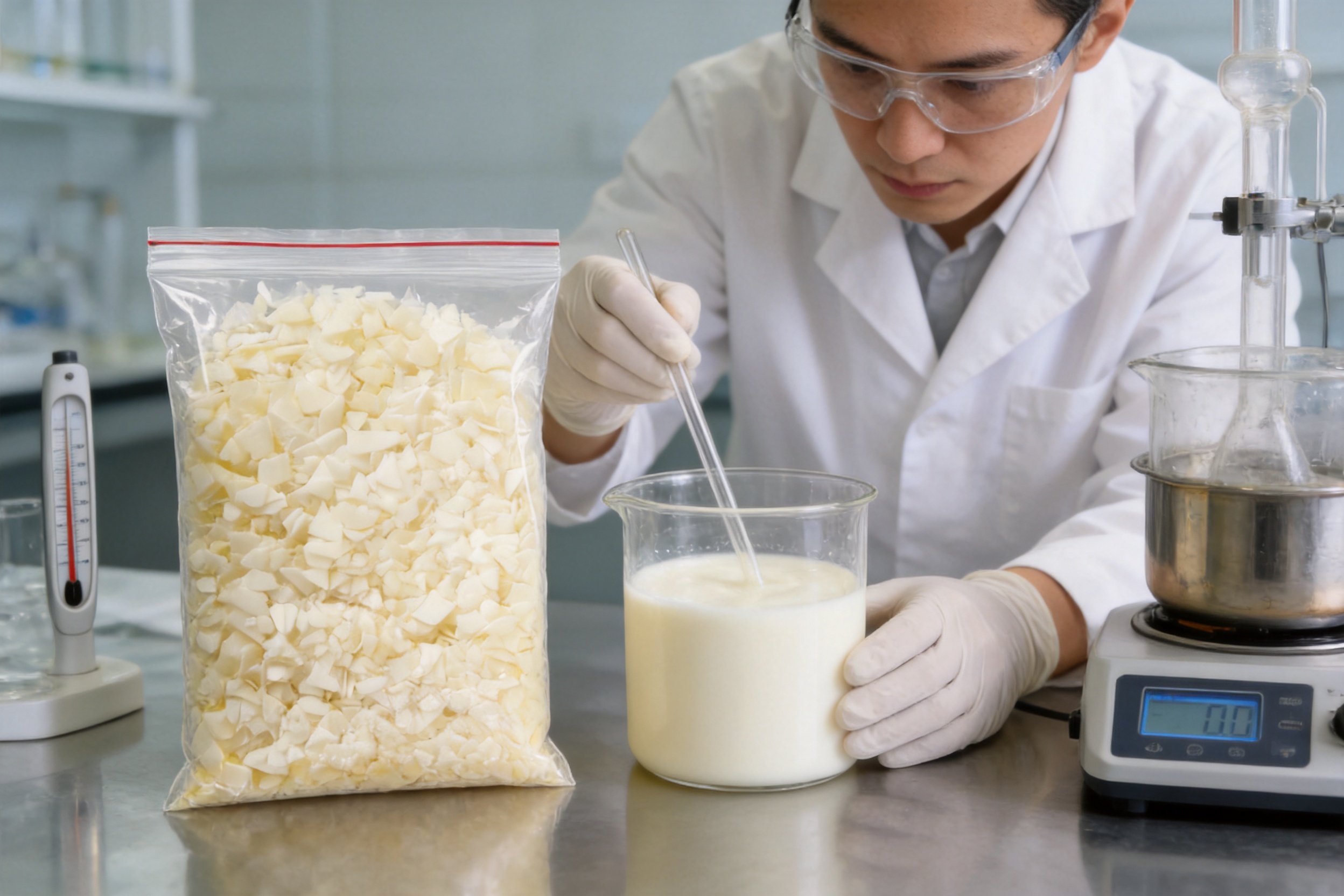
The recommended heating-up preparation method is intended to produce lower viscosity and better fluidity. In this process, the flakes are added to room-temperature water at a ratio of 5–10% while stirring. The mixture is then gradually heated to 70–75°C and stirred continuously until it becomes a uniform paste. Complete preparation typically requires 30–60 minutes, after which the paste is cooled before use.
For applications requiring higher viscosity, the direct high-temperature method can be selected. In this method, the flakes are added directly to water already heated to 70–75°C while stirring. The preparation is mixed until completely uniform, generally within 30–60 minutes, and then cooled for use. The two methods provide useful control over the physical behavior of the working preparation.
Application Areas
Polyester/Cotton Blended Fabrics
Polyester/cotton blends are widely used because they combine the strength, dimensional stability, and easy-care characteristics of polyester with the comfort and absorbency of cotton. However, their different fiber properties can make finishing more demanding. The softener must improve the feel of both components while limiting shade change and preserving acceptable moisture behavior.
The low yellowing, hydrophilic, and antistatic characteristics of this product make it a suitable option for polyester/cotton fabric finishing. It can be evaluated on woven and knitted blends, workwear materials, casual apparel fabrics, and other constructions in which the final handle and appearance must be carefully balanced.
Printed Fabrics
Printed fabrics often require a finishing agent that improves handle without diminishing print clarity. A softener that causes excessive yellowing may influence white grounds, bright colors, and the perceived contrast between printed areas. The product’s low yellowing profile supports use on printed fabrics where shade and whiteness are important.
Its hydrophilic characteristics may also be useful when the printed textile must retain a comfortable surface and reasonable moisture interaction. The selected concentration should be determined according to the printing system, binder type, pigment or dye chemistry, substrate, and required handle. Small-scale trials can reveal whether any change in print surface, rubbing behavior, or color depth occurs under the intended drying conditions.
Synthetic Leather Base Fabrics
Synthetic leather base fabrics may require softness, smoothness, antistatic performance, and a controlled surface feel. Excessive stiffness can reduce flexibility and affect the quality perception of the finished material. At the same time, an overly oily or slippery surface may interfere with subsequent coating, lamination, embossing, or bonding operations.
The product is identified as suitable for synthetic leather base fabrics because of its hydrophilic softening behavior and smooth hand. The appropriate dosage should be established in cooperation with downstream coating and bonding requirements. Compatibility with primers, resins, adhesives, pigments, and other surface treatment materials should be verified before full-scale production.
Sanding and Raising Applications
Sanding and raising are mechanical processes used to modify the fabric surface and create a peach-skin, brushed, fleece-like, or otherwise textured effect. These processes can be sensitive to fabric lubrication, fiber release, surface friction, and static accumulation. A suitable softening treatment can contribute to a smoother handle and a more comfortable final surface.
Because the product combines hydrophilicity with antistatic properties, it can be considered for fabrics that undergo sanding or raising, particularly synthetic or blended materials. The finishing recipe should be coordinated with the mechanical parameters, including machine speed, abrasive condition, brushing intensity, number of passages, and fabric moisture level.
General Softening and Antistatic Finishing
The product can be used as a general softening agent for a broad variety of textiles when a balanced hand, low yellowing, and compatibility are required. It may be evaluated on apparel fabrics, home textiles, lining materials, and selected technical fabrics. The final result depends on the substrate and process conditions, so the stated dosage should be treated as a practical starting range rather than an absolute formula.
Preparation Procedures
Heating-Up Method for Lower Viscosity
The heating-up method is recommended when good fluidity and easier handling are priorities. Begin with clean water at room temperature in a suitable preparation vessel. Start agitation before adding the flakes. Add the softener gradually at a concentration of 5–10% by weight. Slow addition helps prevent localized accumulation and allows the flakes to become evenly wetted.
After addition, gradually increase the temperature to 70–75°C while maintaining continuous stirring. The mixture should be stirred until all visible flakes have been converted into a uniform paste. The normal preparation time is approximately 30–60 minutes, although the exact time may vary according to vessel size, agitation efficiency, water quality, batch concentration, and heating performance.
Once the paste is uniform, stop heating and allow it to cool before use. The prepared solution should be checked for uniformity, visible undissolved material, abnormal separation, and suitable flow behavior. If the paste is stored before application, gentle agitation may be used to maintain consistency, provided that excessive foaming is avoided.
Direct High-Temperature Method for Higher Viscosity
The direct high-temperature method is appropriate when a more viscous preparation is preferred. Charge water heated to 70–75°C into the preparation vessel and begin stirring. Add the flakes gradually at a concentration of 5–10%. Continue stirring until the material is completely incorporated and a uniform paste is obtained.
This preparation also generally requires 30–60 minutes. When the mixture is uniform, cool it to the temperature appropriate for application. The higher viscosity may be useful in systems where a thicker preparation is easier to meter or where the application recipe requires a more concentrated working consistency.
Regardless of the selected method, accurate weighing is important. Concentration errors can influence viscosity, application add-on, handle, and bath stability. Preparation vessels should be clean, and contamination from incompatible products should be avoided. Water hardness and quality should also be monitored because minerals and impurities can affect the appearance and behavior of a finishing preparation.
Recommended Application Methods
Padding Process
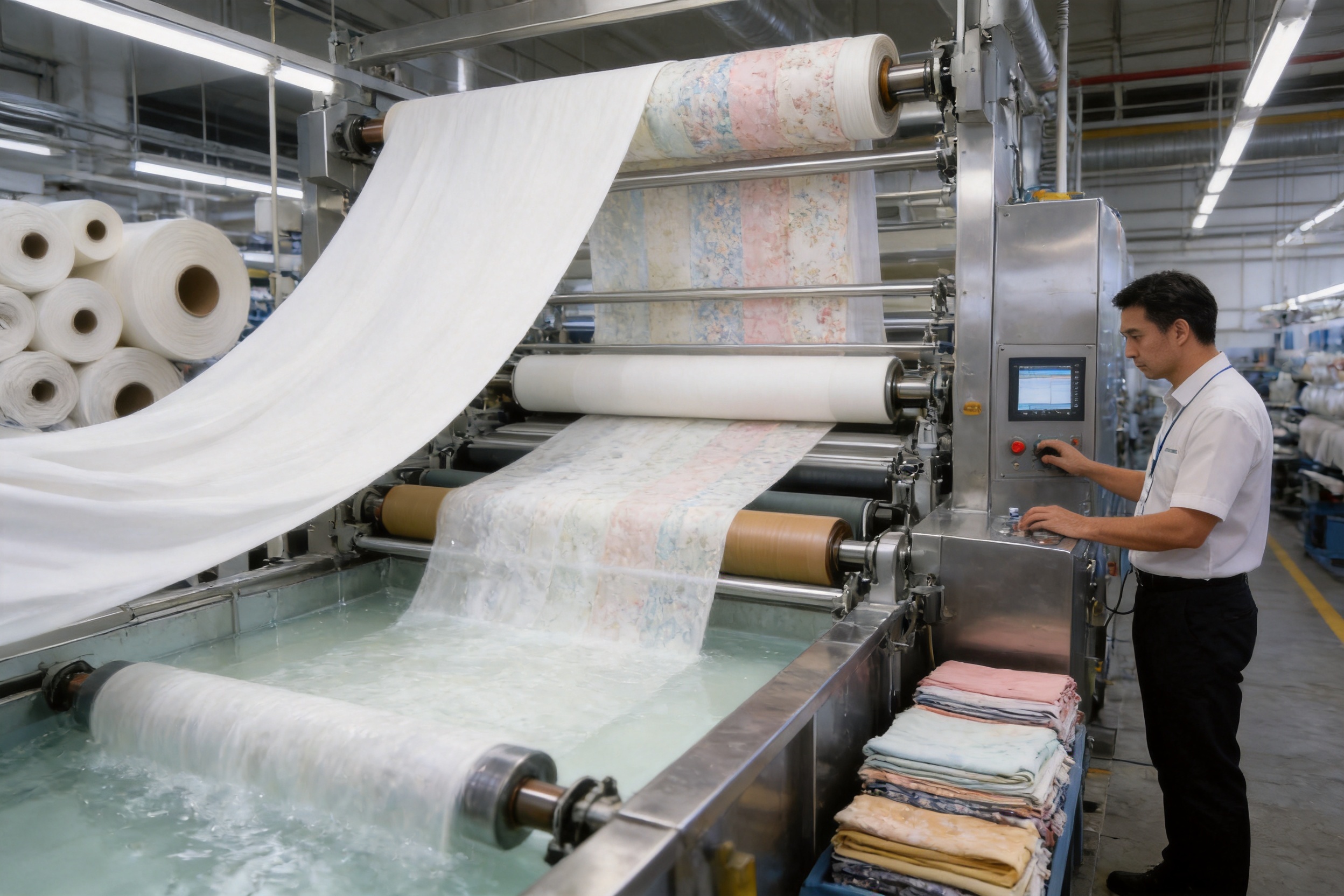
For padding, the recommended dosage is 10–30 g/L based on a 10% slurry. The suggested application temperature is 30–40°C. The product may be applied using one dip and one nip or two dips and two nips, depending on the equipment and the desired wet pickup.
The lower end of the dosage range may be suitable when a light improvement in hand is required or when the fabric is already relatively soft. The higher end may be evaluated for fabrics requiring a fuller, smoother, or more pronounced handle. Actual wet pickup, fabric speed, nip pressure, bath circulation, and drying conditions should be recorded because they directly affect the amount of active product deposited on the fabric.
Padding uniformity is supported by a well-prepared and adequately circulated bath. Operators should monitor the liquor level, temperature, concentration, foam, and visual uniformity throughout the run. If the fabric shade is particularly sensitive, a laboratory comparison should be made between untreated fabric and fabric processed at several dosage levels.
Exhaustion Process
For exhaustion application, the recommended dosage is 2–8% on the weight of fabric, using a 10% slurry. The suggested temperature is 40–50°C, with a bath ratio of 1:10–15 and an application time of approximately 30 minutes.
Exhaustion processing can be useful for batch treatment or for fabrics that require thorough liquor contact. The goods should be loaded consistently, and the bath should be circulated sufficiently to promote even distribution. The selected temperature and time should be reviewed according to fiber type, machine design, liquor movement, and desired exhaustion behavior.
After treatment, the fabric should be drained and processed according to the mill’s normal drying procedure. Drying temperature and residence time can influence final softness and shade appearance. If the fabric will undergo additional heat treatment, the complete thermal history should be considered during product evaluation.
Why It Can Offer an Advantage Over Conventional Softener Choices
Textile mills commonly choose between several categories of softeners, including conventional cationic products, non-ionic softeners, silicone systems, fatty-based softeners, and specialty multifunctional formulations. Each type has specific strengths and limitations. A conventional product may provide softness but lack hydrophilicity. Another may deliver strong surface lubrication but create concerns about shade change, bath compatibility, or subsequent processing.
The main advantage of Ultra-Low Yellowing Softener Flakes ZX is its balanced profile. It is not positioned only as a softness enhancer. It combines low yellowing, hydrophilicity, antistatic performance, softness, smoothness, fullness, chemical resistance, and preparation flexibility. This balance can reduce compromises when a mill must satisfy both appearance and performance requirements.
Its non-ionic or weakly cationic character can also be advantageous compared with strongly cationic systems when the fabric has residual anionic substances or when the finishing bath contains several auxiliaries. The product’s stated resistance to salt, alkali, and anionic agents supports more flexible recipe development. Nevertheless, the best choice depends on the specific fabric and customer standard, and comparative trials should be conducted against the mill’s existing products.
The flake form may provide logistical benefits over low-concentration liquid products. A concentrated solid can reduce the amount of water transported and may require less storage space per unit of active material. It also allows the mill to prepare a working slurry at a selected concentration and viscosity. These benefits can be important for large production facilities as well as customers that import textile chemicals over long distances.
Manufacturing and Technical Strengths
Long-Term Textile Chemical Experience
Jiangyin Huanan New Materials Technology Co., Ltd. was established in 1984 and has developed long-term experience in textile printing and dyeing auxiliaries. This history provides a practical foundation for understanding the needs of dye houses, finishing plants, printing operations, and textile product manufacturers.
The company’s product range includes pretreatment auxiliaries, dyeing auxiliaries, finishing agents, moisture-wicking products, repairing agents, low-temperature carriers, silicone oils, silicone softeners, antistatic agents, color-fixing agents, stiffening agents, down-proof agents, windproof agents, and dry and wet rubbing fastness enhancers. This broad portfolio allows the company to evaluate products in relation to complete textile processing systems rather than treating each auxiliary as an isolated material.
Two Production Plants and Scalable Capacity
The company operates two production plants and reports an annual production capacity of 60,000 tons. Scalable manufacturing is important for customers that need stable supply during seasonal demand, repeat orders, or expanded production programs. Capacity alone does not guarantee quality, but when combined with standardized processes and quality control, it can support reliable delivery and batch-to-batch consistency.
For a flake softener, production control may involve raw material selection, reaction or blending conditions, temperature management, solidification, flake formation, moisture control, packaging, and storage stability. Each stage can affect dissolving behavior, appearance, viscosity of the prepared slurry, and finishing performance. A structured manufacturing system helps maintain the product characteristics expected by users.
In-House Laboratory and Research Capability
An in-house laboratory enables product testing, application evaluation, formulation adjustment, and troubleshooting. Textile auxiliaries must often be assessed not only by chemical specifications but also by their effect on actual fabrics. Laboratory work may include preparation stability, pH testing, compatibility screening, whiteness comparison, softness evaluation, hydrophilicity assessment, antistatic observation, and process simulation.
The company maintains a professional research and development team and provides customized formulation capabilities. This is valuable because textile mills may process different fibers, constructions, dyes, coatings, and finishing equipment. A standard product can provide a starting point, while technical adjustment may be required for a specific fabric or customer requirement.
Environmental and Compliance Orientation
The company offers eco-friendly, APEO-free, and formaldehyde-free formulations. These characteristics are increasingly important as textile manufacturers respond to restricted substance lists, brand requirements, export regulations, and consumer expectations. The company also identifies international management and environmental standards, including OEKO-TEX, ISO 14001, and ISO 45001, as part of its compliance and operational framework.
Compliance claims should always be confirmed against the current product documentation, test reports, and customer-specific requirements. Different markets and brands may apply different limits, test methods, or restricted substance lists. Even when a product is designed as an environmentally considerate option, the complete textile recipe and downstream process must be reviewed.
Integrated Supply and Quality Management
An integrated supply network supports the sourcing of raw materials, production scheduling, packaging, warehousing, and delivery. Quality management is particularly important for textile auxiliaries because a small change in active content, moisture, ionic behavior, or physical form may influence the final fabric. Consistent inspection and documented production procedures help reduce unexpected variation.
For customers, the company’s strengths include technical communication, custom formulation, standardized production, laboratory support, and long-term supply capability. These factors can be as important as the initial product price because finishing problems may lead to reprocessing, shade correction, delayed delivery, or customer complaints.
Quality Control in Mill Trials
Before purchasing a large quantity, textile producers should conduct a structured trial. The trial should include the target fabric, the intended dyeing or finishing history, the planned application method, and the actual drying or curing conditions. Testing only a small fabric swatch under unrelated conditions may not reveal production-scale behavior.
Important observations include the appearance of the prepared slurry, dissolving time, viscosity, storage behavior, foam tendency, filterability, bath stability, and compatibility with other auxiliaries. On fabric, the mill should examine softness, smoothness, fullness, absorbency, antistatic behavior, whiteness, color difference, print appearance, surface uniformity, and any change after laundering or heat exposure.
Comparative testing against the existing softener is recommended. A useful trial may include an untreated control, the current commercial product, and several dosage levels of the new product. The same fabric should be tested under identical machine and drying conditions. This approach makes it easier to determine whether improvements arise from the product itself rather than from process variation.
Compatibility testing should use the actual auxiliaries that will be present in production. These may include wetting agents, leveling agents, fixing agents, resins, silicones, antistatic agents, binders, or optical brighteners. The order of addition should be reproduced because incompatibility may occur when concentrated products contact each other directly, even if they are stable after dilution.
Storage, Handling, and Safety Considerations
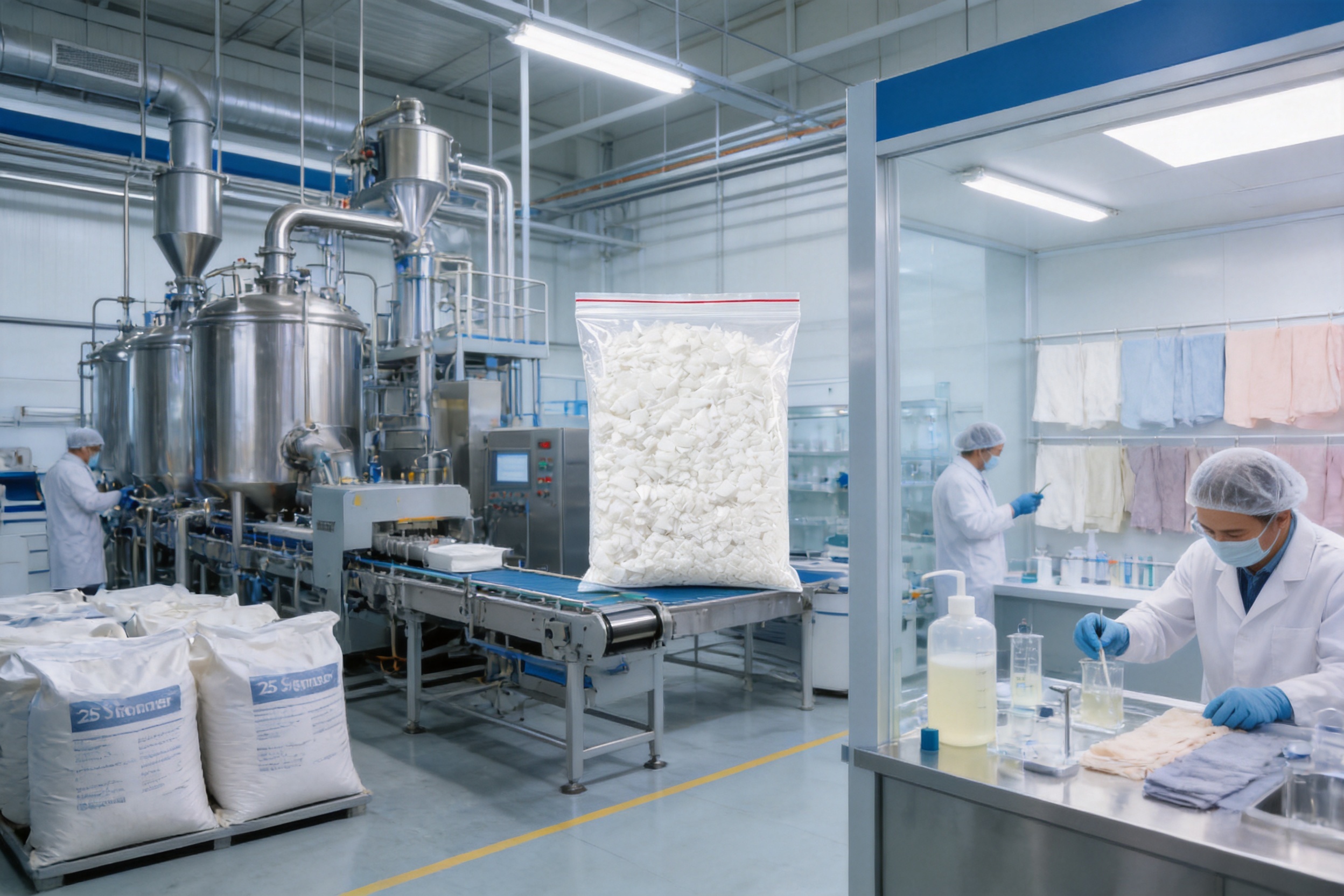
The stated shelf life of the product is 12 months when stored under recommended conditions. It should be kept in a cool place and protected from conditions that could cause excessive heat, moisture uptake, contamination, or packaging damage. The standard packaging is a 25-kilogram plastic woven bag.
Storage areas should be clean, dry, and organized. Bags should not be exposed to direct sunlight or placed where condensation can occur. Stock rotation based on delivery date can help ensure that older material is used first. Before production use, operators should check the package condition, product appearance, lot information, and any relevant quality documentation.
Handling procedures should follow the product safety data sheet and the textile mill’s chemical management rules. Personal protective equipment, ventilation, spill control, labeling, and waste handling should be managed according to local regulations and site procedures. The product should not be mixed with other concentrated chemicals unless compatibility has been established.
Process Optimization Recommendations
Begin with the lower end of the recommended dosage range when the desired hand feel is not yet known. Increase dosage step by step while evaluating softness, smoothness, fullness, hydrophilicity, and shade. Over-application can sometimes produce an excessively coated surface, alter rewetting behavior, or interfere with subsequent treatments.
Select the preparation method according to the required viscosity. Use the heating-up method when pumpability and fluidity are priorities. Use the direct high-temperature method when a thicker preparation is desirable. In both cases, complete uniformity should be achieved before the product is introduced into the application bath.
Maintain consistent temperature and agitation. Uneven heating or insufficient mixing can produce partially prepared material and inconsistent application. Where possible, use calibrated thermometers, accurate weighing systems, and documented preparation times.
Evaluate the product after the complete finishing sequence rather than immediately after application alone. Some differences in hand feel become more apparent after drying, heat setting, conditioning, laundering, or storage. For shade-sensitive materials, measure whiteness and color difference using the mill’s standard instrumental methods as well as visual assessment.
Always adjust compatibility and process conditions according to fabric type through trial runs. Fiber content, yarn count, fabric weight, construction, pretreatment, dye class, print system, mechanical finishing, and customer specifications can all change the optimum recipe.
Frequently Asked Questions
What is the main function of this product?
Its main function is to provide softness, smoothness, and a fuller hand feel while maintaining good hydrophilicity, antistatic behavior, and low yellowing performance. It is intended for textile finishing applications where both tactile quality and shade or whiteness control are important.
Is it suitable for white and pastel fabrics?
Yes. The product is designed for low yellowing and is suitable for fabrics with strict requirements on shade and whiteness. A production trial is still recommended because the final result depends on fabric type, drying temperature, heat history, and other chemicals in the recipe.
Can it be used on polyester/cotton blends?
Yes. Polyester/cotton is one of the key suggested application areas. Its balanced softening, hydrophilic, antistatic, and low yellowing characteristics make it appropriate for evaluation on these blends.
Is the product strongly cationic?
No. It is described as non-ionic or weakly cationic. This ionic character contributes to broad compatibility with many textile substrates and auxiliaries, including systems that may contain salts, alkali, or anionic agents.
How should the flakes be prepared?
They can be prepared by adding 5–10% flakes to room-temperature water, heating gradually to 70–75°C, and stirring for 30–60 minutes until a uniform paste forms. Alternatively, the flakes can be added directly to water already at 70–75°C and stirred for the same approximate period. The first method generally gives lower viscosity and better fluidity, while the second generally gives higher viscosity.
What is the recommended padding dosage?
The recommended padding dosage is 10–30 g/L based on a 10% slurry. The suggested application temperature is 30–40°C, using one dip and one nip or two dips and two nips.
What is the recommended exhaustion dosage?
The recommended exhaustion dosage is 2–8% on the weight of fabric, using a 10% slurry. The suggested temperature is 40–50°C, with a bath ratio of 1:10–15 and an application time of approximately 30 minutes.
Can it be used with other auxiliaries?
It is designed to have good resistance to salt, alkali, and anionic agents. However, compatibility should be confirmed with the actual auxiliaries used in the mill. Jar tests and pilot trials are recommended before bulk production.
Does the product provide moisture wicking?
It provides good hydrophilicity, which can support favorable moisture interaction. However, moisture-wicking performance depends on the entire textile system, including fiber type, yarn structure, fabric construction, pretreatment, dyeing, and mechanical finishing. Specific performance claims should be verified on the target fabric.
What is the shelf life?
The stated shelf life is 12 months when stored in a cool place under suitable conditions.
What packaging is available?
The standard packaging is a 25-kilogram plastic woven bag.
Why should a mill compare this product with its current softener?
A comparison can show whether the product provides a better balance of softness, shade protection, hydrophilicity, antistatic performance, bath stability, and logistics. Testing at several dosage levels can also identify whether the mill can achieve the same or improved handle with a more convenient preparation profile.
Conclusion
Ultra-Low Yellowing Softener Flakes ZX are developed for textile manufacturers that need more than a basic softening effect. The product combines a fatty acid and polyol compound with a balanced performance profile covering softness, smoothness, fullness, hydrophilicity, antistatic properties, low yellowing, chemical resistance, and preparation flexibility.
Its suitability for polyester/cotton, printed fabrics, synthetic leather base fabrics, sanding, raising, and general softening applications makes it a versatile option for dyeing and finishing plants. The ability to prepare a lower-viscosity or higher-viscosity slurry gives operators greater control over handling and process integration. Padding and exhaustion recommendations provide clear starting points for laboratory and production trials.
The manufacturing background of Jiangyin Huanan New Materials Technology Co., Ltd. adds further value. Its long operating history, two production plants, annual production capacity of 60,000 tons, in-house laboratory, R&D team, customized formulation capability, and broad textile auxiliary portfolio support a systematic approach to product development and supply. Its focus on eco-friendly, APEO-free, and formaldehyde-free formulations also aligns with the direction of modern textile chemical management.
As with any textile auxiliary, the optimum recipe must be established on the actual fabric and equipment. Proper preparation, accurate dosing, compatibility testing, controlled drying, and complete performance evaluation are essential. When these steps are followed, the product offers a practical solution for mills seeking a low-yellowing softener that delivers comfortable hand feel without sacrificing hydrophilicity, antistatic behavior, or process flexibility.
References
1. Product technical information for Ultra-Low Yellowing Softener Flakes ZX, including composition, appearance, pH, ionicity, preparation methods, application conditions, storage, and packaging.
2. General principles of textile wet processing, dyeing auxiliary selection, and finishing bath compatibility.
3. Standard laboratory practices for evaluating textile softness, whiteness, shade change, hydrophilicity, antistatic performance, and finishing durability.
4. Textile chemical management principles relating to restricted substances, APEO-free formulations, formaldehyde control, and environmentally responsible production.
5. Technical guidance on padding and exhaustion application methods for textile finishing auxiliaries.
Product: Ultra-Low Yellowing Softener Flakes ZX


Contact us
huanannewmaterials@gmail.com
-
 Phone: +86 - 13861620767
-
 Fax: +86-0510-86200939
-
 298 Hongxing Road, Huashi Town, Jiangyin City, Wuxi City, Jiangsu Province, China
Product links
Mobile App
Copyright © Jiangyin Huanan New Materials Technology Co., Ltd. All Rights Reserved

-
huanannewmaterials@gmail.com
-

-

-
+86 - 13861620767