


 English
 中文简体

Eco-Friendly Waterborne Polyurethane Stiffening Agent for High-Performance Textile Finishing
Content
- 1 What Is a Waterborne Polyurethane Stiffening Agent?
- 2 Key Technical Characteristics
- 3 Performance Advantages in Textile Finishing
- 4 Environmental and Occupational Advantages
- 5 Comparison with Conventional Stiffening Systems
- 6 Recommended Applications
- 7 Application Methods and Process Guidance
- 8 Quality Control and Performance Testing
- 9 Manufacturing Strengths of the Supplier
- 10 Why Manufacturing Process Matters
- 11 Storage, Packaging, and Transportation
- 12 Implementation Strategy for Textile Factories
- 13 Safety and Responsible Use
- 14 Commercial Value for International Buyers
- 15 Q&A
- 15.1 What is the main function of this product?
- 15.2 Is the product waterborne?
- 15.3 What type of polymer technology is used?
- 15.4 Does the product create a sticky surface after drying?
- 15.5 Can the hardness be adjusted?
- 15.6 What is the recommended wet pick-up for machine application?
- 15.7 Can the product be air-dried?
- 15.8 Is the product suitable for dyed fabrics?
- 15.9 Which textile products are suitable for this stiffening agent?
- 15.10 What substances is the product free from?
- 15.11 What are the appearance, solid content, and pH value?
- 15.12 How should the product be stored?
- 15.13 What is the shelf life?
- 15.14 Is it classified as a hazardous chemical?
- 15.15 What support can the manufacturer provide?
- 16 Conclusion
- 17 References
- 18 Product: Eco-Friendly Stiffening Agent (Waterborne Polyurethane)
Textile manufacturers increasingly need finishing agents that provide reliable stiffness, dimensional control, and yarn stability without compromising environmental performance. Conventional stiffening systems can create several production challenges, including re-tackiness, excessive brittleness, re-softening after storage, unpleasant odor, hazardous solvent exposure, and interference with later dyeing or finishing operations. These problems are especially important in webbing, curtain tapes, lace tapes, narrow fabrics, craft textile accessories, and other products where a firm, clean, stable hand feel is essential.
The Eco-Friendly Stiffening Agent, a waterborne polyurethane-based product improved through polyester polymerization, is designed to address these requirements. It combines high hardness with a thick hand feel, low environmental impact, easy water dilution, and practical processing flexibility. The formulation is intended for hardening and setting treatments in textile manufacturing, particularly where the finished material must retain its shape, resist yarn shedding, and maintain a stable surface without becoming sticky.
Produced by Jiangyin Huanan New Materials Technology Co., Ltd., this waterborne stiffening agent reflects the company’s broader expertise in textile printing and dyeing auxiliaries. The manufacturer operates two production plants, has an annual production capacity of approximately 60,000 tons, and maintains dedicated capabilities in research and development, laboratory testing, customized formulation, standardized production, and quality control. These strengths allow the product to serve both routine industrial applications and customers requiring process adjustments for specific fibers, fabric constructions, and finishing equipment.
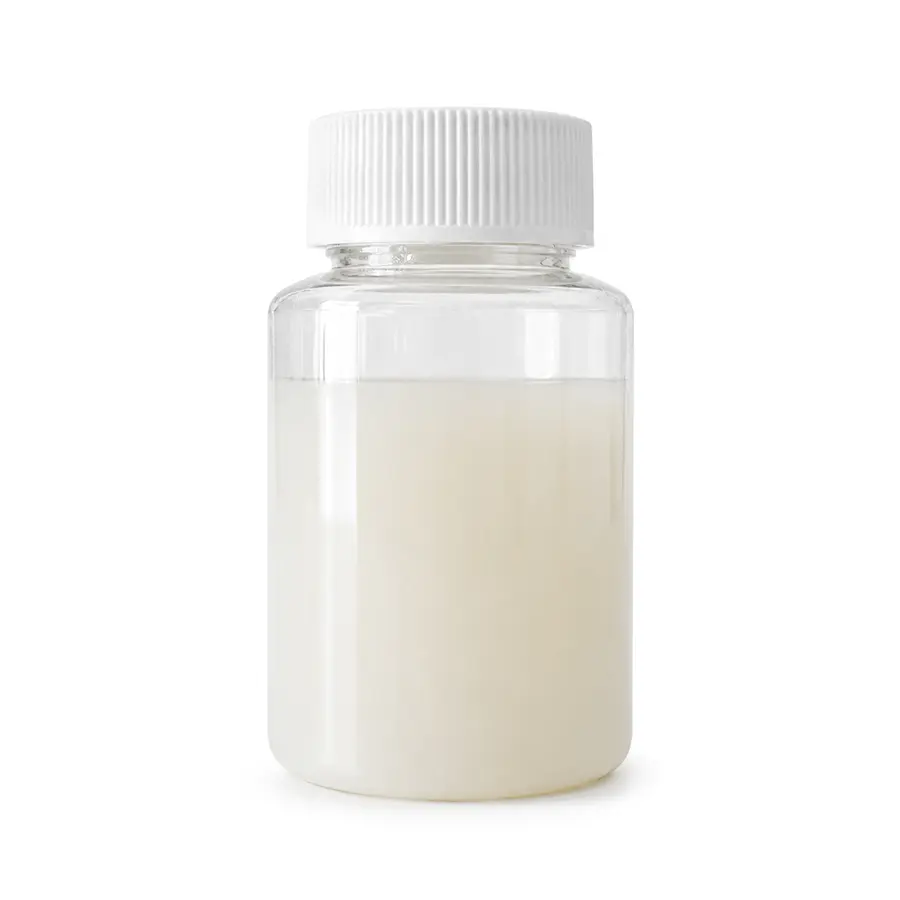
Eco-Friendly Stiffening Agent (Waterborne Polyurethane)
What Is a Waterborne Polyurethane Stiffening Agent?
A stiffening agent is a textile auxiliary applied to increase the firmness, body, shape retention, or structural stability of a fabric or narrow textile product. Depending on the formulation, a stiffening agent may be used to improve edge definition, reduce yarn movement, support dimensional stability, enhance the appearance of finished goods, or help products maintain a specific form during packaging and use.
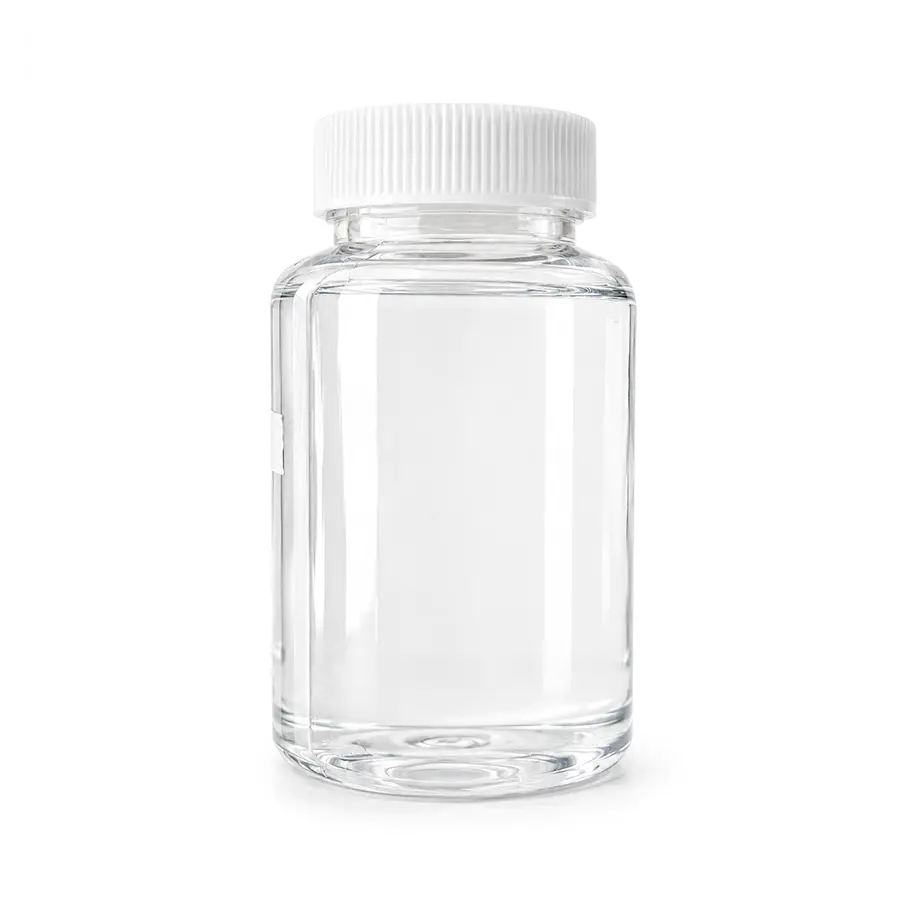
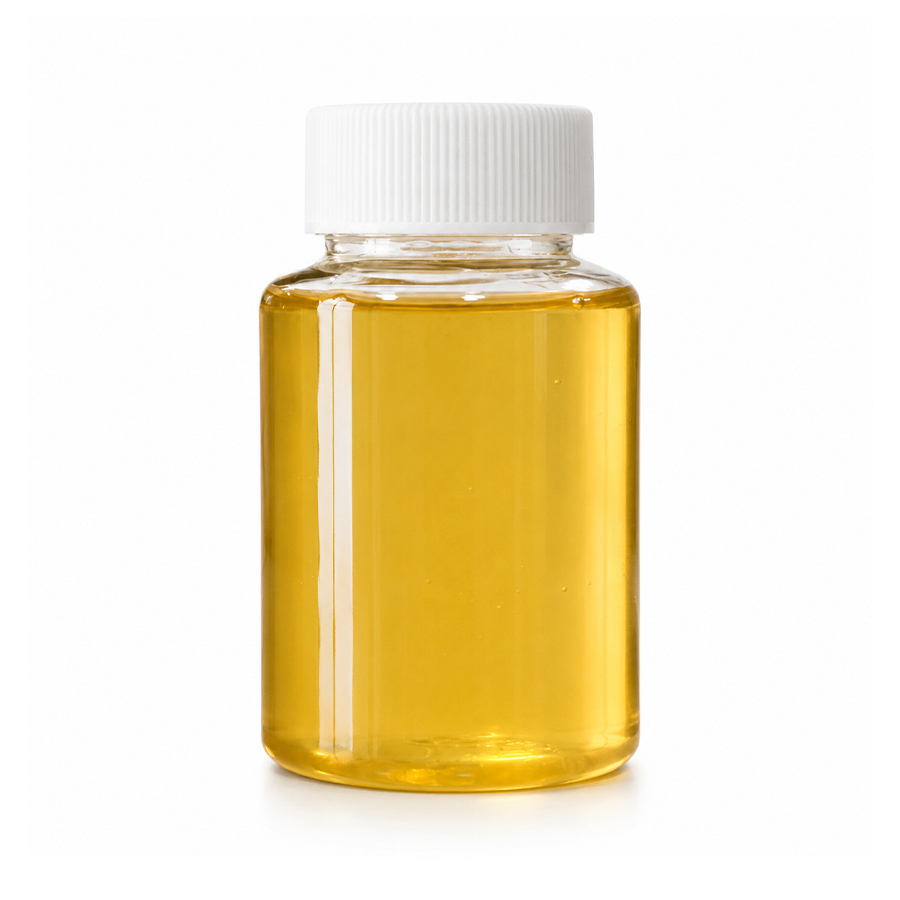
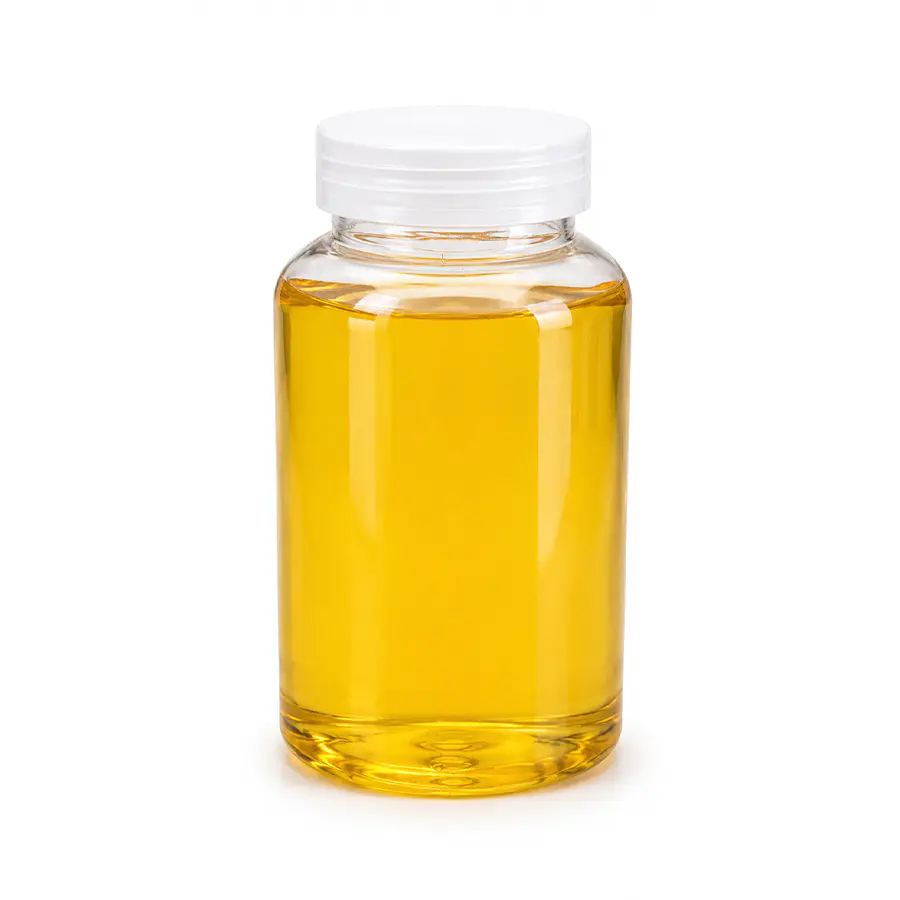
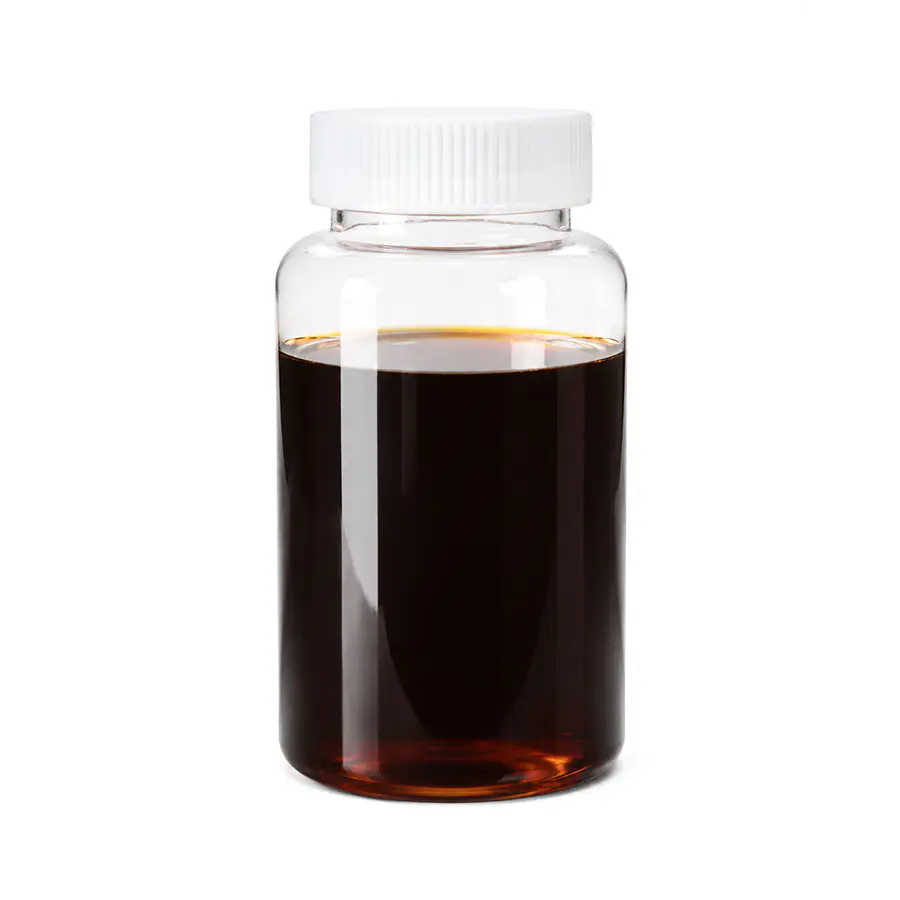
The product discussed in this article is a waterborne stiffening agent developed on the basis of polyester polymerization. It is supplied as a semi-transparent liquid with a solid content of 35% ± 2%. The product is easily soluble in water, allowing users to prepare working solutions at different concentrations according to the required hardness and the characteristics of the substrate.
Unlike a purely surface-drying resin that may create a hard but fragile coating, a carefully designed polyurethane system can form a continuous polymer film around and between textile fibers. This film supports the fabric structure while helping distribute the finishing effect more evenly. The result can be a firm, full, and stable hand feel rather than an excessively brittle surface.
The formulation is intended to provide high hardness, no re-tackiness, increased thick hand feel, and resistance to re-softening. It is also designed to prevent yarn shedding and color loss without adverse effects on dyeing and subsequent processing when used under suitable process conditions. These properties make the product especially relevant to webbing after-treatment and sizing applications.
Key Technical Characteristics
The technical profile of a textile auxiliary is important because it affects storage, dilution, application, drying, and compatibility with production equipment. The following table summarizes the principal information available for this product.
| Property | Typical Information | Practical Significance |
|---|---|---|
| Product name | Waterborne Stiffening Agent | Used for hardening and setting textile materials |
| Appearance | Semi-transparent liquid | Suitable for dilution and conventional liquid application systems |
| Solid content | 35% ± 2% | Provides a concentrated base for adjusting working strength |
| Viscosity | 2500 mPa·s at 25°C | Supports controlled handling and application after suitable dilution |
| pH value | 5–7 | A mildly acidic to near-neutral range suitable for many textile processes |
| Solubility | Easily soluble in water | Enables practical preparation of customized working solutions |
| Hazardous chemical classification | No | Handled as a non-hazardous general chemical under the stated conditions |
The viscosity value should be considered together with the application method, equipment design, temperature, dilution ratio, and fabric absorbency. The supplied product is concentrated enough to allow users to adjust the working formulation, but the correct dilution should always be established through laboratory or pilot trials.
The pH range of 5–7 is another useful characteristic. Textile production frequently involves substrates and auxiliary systems that are sensitive to strong alkalinity or strong acidity. A near-neutral product can simplify process integration, although compatibility testing remains necessary when the stiffening agent is combined with dyes, binders, softeners, crosslinking agents, or other finishing chemicals.
Performance Advantages in Textile Finishing
High and Adjustable Hardness
The primary purpose of this product is to produce a firm and stable finished material. The hardness can be adjusted by changing the dilution ratio, wet pick-up, pressure roller setting, or number of applications. This flexibility enables manufacturers to use one product across a range of constructions, from relatively flexible narrow fabrics to materials requiring a pronounced, board-like feel.
Adjustability is important because “hardness” is not a single universal target. A decorative lace tape may need a controlled degree of body while preserving a clean edge and attractive appearance. Curtain tape may require more dimensional support. Industrial webbing may need a firmer structure to improve handling and reduce yarn displacement. By changing the working concentration and application conditions, users can establish a suitable balance between stiffness, flexibility, thickness, and surface smoothness.
Thick Hand Feel and Improved Body
Many textile buyers evaluate finished materials by touch as well as by instrumental testing. A product that creates only a dry, brittle surface may fail to provide the substantial hand feel expected in premium webbing or accessories. This waterborne polyurethane stiffening agent is designed to increase body and provide a thicker, fuller handle.
A fuller hand feel can improve the perceived quality of narrow fabrics and textile accessories. It may also support easier folding, cutting, sewing, or assembly by giving the material greater self-support. The precise result depends on fiber type, fabric density, finishing add-on, drying temperature, and mechanical compression, so the desired hand should be defined through a practical approval standard rather than by chemical concentration alone.
No Re-Tackiness
Re-tackiness is a common concern with some resin-based or film-forming textile treatments. A material may feel acceptable immediately after drying but become sticky when exposed to heat, humidity, pressure, or prolonged storage. This can cause layers to block together, attract lint, complicate winding, and create problems during cutting or sewing.
The product is designed to provide a dry, non-tacky finish after proper drying and film formation. This characteristic is especially useful for rolled webbing, stacked curtain tapes, packaged lace tapes, and finished accessories that may remain compressed during transportation. The actual outcome will depend on the drying schedule, residual moisture, application level, and storage environment, but the formulation’s non-re-tacky design is a meaningful advantage over less stable stiffening systems.
Resistance to Re-Softening
Some stiffening treatments lose effectiveness when exposed to moisture or elevated temperature. Re-softening can affect product appearance, dimensional behavior, and assembly performance. A stable polymer film helps the treated textile retain its intended firmness during normal handling and storage.
The waterborne polyurethane structure is developed to reduce the tendency toward re-softening. This supports more consistent finished goods, particularly when products are shipped through changing climates or stored in warehouses with variable humidity. Manufacturers should still validate the performance under their actual conditions, including high-humidity aging, heat exposure, folding, rubbing, and compression tests.
Reduction of Yarn Shedding
Loose surface fibers and yarn movement can reduce the visual quality and service performance of narrow fabrics. In certain applications, yarn shedding may also affect sewing, cutting, weaving, or downstream assembly. By forming a controlled film around the textile structure, a stiffening agent can help stabilize fibers and reduce unwanted movement.
This product is intended to help prevent yarn shedding while increasing firmness. The benefit may be particularly relevant for webbing, ribbon, lace tape, and other products with exposed edges or open constructions. The correct treatment level is important: insufficient add-on may not provide adequate stabilization, while excessive add-on can produce unwanted rigidity or alter the appearance of the fabric.
Color Retention and Process Compatibility
Textile finishers often need to improve handle without damaging shade, brightness, or fastness. A poorly selected stiffener can cause color change, surface whitening, uneven deposition, or interference with subsequent processing. The product is designed to prevent color loss and avoid adverse effects on dyeing and later operations when properly applied.
For dyed fabrics, users should evaluate shade change under standard lighting and compare treated and untreated controls. Testing should also include rubbing fastness, washing behavior, migration, and any other performance requirements relevant to the final product. Compatibility is influenced by the dye class, fiber type, prior washing efficiency, residual chemicals, and drying conditions. The product’s stated design supports compatibility, but factory-specific validation remains essential.
Environmental and Occupational Advantages
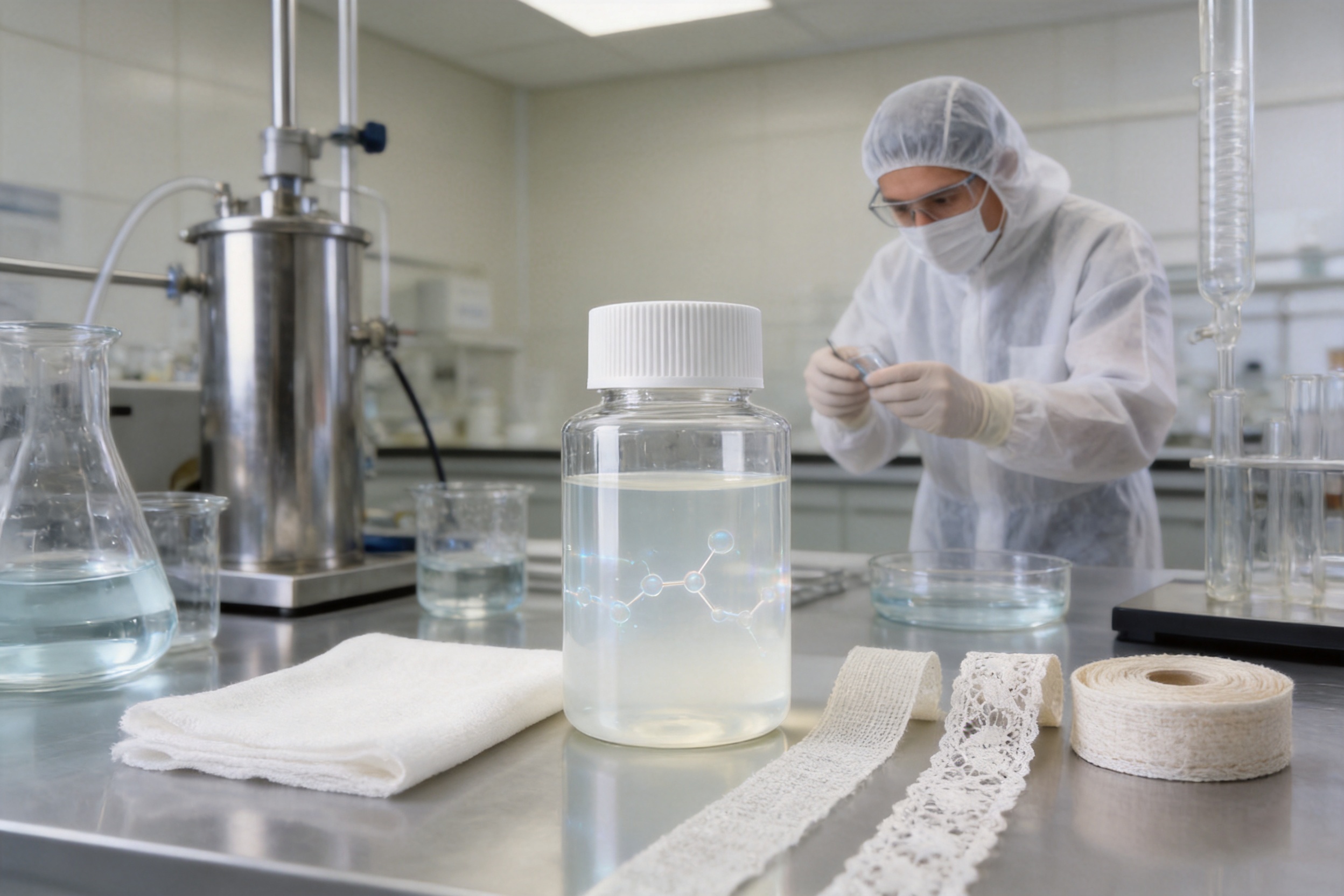
Environmental performance is now a central factor in textile chemical selection. Brands, retailers, exporters, and manufacturers increasingly require formulations with reduced restricted substances, lower occupational risk, and improved compatibility with responsible production programs. The waterborne stiffening agent is positioned as an environmentally friendly product for these needs.
The formulation is described as free of OPEO, NPEO, benzene, aldehydes, and alcohols. It is also identified as harmless, non-toxic, and not classified as a hazardous chemical. These characteristics can simplify chemical management, storage planning, and customer documentation compared with solvent-based or restricted-substance systems.
Waterborne chemistry offers an additional practical benefit by reducing reliance on organic solvents during application. Because the product is easily diluted with clean water, textile plants can prepare working solutions without introducing solvent-handling steps into the normal finishing process. This can contribute to a more comfortable production environment and may reduce concerns related to solvent odor and flammability.
Environmental claims must always be interpreted in the context of complete manufacturing conditions. Energy used for drying, wastewater management, packaging disposal, and the behavior of the finished textile all influence overall sustainability. Nevertheless, a waterborne, APEO-free, benzene-free, aldehyde-free, and alcohol-free formulation offers a strong starting point for manufacturers seeking to upgrade their finishing chemistry.
Jiangyin Huanan New Materials Technology Co., Ltd. supports the development of eco-friendly, APEO-free, and formaldehyde-free formulations. Its product portfolio covers pretreatment, dyeing, and finishing auxiliaries, enabling customers to work with a supplier that understands the interactions between different stages of textile processing.
Comparison with Conventional Stiffening Systems
Traditional stiffening products may rely on resin systems, solvent-containing formulations, or film-forming chemistries that deliver strong initial hardness but create disadvantages during use. These disadvantages can include a rough surface, brittle handle, tackiness after storage, odor, poor humidity resistance, or difficulty in adjusting the final hand.
The waterborne polyurethane stiffening agent offers several competitive advantages:
First, it combines high hardness with a thicker hand feel. This is different from systems that create hardness mainly by depositing a rigid, brittle layer on the surface.
Second, its waterborne form supports easy dilution and flexible process control. Users can adjust the treatment level to match the substrate and customer specification.
Third, its non-re-tacky design is valuable for products that are rolled, folded, stacked, or packed shortly after finishing.
Fourth, the formulation is designed to resist re-softening, supporting more stable performance during storage and transportation.
Fifth, the product is positioned as free from OPEO, NPEO, benzene, aldehydes, and alcohols, which may help manufacturers respond to environmental and restricted-substance requirements.
Sixth, it is intended to preserve dyeing and subsequent processing performance when correctly applied. This makes it more suitable for integrated production lines where a stiffening treatment must coexist with other textile operations.
These advantages do not mean that every competing product will perform identically in every application. Performance comparisons should be made using the same fabric, add-on, drying conditions, and test methods. A professional evaluation should include hardness, bending length, handle, shade change, rubbing, washing, blocking, re-softening, and storage stability.
Recommended Applications
Webbing After-Treatment
Webbing is one of the most important applications for a high-performance stiffening agent. Webbing may be used in garments, luggage, furniture, home textiles, packaging, safety products, and industrial assemblies. Depending on the end use, it may need a firm edge, reduced yarn movement, controlled thickness, better shape retention, or improved sewing behavior.
The product can be applied after dyeing and washing, provided the webbing is clean and dry before treatment. Its ability to create hardness without re-tackiness is useful for rolls that must be wound, stored, and transported without blocking.
Curtain Tapes
Curtain tapes often require a balance of body, clean appearance, and dimensional stability. Excessive softness may cause the tape to collapse during sewing or installation, while excessive brittleness may reduce comfort and make handling difficult. Adjustable dilution allows manufacturers to establish the appropriate stiffness for different tape constructions and curtain systems.
Lace Tapes and Decorative Narrow Fabrics
Lace tapes and decorative accessories may have open structures and exposed yarns. A controlled film-forming finish can help stabilize the construction, reduce shedding, and improve the consistency of the edge. The treatment should be carefully optimized to preserve the visual character, openness, and flexibility required by the design.
Craft Textile Accessories
Craft textile accessories include ribbons, decorative strips, fabric ornaments, trims, and components used in handmade or industrial decorative products. These materials may need a firm shape for cutting, gluing, folding, or assembly. The waterborne stiffener can be adjusted to provide anything from moderate body to high stiffness, depending on the working solution and application method.
General Fabric Hardening and Setting
The product is also suitable for the hardening and setting treatment of other textile materials. Potential applications include fabrics requiring temporary or permanent body, narrow woven products, selected interior textile components, and products that need improved shape retention. Each application should be tested for adhesion, surface appearance, flexibility, wash durability, and compatibility with the fiber and dye system.
Application Methods and Process Guidance
Before treatment, the fabric should be dry and clean on the surface. Oil, dust, sizing residues, softeners, waxes, silicone contamination, and other attached substances may interfere with wetting and film formation. If the material has recently undergone dyeing or washing, it should be sufficiently rinsed and dried before the stiffening solution is applied.
The product is diluted with clean water at the desired ratio. The correct concentration depends on the required hardness, the fabric construction, the application method, the machine speed, the drying temperature, and the target add-on. Customers should begin with laboratory trials using several dilution levels rather than relying on a single concentration.
High-Temperature Drying and Padding
For high-temperature drying, prepare the working solution at the required ratio and add it to the sizing trough or finishing bath. The pressure roller of the finishing machine should be adjusted to achieve the appropriate wet pick-up. A general pick-up range of 60–80% is recommended as a starting point, but the optimum value depends on the substrate and equipment.
Higher pick-up can increase the amount of polymer deposited on the fabric, but it may also increase drying demand, stiffness variation, edge build-up, or surface deposits. Lower pick-up may be appropriate for lightweight materials or applications requiring moderate body. The pressure roller should be adjusted gradually while monitoring the actual wet weight and the finished hand.
Drying must be sufficient to remove water and support proper film formation. The exact temperature and residence time should be determined through trials because different fibers and fabric constructions tolerate heat differently. Over-drying or excessive heat can cause yellowing, shrinkage, shade change, or undesirable handle. Under-drying can leave residual moisture and may contribute to blocking or incomplete stiffness development.
Air-Drying Method
For air drying, prepare the solution at the required ratio and soak the product to be set until it is thoroughly saturated. Remove the material and squeeze off excess solution before placing it in a clean, ventilated area for drying.
Air drying is suitable for smaller batches, craft accessories, laboratory samples, and products that cannot be processed through a high-temperature finishing machine. The material should be arranged to avoid folds, uneven compression, or contact with contaminated surfaces. Drying time will depend on fabric thickness, room temperature, air movement, humidity, and solution add-on.
Process Optimization
For consistent production, operators should control the following variables:
1. Working concentration: adjust the dilution ratio to meet the required stiffness without excessive coating.
2. Wet pick-up: monitor the amount of solution retained by the textile after padding or soaking.
3. Drying conditions: maintain a stable temperature, residence time, and airflow.
4. Fabric cleanliness: remove residual oils, loose particles, and incompatible finishing residues.
5. Bath homogeneity: mix the solution sufficiently and prevent contamination from other chemicals.
6. Machine pressure: maintain consistent roller pressure across the production width.
7. Storage before testing: condition finished samples under controlled humidity and temperature before evaluating final hardness.
8. Batch records: document dilution, pick-up, drying conditions, machine settings, and test results for traceability.
Quality Control and Performance Testing
A stiffening agent should be evaluated using both subjective and objective methods. Hand feel remains important, but laboratory measurements provide better control during scale-up and routine production.
Hardness can be evaluated through bending length, cantilever testing, flexural rigidity, compression behavior, or application-specific shape retention tests. The chosen method should reflect the final product’s intended use. For example, curtain tape may require a different evaluation from industrial webbing.
Surface performance should be checked for tackiness after drying, blocking after stacking, and resistance to pressure during winding. Samples can be stored under normal and elevated humidity conditions before inspection. If the final goods will pass through sewing or cutting, operators should assess needle behavior, edge stability, dust generation, and feeding consistency.
Color evaluation should include comparison against an untreated or approved reference sample. Shade change, whiteness, surface gloss, and visual uniformity should be reviewed. For dyed materials, rubbing fastness and washing performance should be assessed according to the customer’s required standards.
Yarn shedding can be evaluated through controlled rubbing, brushing, handling, or simulated sewing. The test should compare untreated material, the approved production finish, and alternative products under equivalent conditions.
Storage stability testing is also valuable. Finished samples should be checked after folding, rolling, stacking, and prolonged storage. The purpose is to confirm that the material does not become tacky, lose stiffness, develop odor, or show visible migration of the finishing film.
Manufacturing Strengths of the Supplier
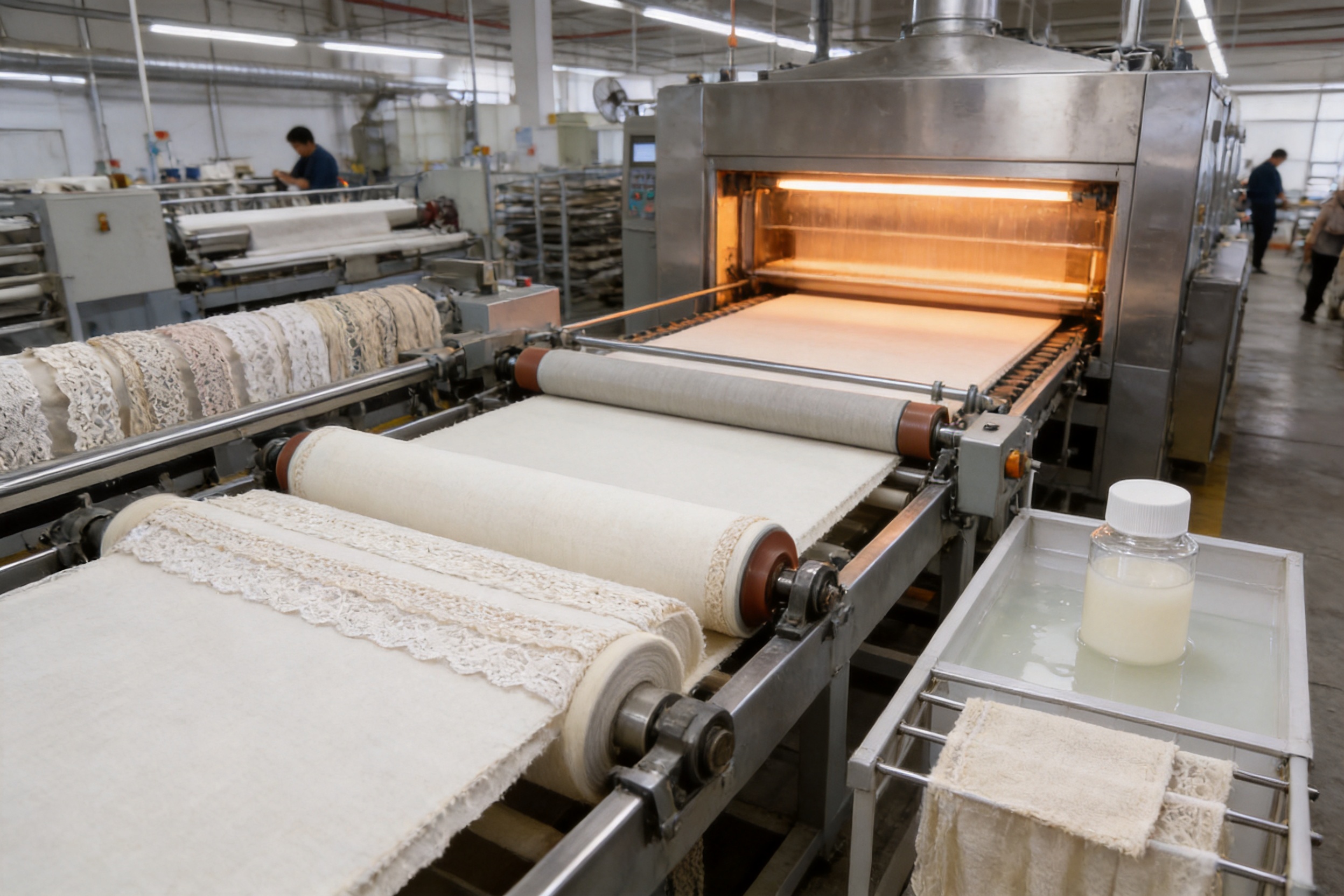
The performance of a textile auxiliary depends not only on its formula but also on the manufacturer’s ability to reproduce that formula consistently. Jiangyin Huanan New Materials Technology Co., Ltd. was established in 1984 and is located in Jiangyin City, Jiangsu Province, China. Its long operating history provides experience in textile chemical development, production, application support, and customer service.
The company operates two production plants with an annual production capacity of approximately 60,000 tons. This production scale supports supply continuity for customers requiring regular shipments, while standardized manufacturing procedures help maintain consistency between batches.
The company’s product portfolio includes moisture-wicking finishing agents, high-concentration repairing agents, low-temperature environmentally friendly carriers, silicone oils, silicone softeners, antistatic agents, color-fixing agents, stiffening agents, down-proof and windproof agents, and dry and wet rubbing fastness enhancers. This broad range is important because textile finishing rarely involves only one chemical. Customers may require several auxiliaries across pretreatment, dyeing, and finishing stages.
With an in-house laboratory and professional research and development team, the manufacturer can investigate application issues rather than treating every customer requirement as a standard catalog order. Laboratory capability supports screening, formula adjustment, compatibility checks, process simulation, and comparison of different raw materials.
Customized formulation is another important strength. Textile factories use different fibers, machine types, fabric weights, dye classes, drying systems, and quality standards. A formulation that performs well on polyester webbing may require adjustment for cotton tape, blended lace, or a highly absorbent substrate. The ability to provide corresponding technical guidance and recommendations helps customers shorten development time and reduce trial-and-error production.
Standardized production and strict quality control are essential for a waterborne polymer product. Controls may include raw material inspection, polymerization monitoring, viscosity measurement, pH measurement, solid content testing, appearance inspection, packaging checks, and batch retention. Consistent testing helps ensure that customers receive a product with predictable dilution and finishing behavior.
The company also maintains an integrated supply network. This supports raw material coordination, production planning, packaging, warehousing, and delivery. For international customers, dependable logistics and clear product documentation are as important as the chemical performance itself.
Why Manufacturing Process Matters
Waterborne polyurethane chemistry is sensitive to polymer structure, particle distribution, solids content, pH, viscosity, and storage conditions. Small variations may affect wetting, film formation, hardness, flexibility, and compatibility with other auxiliaries. A manufacturer with controlled production and laboratory verification is better positioned to manage these variables.
Polyester polymerization provides the foundation for the product’s polymer architecture. The selection and balance of polymer components influence hardness, film integrity, adhesion, flexibility, and resistance to environmental changes. Subsequent dispersion and stabilization steps determine how the polymer behaves in water and how evenly it can be applied to textile surfaces.
Quality control should continue after synthesis. A stable waterborne product must maintain uniformity during storage and transport. Appearance, viscosity, pH, and solid content are practical indicators, but application testing is equally important. A batch may meet basic specifications while still requiring investigation if it behaves differently on a particular fabric or machine.
Jiangyin Huanan’s combination of production scale, technical personnel, in-house laboratory resources, and textile-specific product knowledge provides a foundation for process consistency. These capabilities distinguish a specialized textile auxiliary supplier from a general chemical distributor that may not have direct experience with textile finishing conditions.
Storage, Packaging, and Transportation
The product is available in 50-kilogram or 125-kilogram drums. Packaging selection should reflect the customer’s consumption rate, production scale, storage capacity, and handling equipment. Smaller drums may be convenient for development work or moderate production, while larger drums can reduce packaging frequency in high-volume operations.
The product should be stored in a dry, well-ventilated, cool warehouse and kept sealed. Direct exposure to heat, sunlight, freezing conditions, dust, and contamination should be avoided. The container should remain closed when not in use to protect the product from evaporation, foreign matter, and unintended changes in concentration.
The stated shelf life is 12 months when stored under suitable conditions. Before use, customers should inspect the appearance and confirm that the product remains homogeneous and suitable for processing. If unusual separation, odor, gel formation, or significant viscosity change is observed, the material should be isolated and evaluated before production use.
The product is classified as a general chemical and non-hazardous under the stated information. For sea freight, it can be handled as ordinary cargo. Nevertheless, transport and storage should follow the supplier’s technical documentation, local regulations, and the customer’s internal chemical management procedures.
Implementation Strategy for Textile Factories
A factory introducing the product should begin with a controlled trial. Select representative materials from current production and prepare several working concentrations. Apply the solutions under conditions close to the intended production process, then dry and condition the samples before evaluation.
The trial should include at least one untreated reference, the current stiffening product if applicable, and the new waterborne polyurethane system. Evaluators should compare hardness, hand feel, surface appearance, yarn shedding, tackiness, color, flexibility, and ease of handling. If the product will be sewn, laminated, folded, or packed, those operations should be included in the test plan.
After laboratory approval, conduct a pilot run using the intended machine. Confirm bath stability, roller behavior, wet pick-up, drying load, line speed, and finished-product uniformity. Operators should record the conditions and identify any differences between the center and edges of the fabric.
Once the pilot run is approved, establish a production standard. The standard should specify the dilution method, mixing order, water quality, working concentration, wet pick-up range, drying conditions, inspection frequency, and acceptance criteria. Clear instructions reduce variation between shifts and support repeatability across production batches.
For customers with special requirements, the manufacturer can provide technical guidance based on the specific fabric and process. Questions related to hardness, re-softening, dye compatibility, application equipment, or environmental documentation should be discussed before large-scale production.
Safety and Responsible Use
Although the product is described as non-hazardous and environmentally friendly, good industrial practice should always be followed. Personnel should review the current technical and safety documentation before handling the product. Appropriate protective equipment, clean working areas, spill control, and proper labeling should be maintained.
Clean water should be used for dilution, and the mixing vessel should be free of residues from incompatible chemicals. The order in which auxiliaries are combined can affect bath stability. Unless a validated procedure says otherwise, the stiffening agent should not be mixed directly with concentrated acids, alkalis, oxidizers, or other additives without compatibility testing.
Wastewater and rinsing water should be managed according to local regulations and the factory’s environmental system. Even an environmentally preferable auxiliary must be used within a controlled production process. Proper dosage and accurate application can reduce waste, improve product consistency, and support responsible resource use.
Commercial Value for International Buyers
For international buyers, product value includes more than the purchase price per kilogram. A reliable stiffening agent can reduce rework, lower production interruptions, improve finished-product consistency, and decrease complaints related to tackiness, softness, yarn shedding, or color change.
The product’s concentrated solid content allows users to tailor the working solution to the application. This can provide flexibility when a factory produces several grades of webbing or narrow fabrics. A single base product may be adapted to different hardness targets rather than requiring a completely different chemical for every product line.
Waterborne processing may also help factories simplify handling and improve workplace conditions. The absence of OPEO, NPEO, benzene, aldehydes, and alcohols supports buyers who must meet restricted-substance policies or customer sustainability requirements. Documentation and testing should be confirmed for each market and certification program, but the formulation profile is aligned with the direction of modern textile chemical management.
Jiangyin Huanan’s ability to supply a broad portfolio of textile auxiliaries can further simplify procurement. A customer sourcing pretreatment, dyeing, and finishing products from one experienced textile chemical manufacturer may benefit from more coordinated technical communication and fewer compatibility uncertainties.
Q&A
What is the main function of this product?
Its main function is to harden and set fabrics, webbing, curtain tapes, lace tapes, craft textile accessories, and related materials. It increases firmness, body, and shape stability while helping reduce yarn shedding and color loss.
Is the product waterborne?
Yes. It is a waterborne stiffening agent and can be diluted with clean water according to the required hardness and application method.
What type of polymer technology is used?
The product is improved based on polyester polymerization and formulated as a waterborne polyurethane stiffening system. Its polymer structure is designed to support hardness, thick hand feel, non-tackiness, and resistance to re-softening.
Does the product create a sticky surface after drying?
The product is designed to provide no re-tackiness after proper application and drying. Actual results depend on concentration, wet pick-up, drying conditions, residual moisture, and storage humidity, so production trials are recommended.
Can the hardness be adjusted?
Yes. Customers can adjust the dilution ratio according to the required hardness. Wet pick-up, pressure roller settings, drying conditions, and repeated application can also influence the final result.
What is the recommended wet pick-up for machine application?
A general pressure roller pick-up range of 60–80% is provided as a starting reference for high-temperature drying. The optimum value should be established according to the fabric, machine, target hand, and production conditions.
Can the product be air-dried?
Yes. The material can be saturated in the diluted solution, excess liquid can be squeezed out, and the treated product can then be air-dried in a clean, well-ventilated area.
Is the product suitable for dyed fabrics?
It is designed to avoid adverse effects on dyeing and subsequent processing and to help prevent color loss. However, each dyed fabric should be tested because compatibility depends on the fiber, dye system, prior treatment, and production conditions.
Which textile products are suitable for this stiffening agent?
Typical applications include webbing, curtain tapes, lace tapes, narrow fabrics, craft textile accessories, and other materials requiring hardening or setting. The product may also be evaluated for general fabric finishing when the required performance is confirmed through trials.
What substances is the product free from?
The product is described as free of OPEO, NPEO, benzene, aldehydes, and alcohols. Buyers should request current technical and compliance documentation for their specific purchasing and certification requirements.
What are the appearance, solid content, and pH value?
The product is a semi-transparent liquid with a solid content of 35% ± 2%, viscosity of approximately 2500 mPa·s at 25°C, and a pH value of 5–7.
How should the product be stored?
It should be kept sealed in a dry, well-ventilated, cool warehouse. Exposure to excessive heat, direct sunlight, freezing conditions, and contamination should be avoided.
What is the shelf life?
The stated shelf life is 12 months when the product is stored under suitable conditions.
Is it classified as a hazardous chemical?
The product information identifies it as a non-hazardous general chemical. Users should still follow applicable local regulations and the supplier’s latest safety documentation.
What support can the manufacturer provide?
The manufacturer has an in-house laboratory, professional research and development capabilities, customized formulation experience, standardized production, and technical guidance resources. Support can be adapted to the customer’s fabric, machine, hardness target, and process conditions.
Conclusion
The Eco-Friendly Stiffening Agent is a practical waterborne polyurethane solution for textile manufacturers seeking firm, stable, and environmentally considerate finishing performance. Its main advantages include high hardness, thick hand feel, no re-tackiness, resistance to re-softening, reduced yarn shedding, color protection, easy water dilution, and compatibility with a wide range of textile after-treatment applications.
Its value is strengthened by the manufacturing capabilities of Jiangyin Huanan New Materials Technology Co., Ltd. The company combines decades of textile chemical experience with two production plants, substantial annual capacity, an in-house laboratory, professional R&D personnel, customized formulation capabilities, standardized manufacturing, strict quality control, and an integrated supply network.
For webbing, curtain tapes, lace tapes, craft accessories, and other materials requiring controlled stiffness, the product offers a flexible alternative to conventional systems that may become tacky, brittle, soft, or environmentally difficult to manage. The best results will come from a structured trial program that evaluates concentration, wet pick-up, drying, hardness, appearance, storage behavior, and downstream processing performance.
By combining waterborne chemistry with textile-specific technical support, this stiffening agent can help manufacturers improve product quality, simplify process control, and respond to the growing demand for responsible textile auxiliaries.
References
1. Product technical information for Waterborne Stiffening Agent, including appearance, solid content, viscosity, pH, solubility, application guidance, packaging, storage, and shelf-life data.
2. Company profile and manufacturing information for Jiangyin Huanan New Materials Technology Co., Ltd., including production capacity, product portfolio, laboratory resources, R&D capabilities, and customized formulation services.
3. AATCC technical procedures for textile colorfastness, rubbing evaluation, washing assessment, and related quality-control methods.
4. ISO textile testing standards for fabric handle, dimensional stability, colorfastness, chemical management, and performance evaluation.
5. OEKO-TEX textile chemical safety principles and restricted-substance management guidance.
6. General technical literature on waterborne polyurethane dispersions, polyester polymerization, polymer film formation, and textile finishing applications.
7. Industrial guidance on responsible storage, handling, dilution, application, drying, and quality control of waterborne textile auxiliaries.
Product: Eco-Friendly Stiffening Agent (Waterborne Polyurethane)

Contact us
huanannewmaterials@gmail.com
-
 Phone: +86 - 13861620767
-
 Fax: +86-0510-86200939
-
 298 Hongxing Road, Huashi Town, Jiangyin City, Wuxi City, Jiangsu Province, China
Product links
Mobile App
Copyright © Jiangyin Huanan New Materials Technology Co., Ltd. All Rights Reserved

-
huanannewmaterials@gmail.com
-

-

-
+86 - 13861620767